
13 JUL 2026
What an e-commerce site costs in Italy in 2026: the real numbers
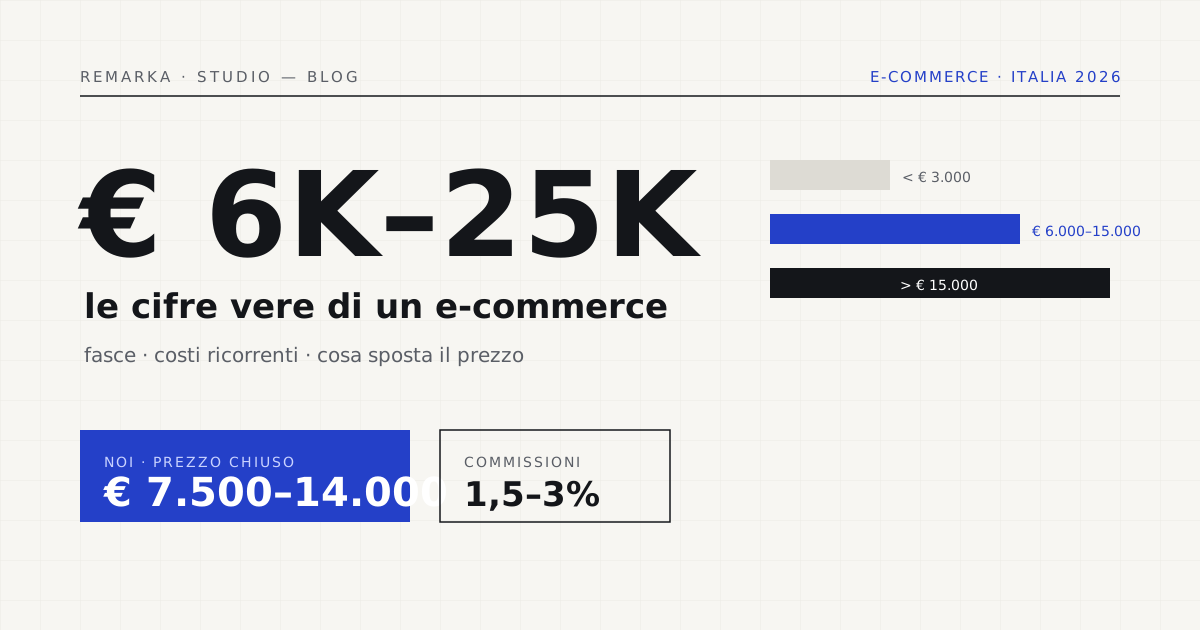
“How much does an e-commerce site cost?” is how almost every first phone call with us begins. The honest answer is a wide range — 6,000 to 25,000 euros and up on the Italian market — because two online stores with the same number of products can hide completely different levels of complexity. In this article we lay out the real 2026 market figures, the costs that quotes keep quiet about, and the three factors that actually move the price.
The Italian market’s price tiers.
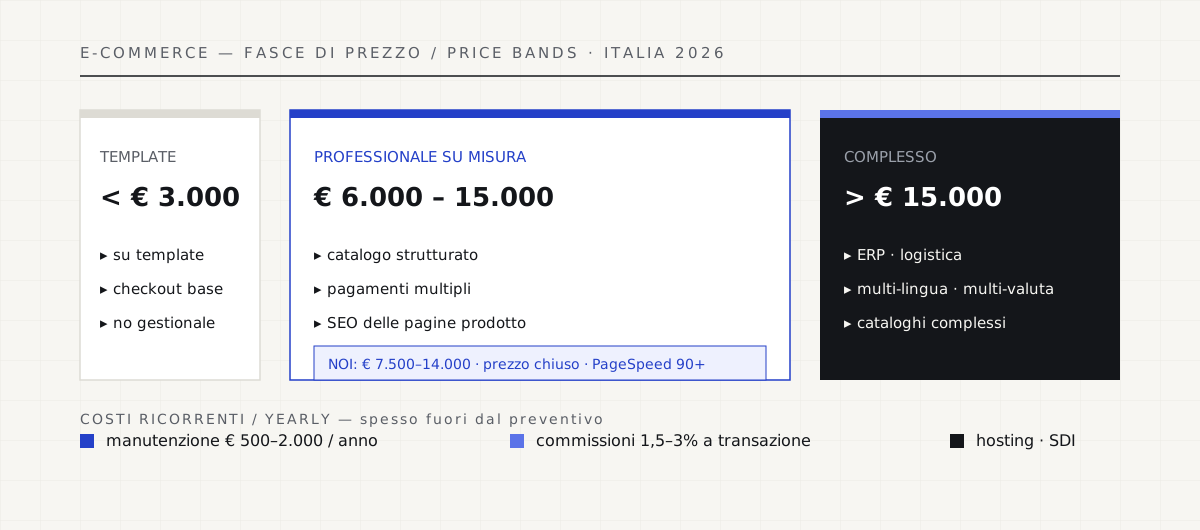
Public price lists from Italian agencies in 2026 describe a market in three tiers. Under 3,000 euros you get stores assembled on templates with minimal configuration: they work until you need to customize the checkout or connect your ERP. The middle tier — 6,000–15,000 euros — covers a professional, custom-built e-commerce site: a structured catalog, multiple payment methods, technical SEO on product pages. Above 15,000 you move into complex catalogs, ERP and logistics integrations, multiple languages and currencies.
Our price list sits in the middle tier — € 7,500–14,000, fixed in the quote — with one contractual difference: PageSpeed 90+ guaranteed in writing and a delivery date backed by a penalty clause. Those are the two items you will almost never find in competing offers in black and white.
Real market data: HTTP Archive’s Web Almanac 2024 →
The costs quotes don’t mention.
The build price is half the story. A live e-commerce site costs money every year: hosting sized for traffic peaks, security updates, payment fees (typically 1.5–3% per transaction), e-invoicing, and catalog maintenance. On the market, professional maintenance runs between 500 and 2,000 euros a year: always ask what is included, and for how long.
In our case, the first 12 months of support, updates, and monthly measurements are included in the build price. After that, the plan is optional — or the store stays with you as is: code and data are yours from day one.
The three factors that move the price.
A catalog translated by native speakers and a checkout cut down to one step are the two levers that move the most direct sales in an e-commerce site selling abroad: we apply them to the same multilingual projects the Remarka group builds for itself — real cases, with a link to the live project, at /en/case-studies/.
The questions to ask before signing.
A € 5,000 mistake: underestimating content.
There’s one line item that almost every e-commerce quote keeps low to look competitive: content. Well-written product pages, real photos, copy that sells, and — if you export — native-speaker translations. It seems like the “easy” part, and it’s actually the one that decides whether the shop converts or stays a silent shop window. Whoever sells you a cheap e-commerce site often leaves you this bill for later, when you discover that 300 product pages don’t write themselves.
Sources.
The figures and claims in this article come from here. These are primary sources, not summaries: open them and check for yourself.
- HTTP Archive — Web Almanac 2024Real data on the weight, technologies, and performance of sites, e-commerce included.
- Eurostat — e-commerce statisticsHow much Europe sells online: the market context behind a shop’s figures.
- web.dev — Web VitalsThe mobile speed we defend by contract and that affects sales.
- AccessibleEU — European CommissionSince 2025 accessibility is a mandatory cost for e-commerce too: it has to go in the quote.
Let’s talk about your website.
Free analysis of your current website; a fixed quote within 24 hours of the call.