Case studies
Portfolio: the systems we run ourselves and the ones we build for clients.
Most web agencies show off client logos. The Remarka group has worked with languages since 2001 — and has been building websites since that same year: as early as 2002–2003 it was delivering sites for outside companies, some still online today (directindustry.com.ru · ivextrans.eu · beltran.by). Since then: over 160 projects delivered, 28 currently under our continuous maintenance. Studio Remarka is this work’s new storefront, not its beginning.
Below are the systems the group built for itself: to run our own operations, rank our own services on Google, sell in several languages. We use them every day, with our own money and reputation on the line — and when you work with us you get the same engineering. Further down you will also find projects built for clients: web services, multilingual portals, a signature website. Every case links to the live project: open it, test it, measure it yourself. No invented clients, no numbers you can’t check.
Every card opens the live project. Scores and metrics are verifiable on the spot.
18 projects — 12 of our own, 6 for clients · filter by type of work
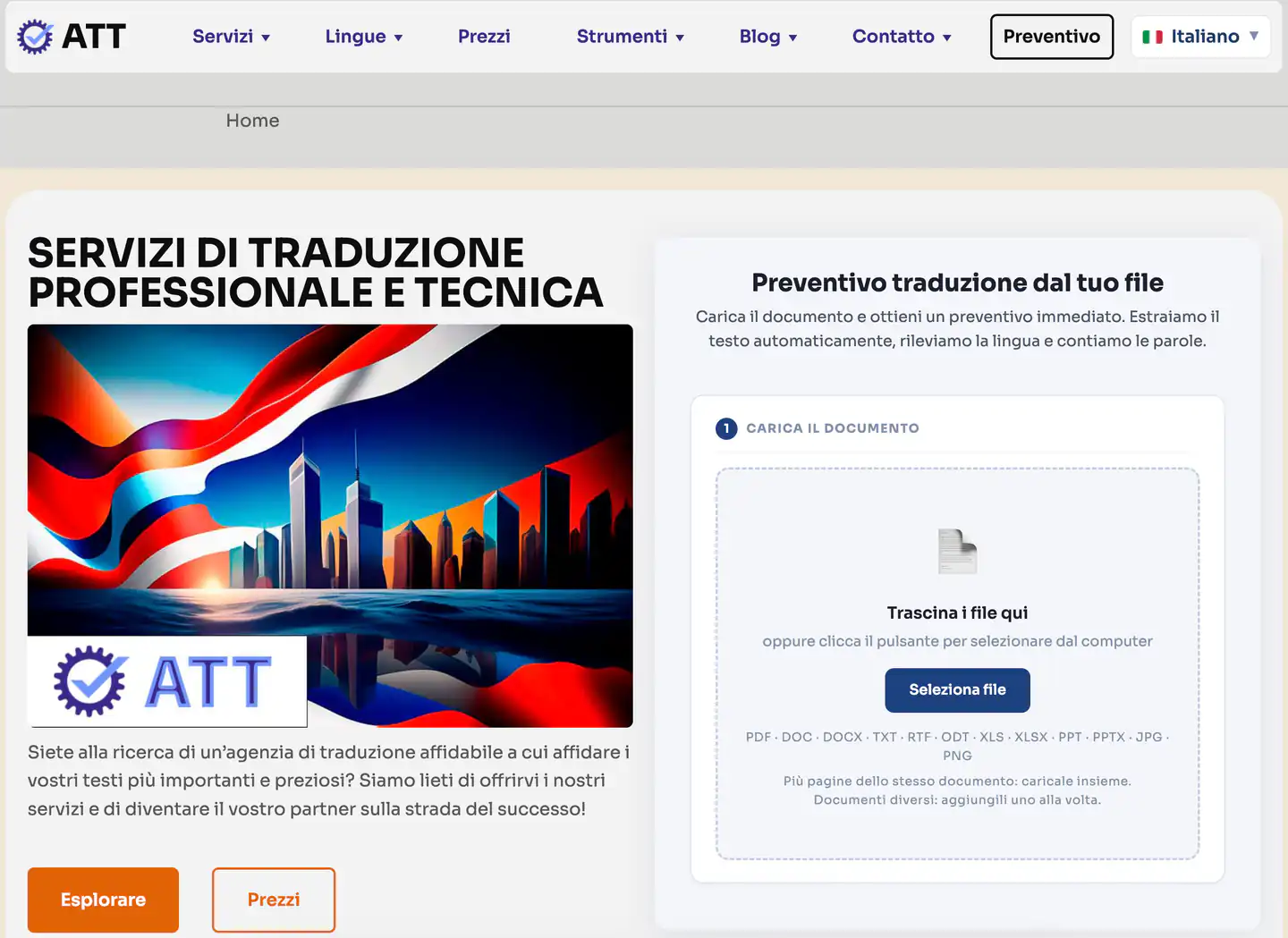
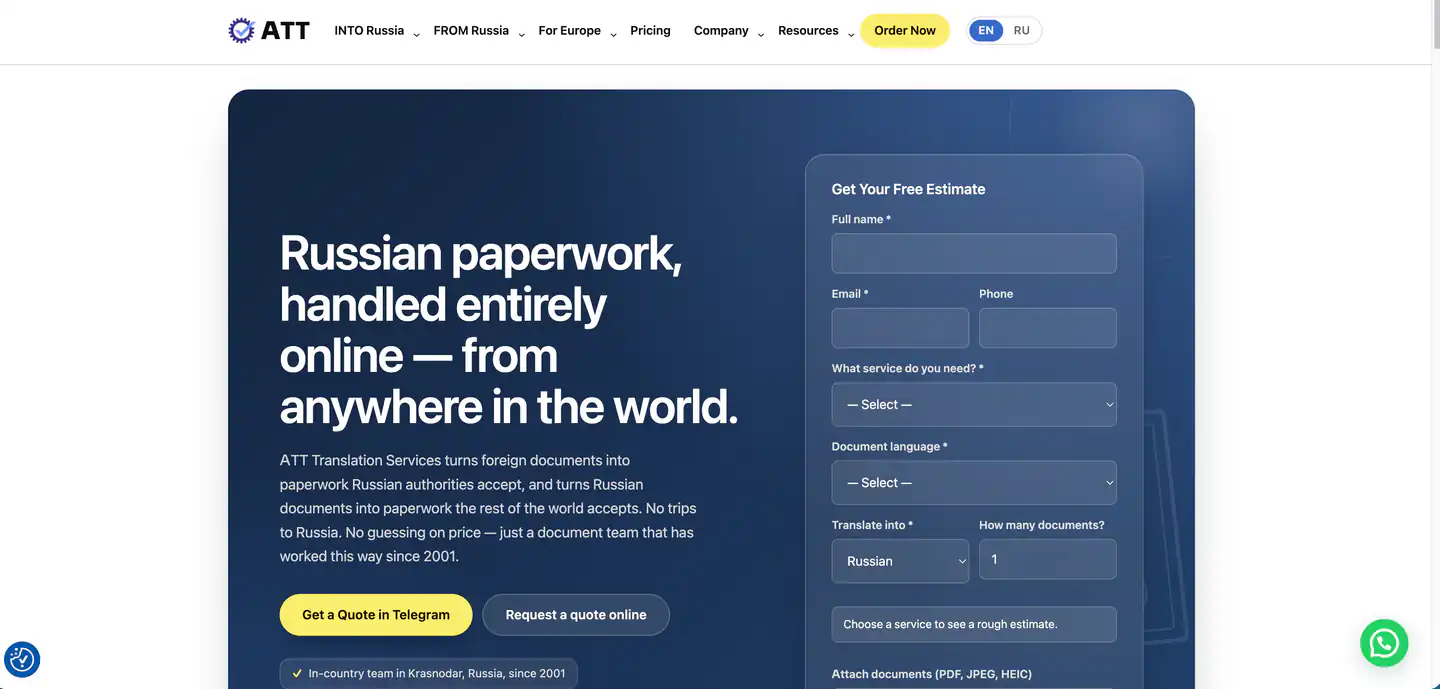
A translation agency’s website, built by translators.
A translation agency with over twenty years of history needed a site that spoke the language of the Italian B2B buyer: fast quotes, clear services, instant trust. The old site held up on neither load time nor service structure.
We rebuilt the ATT (Technical Translation Agency) site as a complete business website: services architected by field and by language, a quote request in a few steps, copy written by the people who actually do the translating. Technical SEO and structured data from line one. It’s our own calling card — if it didn’t work, we’d be the first to know.
Live since 2022, the site brings the agency around 20 orders a month across more than 40 language pairs and directions. It’s the channel ATT wins clients with today.
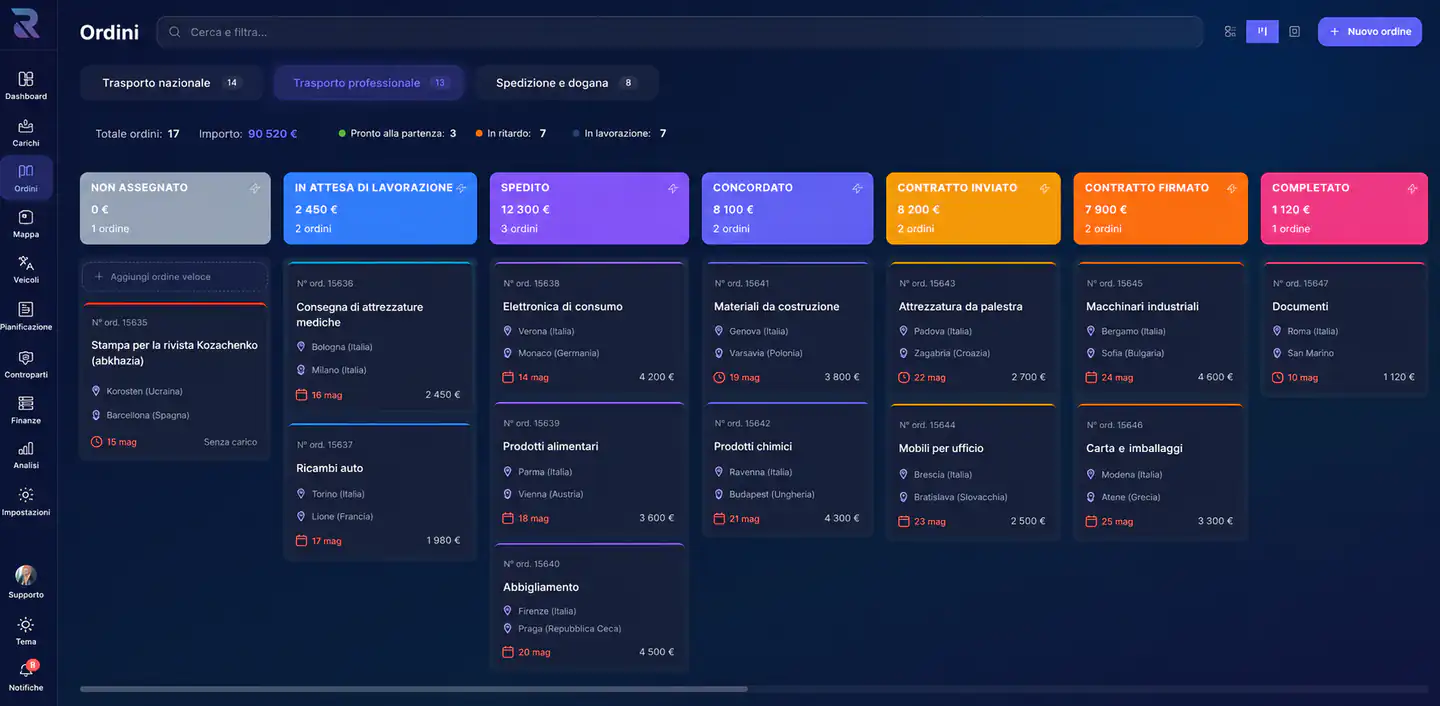
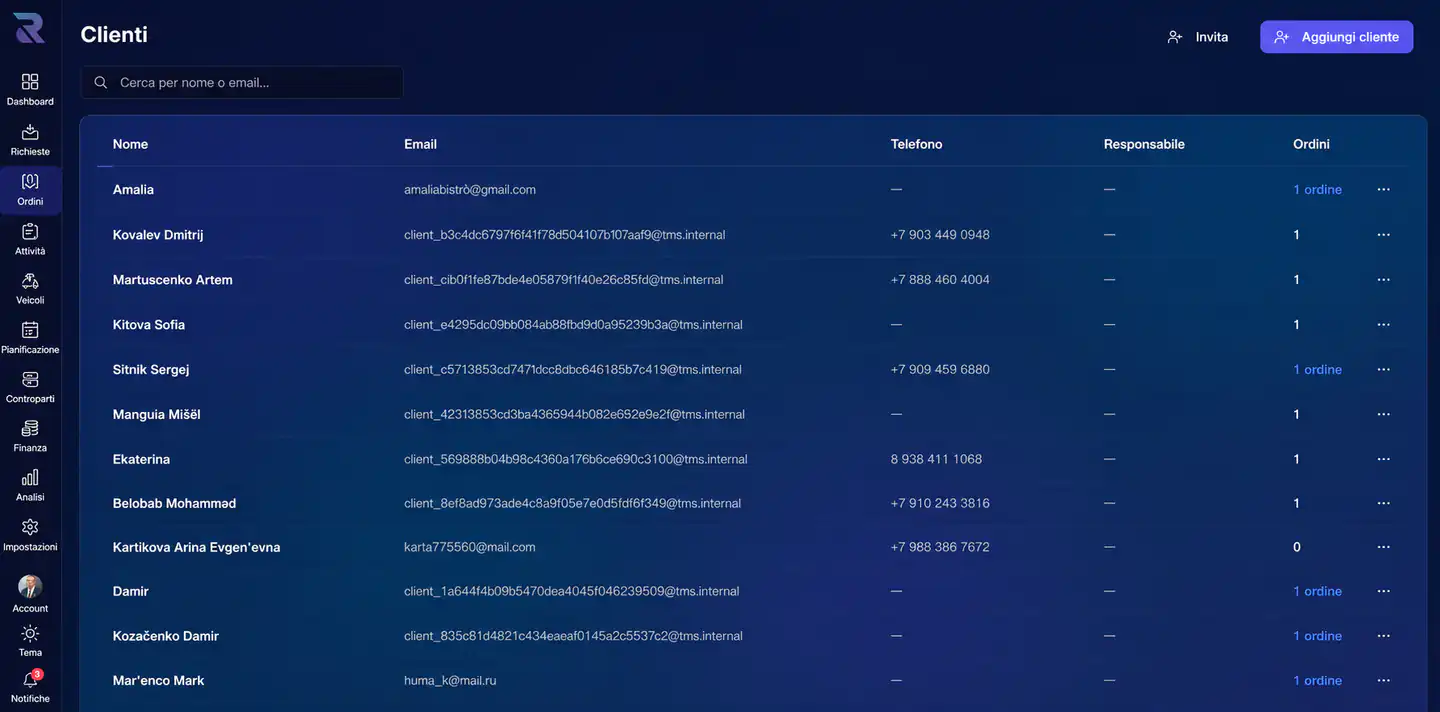
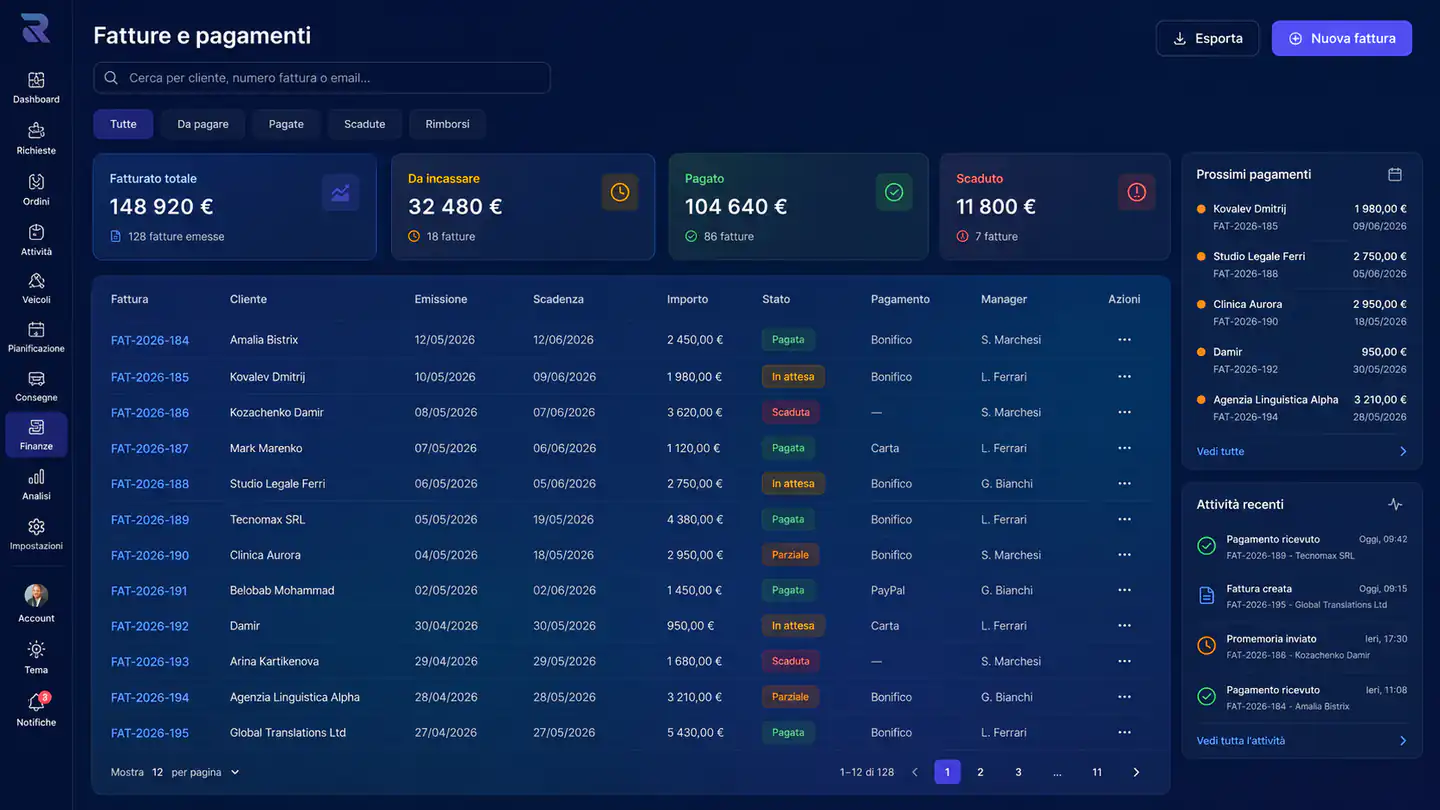
The web app that runs a translation agency.
Running hundreds of translation orders — clients, translators, deadlines, quotes, invoices — on spreadsheets and email is a bottleneck that breaks deliveries. We needed one system, not ten disconnected tools.
We built a full TMS (Translation Management System): a dashboard where every order has a status, every client a record, every translator a workload, and every job its invoice. Order board, contacts, quotes and accounting in a single web app. It’s the group’s internal operating system — we use it every day so no delivery slips through. This is our flagship: the same engineering we put into custom web apps for you.
In production for 2 years: the system handles 180 orders a month, over 2,000 a year. Inside it work 2 administrators, 8 project managers and 4 partner agencies with their own client base — and orders no longer get lost in email.
Read the full case study: architecture, features and phases →
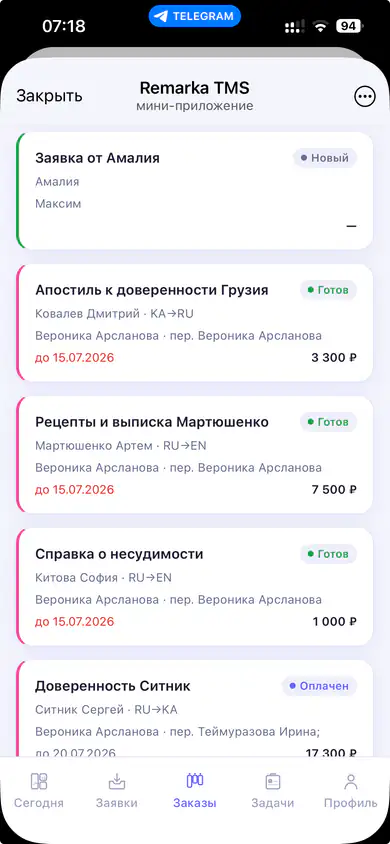
The Telegram Mini App almost nobody in Italy builds yet.
Translators and clients live inside chats, not at desks. Opening a browser dashboard just to check an order is too much. We needed access to the TMS inside Telegram, with nothing to install.
We brought the TMS’s key functions into a Telegram Mini App: orders, statuses and notifications right in the chat, with the same logic as the web dashboard. Telegram Mini Apps are still rare among Italian SMBs — exactly the kind of product we know how to build when the interface has to live where people already are.
Built in 2 weeks, the Mini App now handles over 10 users and orders a day: the back office in your pocket, nothing to install.
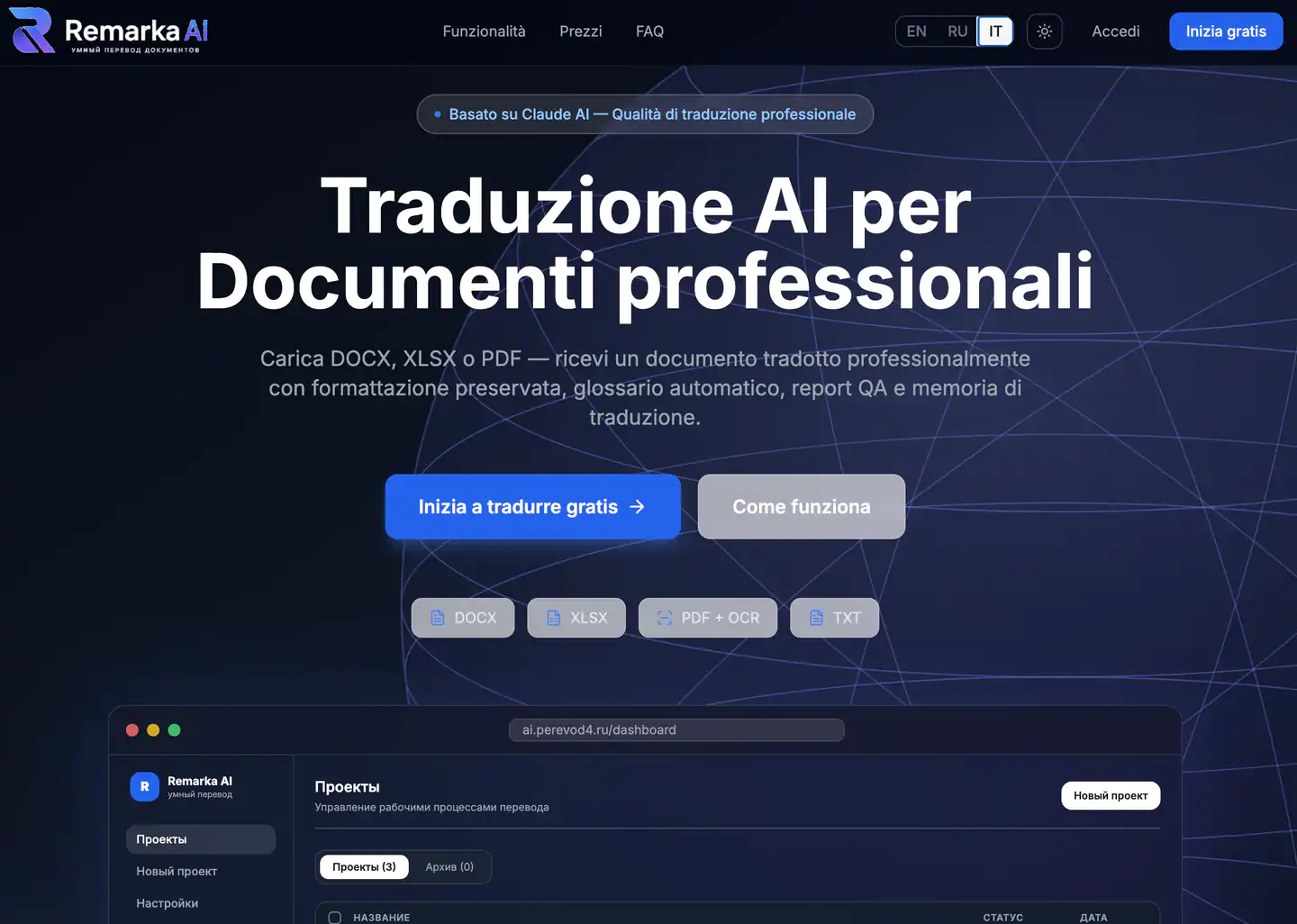
A multilingual AI project, Italian included.
An AI-powered project only matters if the right person finds it, in their own language. Building a multilingual AI site whose technical SEO holds up in every version — Italian included — is engineering, not a translation plugin.
We built ai.perevod4.ru as a multilingual project with a native Italian version: a clean technical structure, structured data, and content written for search in each language rather than machine-translated. The Italian version exists because we can serve the Italian market from the technical base up to the language.
Over 60 working languages and more than 10,000 requests processed a month: an AI project that gets found — and used — across markets.
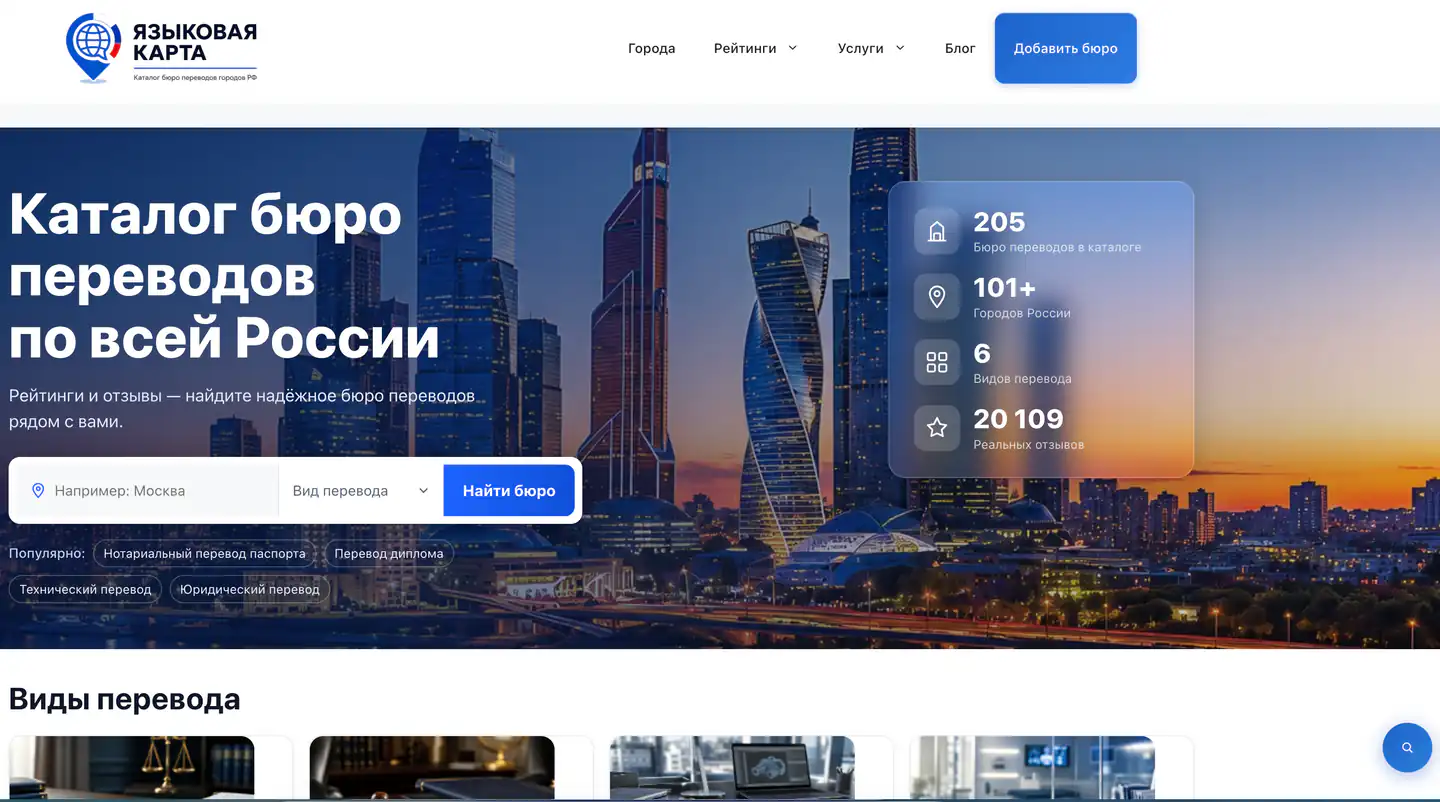
The catalogue that indexes an entire industry.
A catalogue portal covering an entire industry — agencies, cities, specialisms — lives or dies on technical SEO: if the structure doesn’t hold, Google won’t index it and the content doesn’t exist.
We built perevod4.ru as an editorial/SEO catalogue portal: translation agencies listed by city and specialism, with a consistent structure, structured data and speed kept under control across the whole volume. It’s proof we can make technical SEO hold when the pages number in the hundreds, not the dozens.
Over 200 translation agencies listed in the catalogue: an entire industry made navigable and indexable, with technical SEO tested at scale, not on a demo.
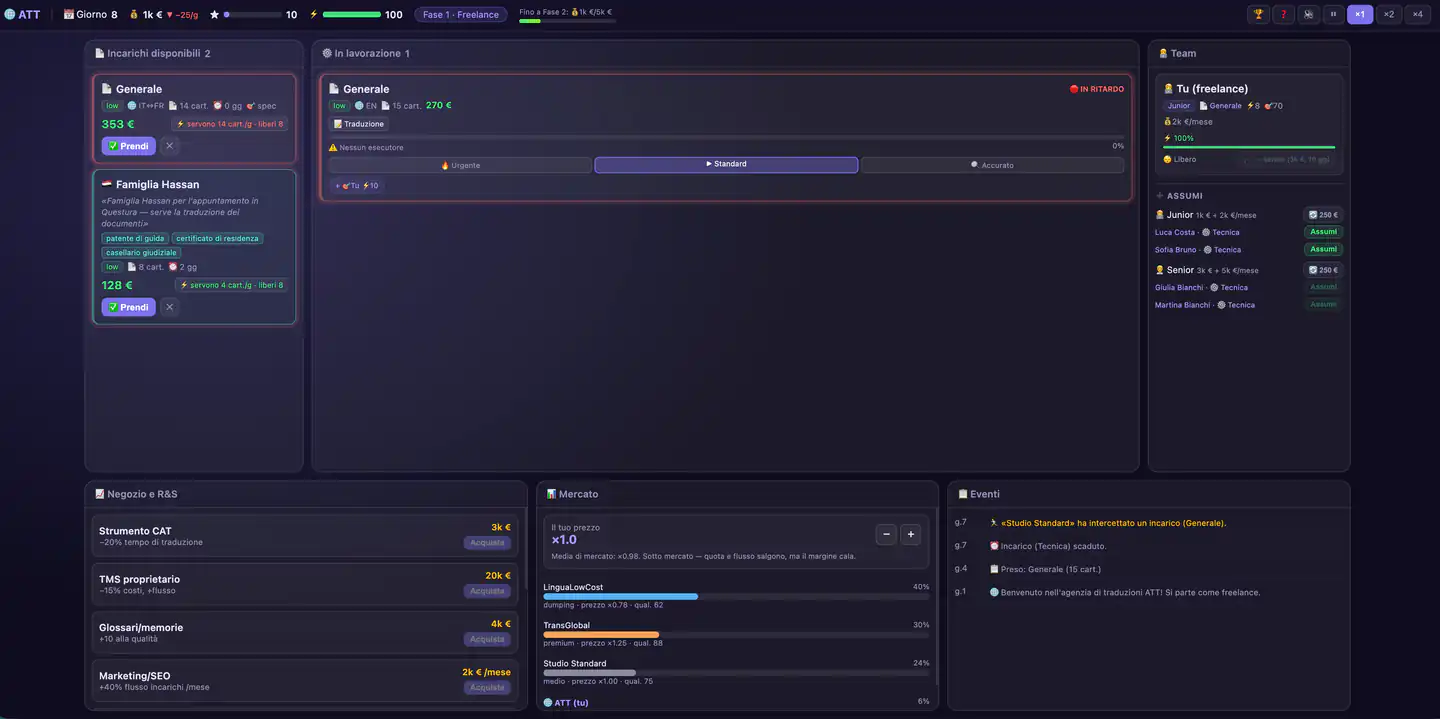
A game to talk about translation (in Italian).
A “serious” B2B service like translation struggles to be memorable. We wanted a way to keep people on the site and tell our story without a boring brochure.
We created “Translation Empire”, a browser game in Italian inside the agency site: gamification in the service of marketing — content that entertains while it explains what we do. It’s the creative side of the same team that handles your redesign: when the job is to keep the user around, we know how to entertain them too.
Content that keeps people on the site and gives the brand something to talk about: gamification used as a marketing tool, not a gadget.
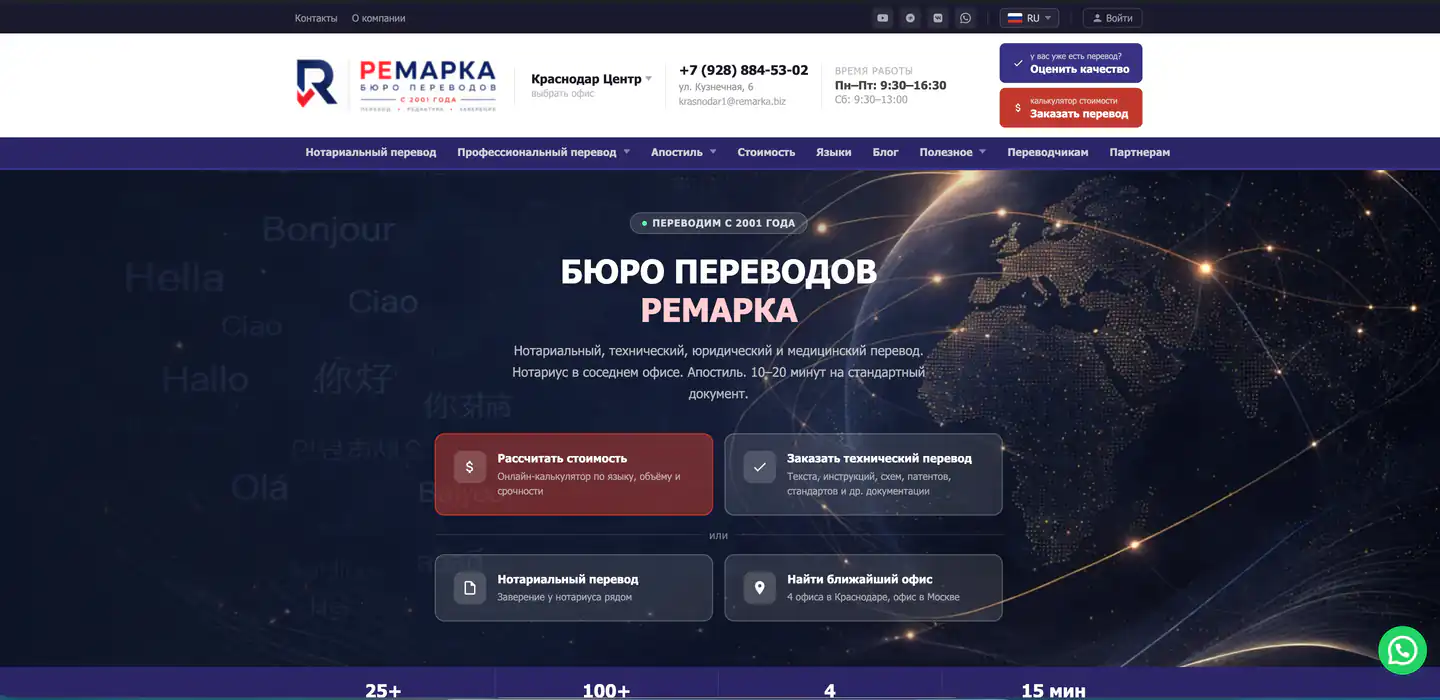
A two-letter domain, a masterclass in technical SEO.
A very short domain on a non-Latin alphabet (IDN/punycode) is an edge case: ranking it well takes flawless technical SEO, because you can’t lean on the name.
We took пере.рф to the top positions with purely technical work: structure, speed, structured data, correct handling of the internationalised domain. It’s one of our strongest SEO cases precisely because the result comes from engineering, not branding.
Position no. 1 on Yandex — Russia’s leading search engine — for the industry queries “notarised translation” and “manual translation”, 9,000–10,000 visitors a month, at the top for over 1,000 days. Top positions won with technique, not with the name.
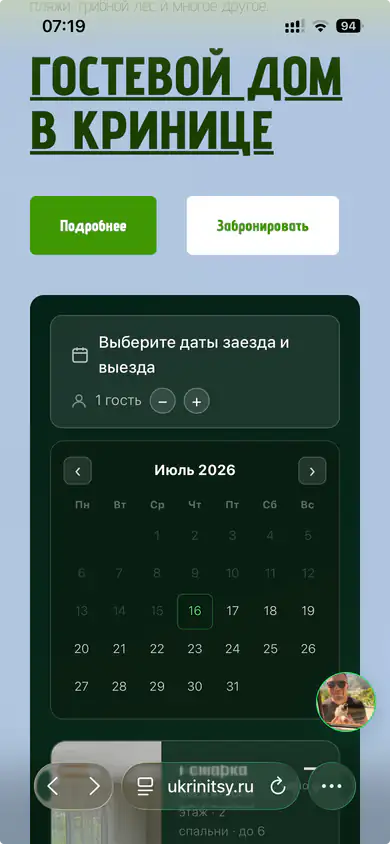
A brochure site for a small hospitality business.
A guest house lives on direct bookings and trust: a small tourism operator needs a simple, fast, credible site — not a back-office system.
We built ukrinitsy.ru as an essential brochure site: photos that sell the place, contact and booking request within reach, fast loading even on mobile. The same “small but done right” approach we bring to restaurants, studios and local businesses.
Bookings grew 450% after launch: 18 bookings in a season straight from the site — for a small guest house, the difference between a full season and empty rooms.
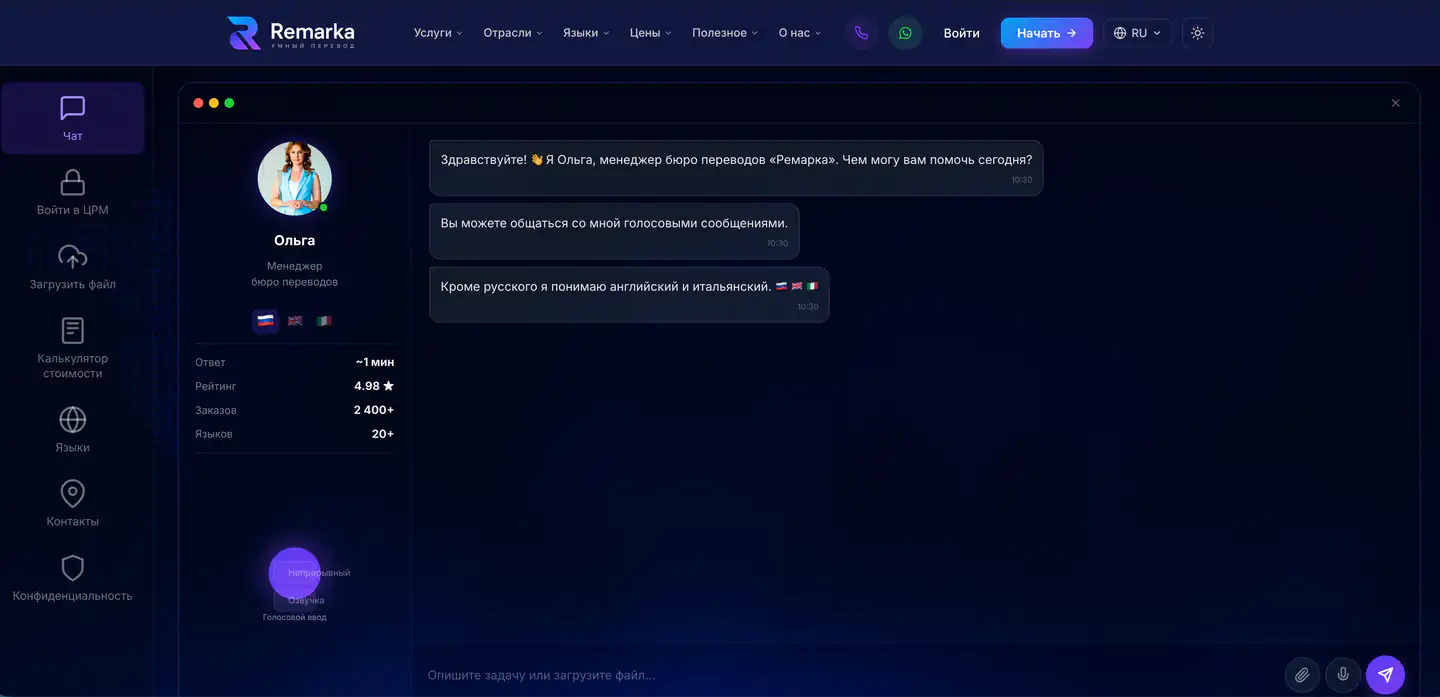
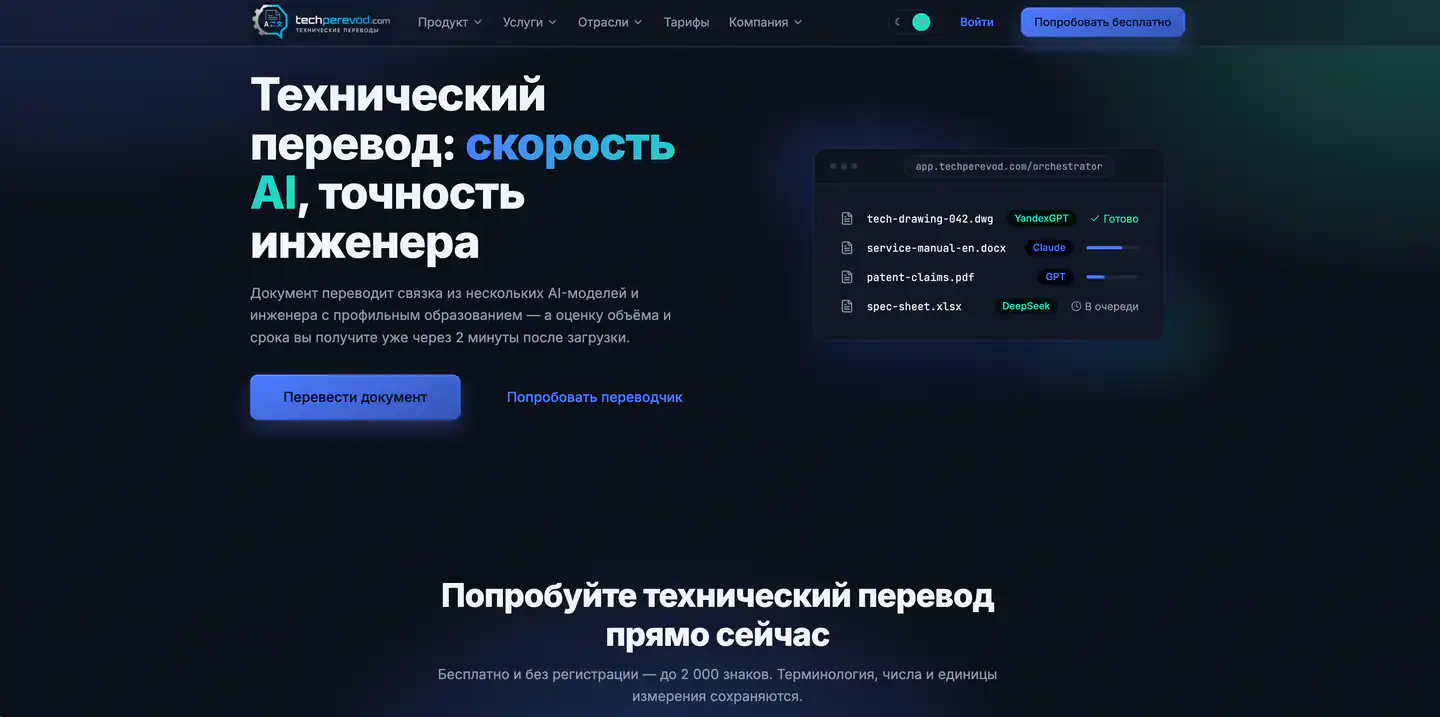
Two “beautiful and fast” agency sites for a demanding market.
moscowtrans.ru · techperevod.com ↗
In the competitive translation-agency market a site has to be both beautiful and very fast: looks build trust, speed keeps it. Pulling that off on two different sites, at the same quality, is a test of method.
We designed moscowtrans.ru and techperevod.com as a pair of agency sites — careful in design, optimised in performance: clear visual hierarchy, light images, a service structure built for conversion. It’s our “design + redesign” side applied to an industry where competitors all look alike.
After the 2026 redesign of both look and functionality, conversions grew by over 300% in recent months: two sites that stand out in a sector where everyone looks alike.
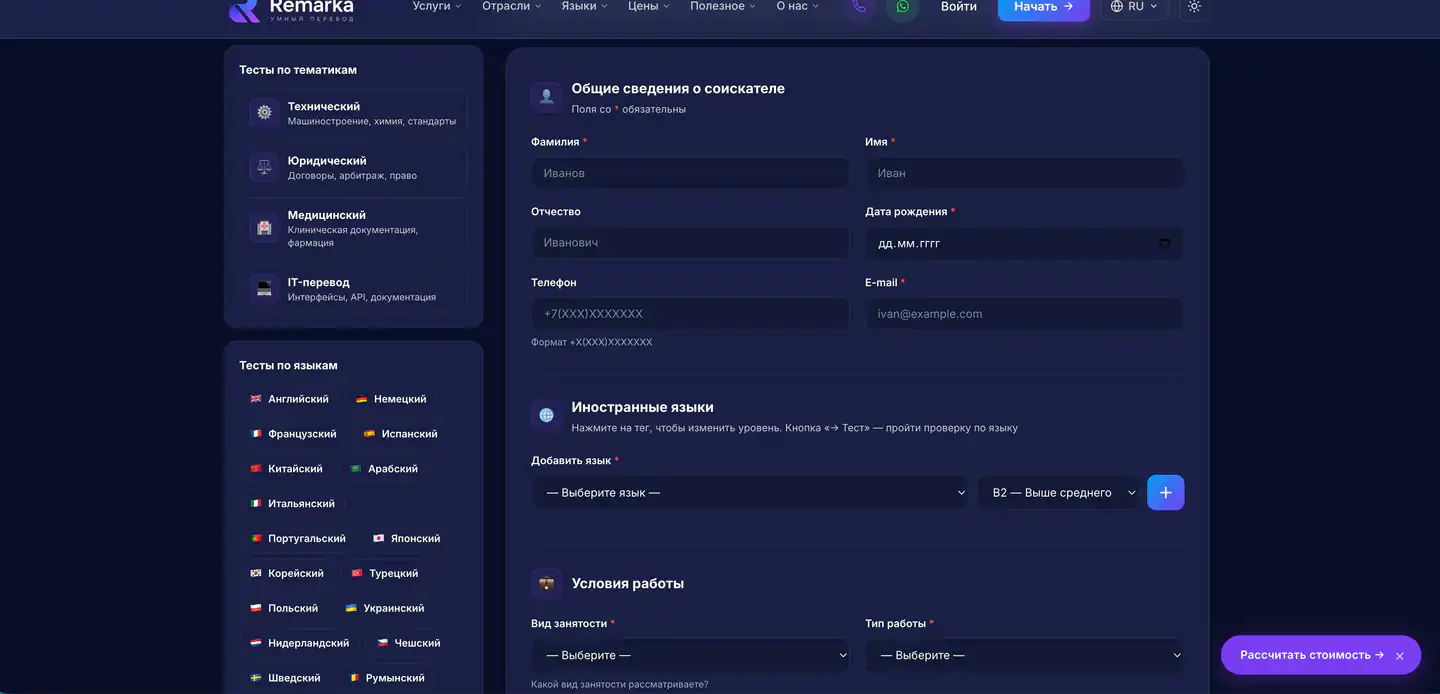
The platform that decides who translates your copy.
moscowtrans.ru/test-perevodchika ↗
The “native editors by specialism” promise you read on our service pages only holds if there’s a serious way to select who translates. Picking translators by gut feeling is not a method.
We built a translator testing and evaluation platform — a progressive selection system used across every project in the group: tests of increasing difficulty, structured scoring, automatic candidate filtering. It’s the internal product that holds our translation quality: this is exactly the system behind the “native editors by profile” guarantee on the multilingual sites we deliver.
Over 400 translators tested — and only 8% pass the selection. Every translator who works on your copy is inside that 8%: quality decided by a system, not a hunch.
An international project, written in English for the world.
A project aimed at a global audience lives or dies on language and search: English copy a native speaker reads as their own, and a technical base Google indexes without friction. Translating isn’t enough — you have to write for that audience.
We built 1russian.com as an international, English-language project: content written for people who search in English, not translated from Russian, with structure and technical SEO handled from the ground up (WordPress with a controlled deploy pipeline). It’s also the proving ground for our in-house SEO audit tooling: we test on our own project first what we then apply to yours.
Over 10,000 visitors a month from 80 countries: a project that speaks English to a genuinely global audience.
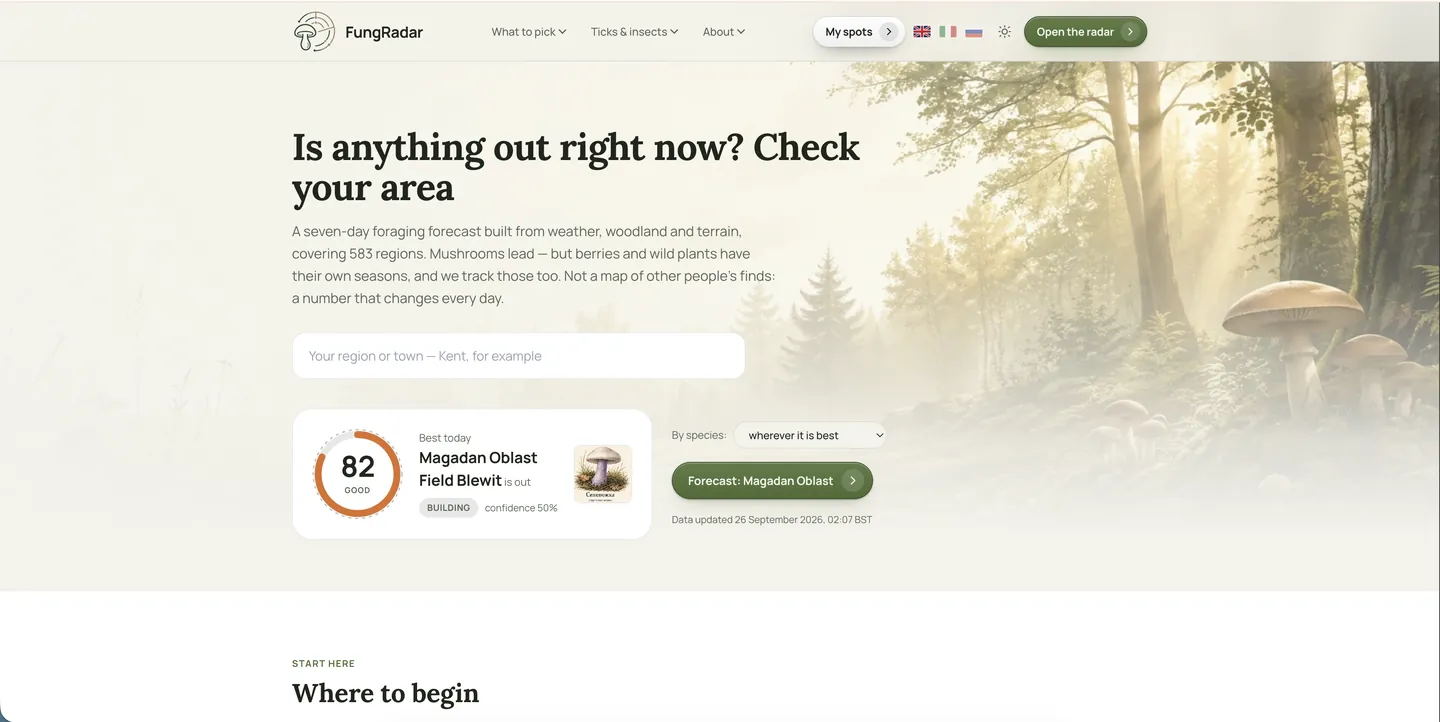
Mushroom forecasts: one engine, three sites, three languages.
Foragers want to know where and when it is worth going out. But in a field where a mistake can be costly, an app that over-promises does more harm than good: the forecast has to be honest and the safety warnings have to be in the right place.
For the client we built FungRadar: forecasts by region and city from weather, soil and forest-cover data. One engine serves three sites — English fungradar.com, Italian it.fungradar.com and the Russian ГрибРадар. English and Italian texts were written from scratch, not translated; a species enters the catalogue only when its name, safety notes and every dangerous look-alike exist in the site’s language.
A public back-test against real finds scores 0.61 for the week, where 0.5 is pure chance — and the site also publishes the 0.75 target it has not reached yet.
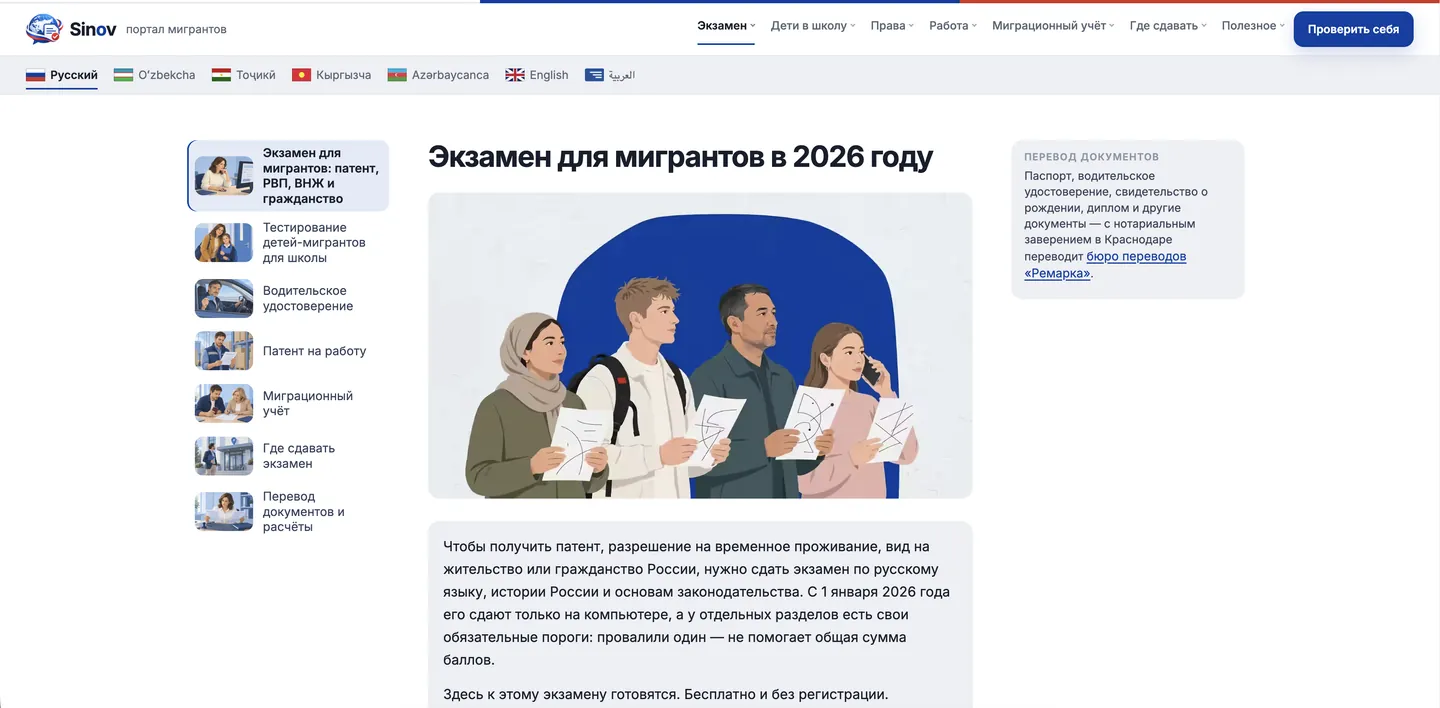
An exam trainer and a practical guide, in 7 languages.
People who move to Russia to work must pass an exam in language, history and law — and meanwhile find their way through permits, registration and paperwork, often on a cheap phone and in a language that is not Russian.
We built sinov.ru: a free exam trainer with a speaking test recognised by a speech model on the project’s own server, plus calculators and a practical guide, in 7 languages including right-to-left Arabic. The trainer works even without JavaScript; every quotation from the law is automatically checked against the official text.
A home page of about 27 KB gzipped, WCAG AA contrast enforced by an automated test, 100 cities and 193 exam centres in the guide.
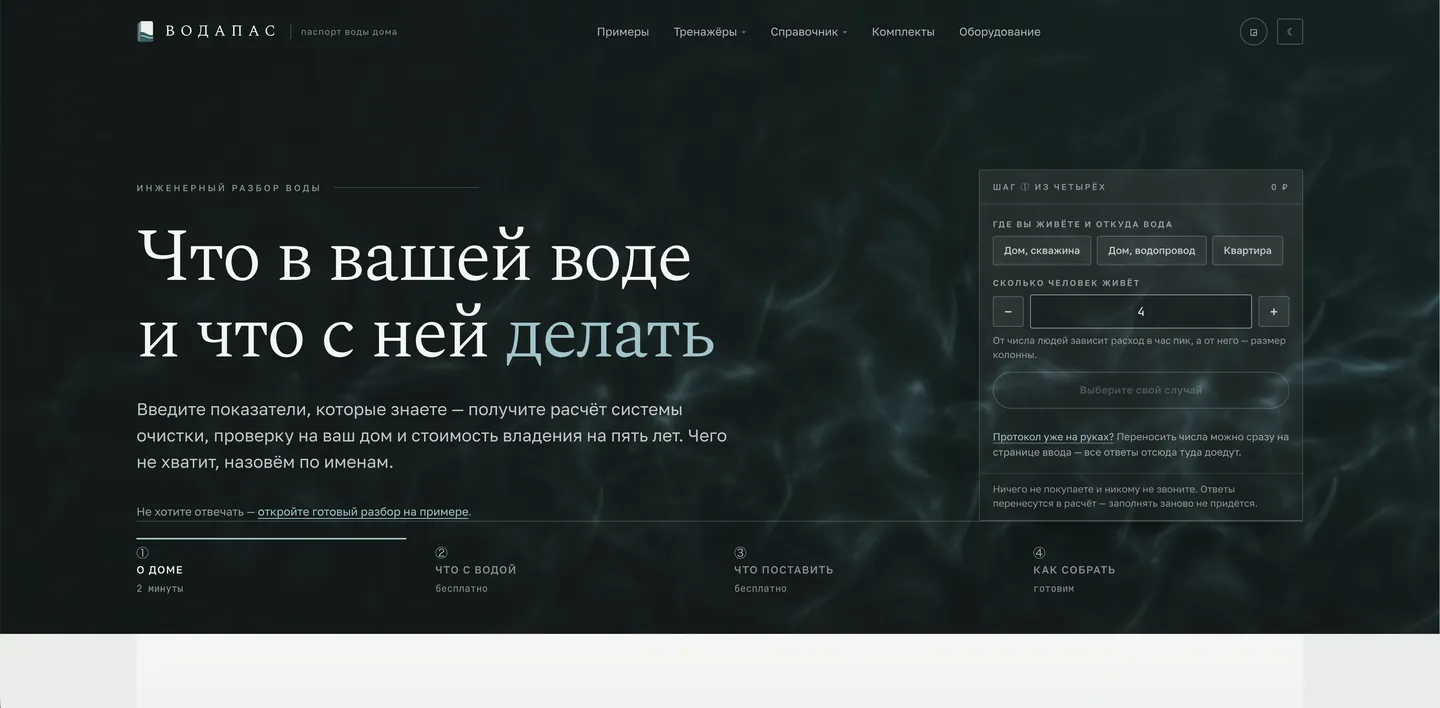
From a lab report to the right treatment system, in one link.
A water analysis is a table of numbers almost nobody can read — and whoever sells filters has every reason to read it their own way.
We built Vodapas: a calculation engine over 28 parameters that normalises the way labs write values, computes scaling and corrosion indices, applies 18 safety rules and sizes the system in three variants, with total cost of ownership up to 10 years. The result is a shareable link that reads even without JavaScript; alongside, 8 control-valve simulators and a 124-item catalogue.
123 automated tests on the engine; in the lab, on slow 4G, the main content appears in 1.0 s instead of 13.5 s.
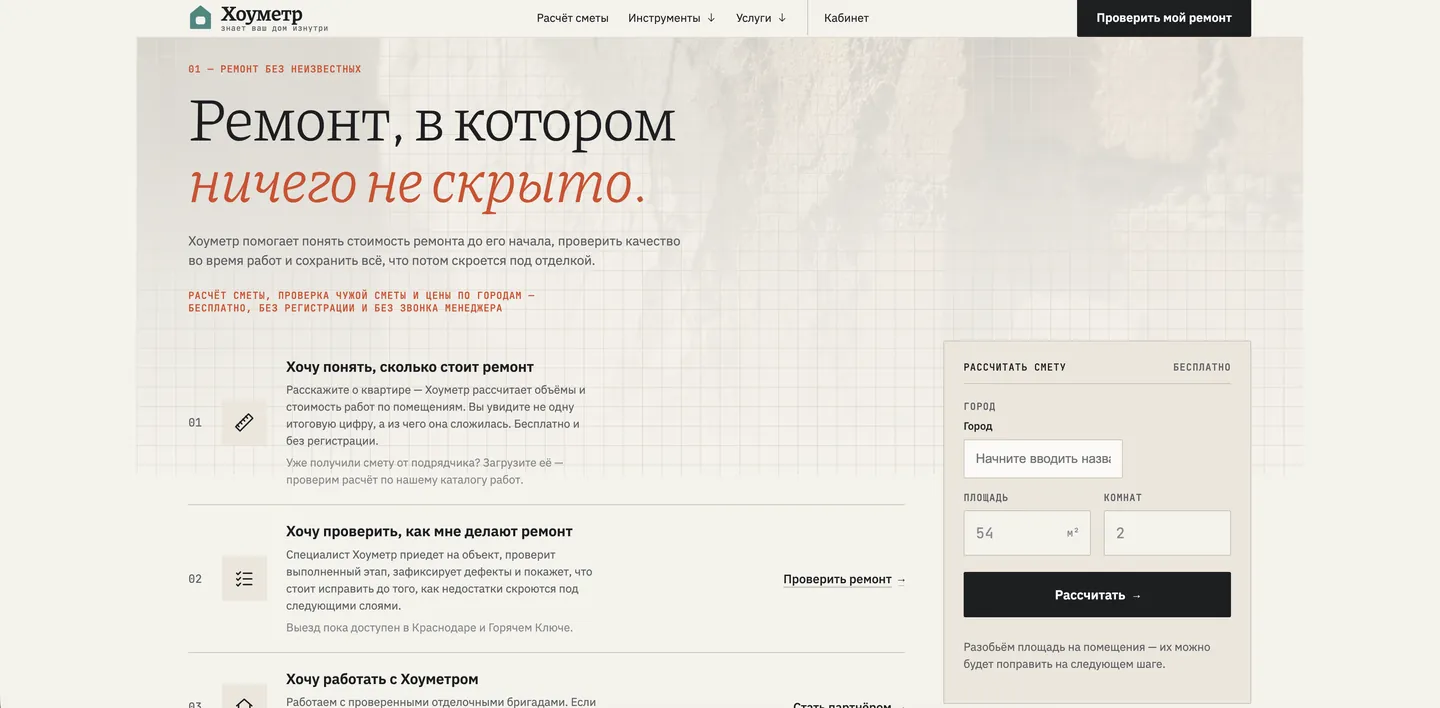
A passport for a home’s hidden works.
Once a renovation is over, nobody remembers where cables and pipes run: they are under the plaster. And without evidence, a hidden defect becomes the owner’s word against the contractor’s.
We built Hometr: hidden works are photographed before they are covered, and the photos become the flat’s digital passport, which stays with the owner. Photos are linked in a hash chain, a stage cannot be closed without a photo of every surface, and from a wall’s 4 corners the system derives positions in millimetres. Website, Telegram Mini App with an offline queue and a free estimate check.
Privacy by design: encrypted address, EXIF metadata stripped on the server, a public link without the address that can be revoked. Live since September 2026.
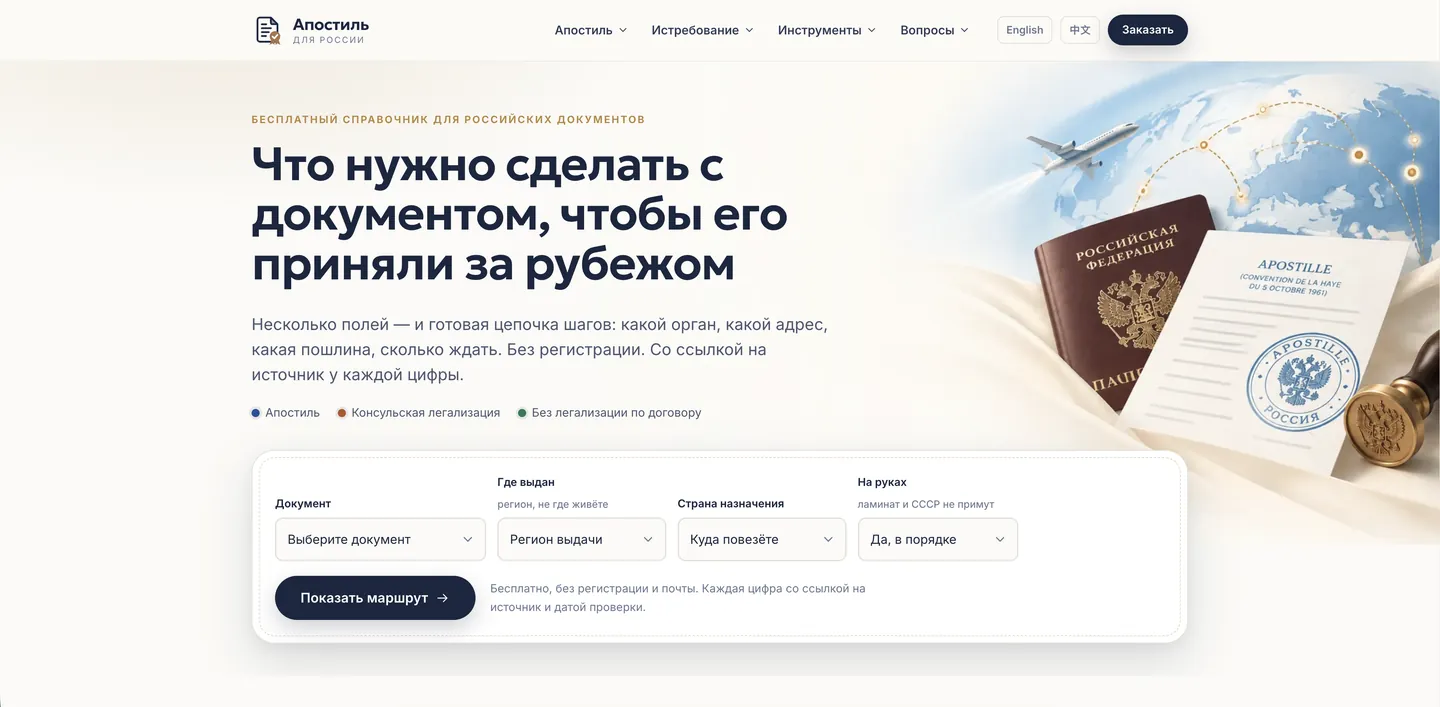
Apostille and legalisation: the exact route, with sources.
Taking a Russian document abroad means working out which office, which fee, how long — and the rules change by document, region and country. Online information is often outdated and unsourced.
We built apostil4.ru: a rules engine that, once you pick document, region and country, builds the chain of steps with office, address, fee, timing and a link to the official source. Every fact carries its source and check date, and countries not yet verified are labelled as such. Requests go straight into the agency’s TMS through its API.
196 countries, 166 offices in 85 regions and 2,476 notaries from the official register; before every release 74 tests and about 1.2 million links checked, zero broken.
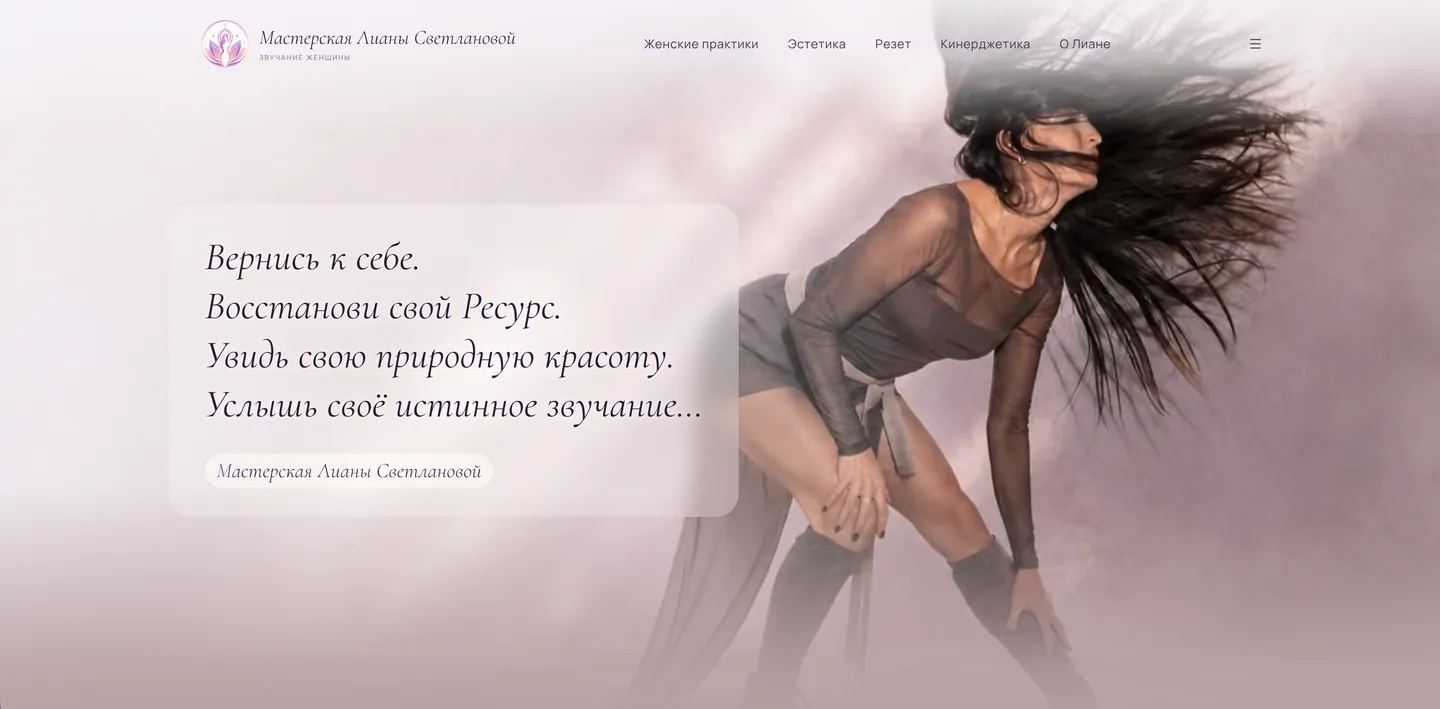
A website that breathes: beauty without the weight.
A wellbeing practitioner sells trust and feeling: the site has to convey calm and care without becoming slow or inaccessible because of its animations.
For Liana Svetlanova we built a site where every movement follows a single 10.9-second breathing cycle, with our own animation layer of about 2 KB. On the body page, a 3D map slimmed from 37.2 to 0.55 MB, with points reachable by keyboard; anyone who prefers less motion can switch it off entirely.
Lab measurement: first screen from 1,081 to 191 KB, main content in 1.5 s instead of 2.9 s.
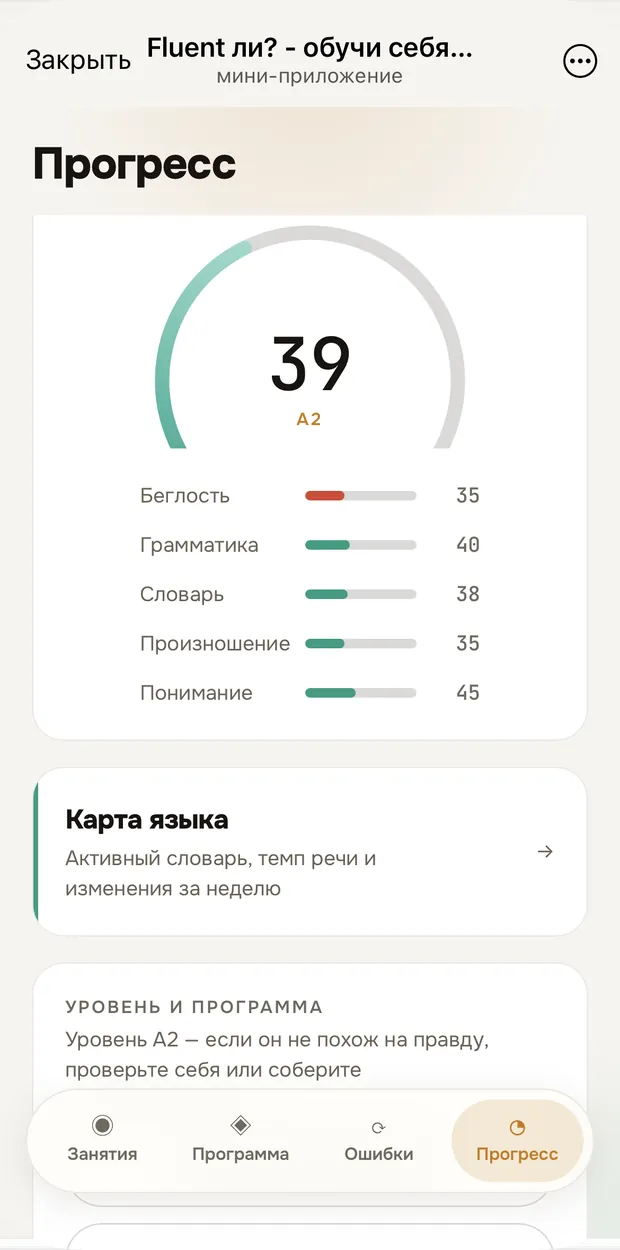
Speaking a language, not just studying it — inside Telegram.
Adults who learn a language can read and understand, but freeze when they have to speak. And the typical mistakes of Russian speakers keep coming back, because nobody explains them in their own language.
We built Fluent ли?, a Telegram Mini App for practising conversation in English and Italian: voice dialogue in scenarios, then a debrief in Russian based on a bank of typical Russian-speaker mistakes. A self-check question comes before the explanation; spaced repetition follows.
Over 1,000 exercises per language, from A1 to C1: 1,056 for English, 1,026 for Italian.
The next system, we can build for you.
First we measure what you have today, then we tell you — with numbers and a date in the contract — what we can do.