
15 JUL 2026
E-E-A-T: how Google judges your credibility
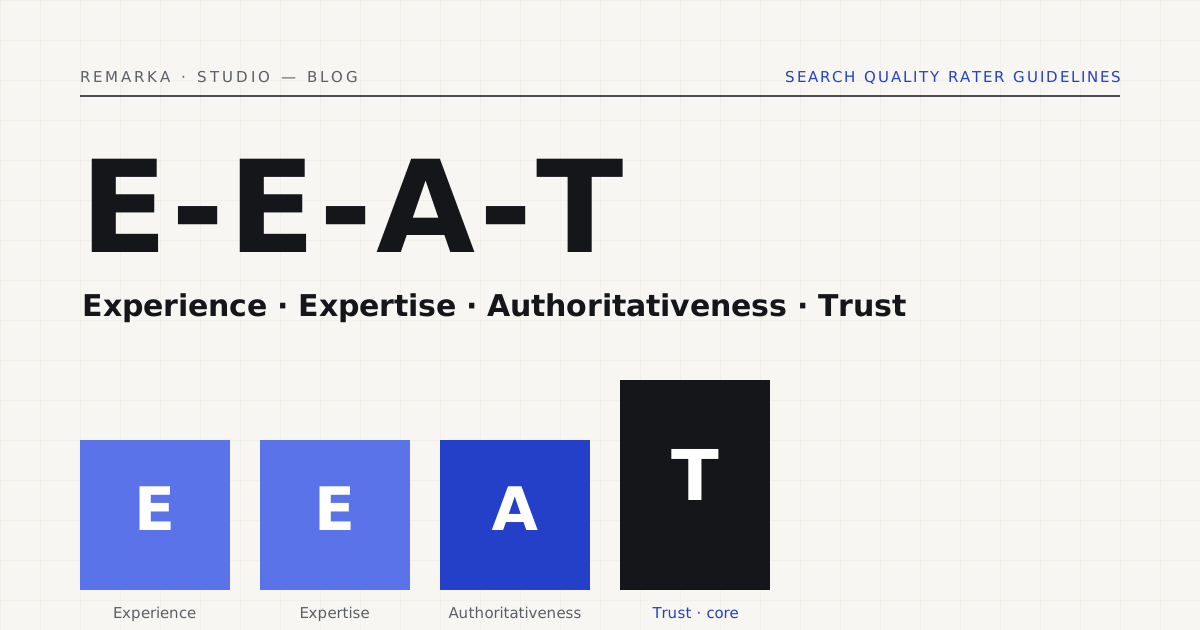
If you’ve read anything about SEO in the past year, a mysterious-looking acronym has probably bounced off you: E-E-A-T. It sounds like a password, and it’s actually the way Google tries to answer a very human question: can this site be trusted? It’s not a secret score and it can’t be bought. It’s a framework made of four words — experience, expertise, authoritativeness, trust — worth understanding, because it directly affects anyone who sells services or advice online. Let’s look at what E-E-A-T is and, above all, what you can do to strengthen it without shortcuts.
E-E-A-T, what it is (and what it isn’t).
E-E-A-T stands for Experience, Expertise, Authoritativeness, Trust. It isn’t an invention of the SEO crowd: it’s written in black and white in the Search Quality Rater Guidelines, the manual Google uses to instruct the flesh-and-blood people who assess the quality of its results. It’s there to estimate how far a page can be trusted, especially on topics that affect health, money and safety.
Beware a widespread misunderstanding: E-E-A-T is not a direct ranking factor, nor a number Google assigns you. It’s a quality framework the human raters use to train the algorithms. Strengthening trust signals helps indirectly; but no tool — not even ours — measures your site’s “real” E-E-A-T. Be wary of anyone who promises it.
E-E-A-T, Google’s official definition →
The four pillars, with Trust at the center.
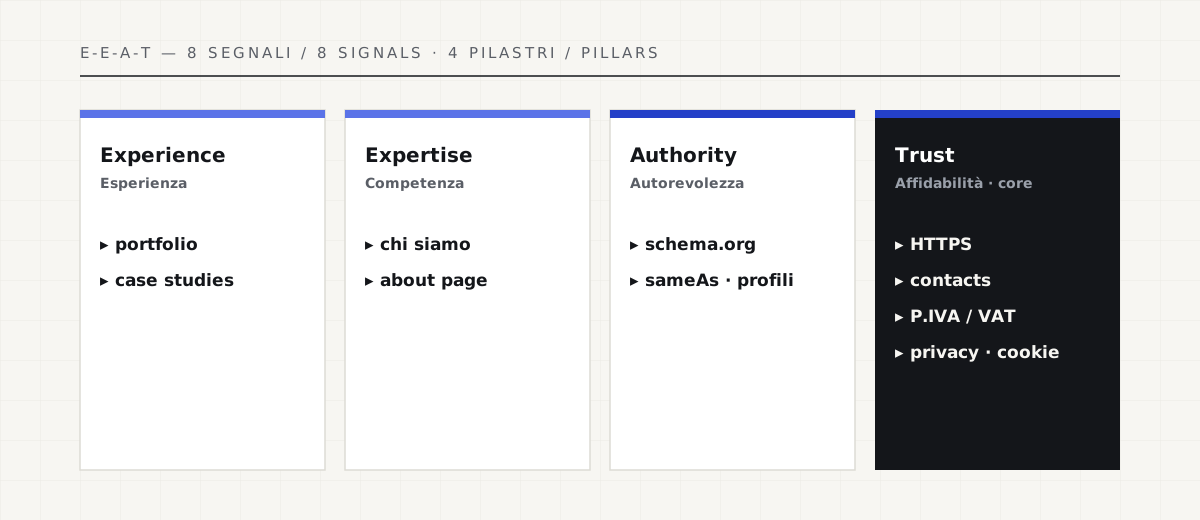
The four words don’t all carry equal weight. In Google’s guidelines the central pillar is Trust: experience, expertise and authoritativeness mostly serve to support it. It makes sense: content can be written by a genuine expert, but if the site isn’t secure or it’s unclear who’s behind it, trust collapses anyway.
The signals you can actually control.
The good part of E-E-A-T is that a slice of it is within your reach right away. Google and readers look, on the page, for readable trust signals: a secure HTTPS connection, verifiable contacts, legal identity (VAT number and registered name), links to privacy and cookie policies, a real “about” page with names and faces, a portfolio or case studies, JSON-LD structured data and external profiles. These are precise technical additions, almost all of them quick and low-cost.
What no shortcut will give you is the other half: reputation, mentions, the real quality of the content, the lived experience of whoever writes it. That’s built over time — and it’s precisely because it can’t be faked that Google gives it so much weight.
Where to start: measure, then fix.
The fastest way to see where you stand isn’t to read more theory, but to look at what your homepage actually exposes. In a minute you can measure the eight trust signals readable in the code and see which of the four pillars is worth tackling first. From there, an afternoon of technical work — a real “about” page, contacts in the footer, a block of structured data — moves the score more than you’d expect.
And remember the rule that holds for all of E-E-A-T: a site can state well who it is, but real trust is built by content, time and people. Tools measure the signals; the credibility, you earn.
Measure your homepage’s eight E-E-A-T signals for free →
An about page, contacts and structured data come standard in technical SEO →
Sources.
The figures and claims in this article come from here. These are primary sources, not summaries: open them and check for yourself.
- Google — creating helpful, reliable contentThe page where Google defines E-E-A-T and explains what it assesses as quality.
- Google — intro to structured dataJSON-LD structured data is one of the easiest identity signals to add.
- Google — AI features and your siteWhy credibility and clarity matter in AI-generated answers too.
Let’s talk about your website.
Free analysis of your current website; a fixed quote within 24 hours of the call.