
17 JUL 2026
Schema.org for SMEs: the structured data Google rewards
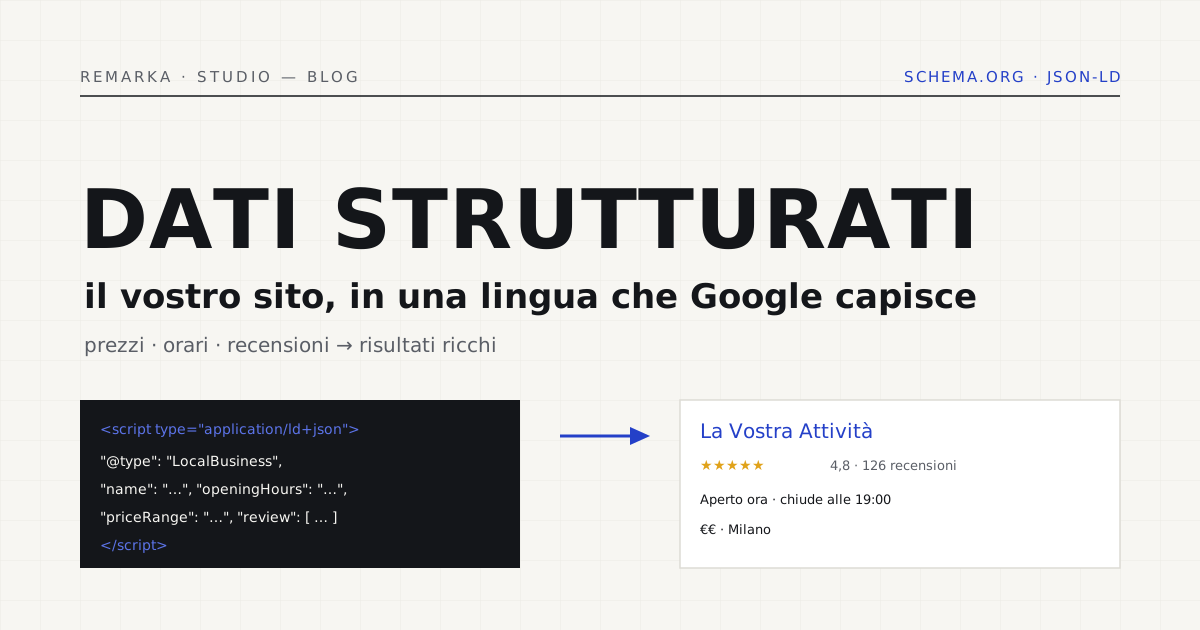
Search Google for a restaurant’s name and, before you even open the site, you already see the review stars, the opening hours, the price range. Search for a recipe and the cooking times and the photo appear. It isn’t magic or luck: those sites told Google, explicitly, what they contain — using schema.org structured data. It’s one of the most underrated tools among Italian SMEs, yet one of the few you can add without rewriting the site and with a visible effect in the results. Let’s see what schema.org structured data is, how it works, and what Google actually does with it.
What structured data is (in your words).
A web page, to a search engine, is a wall of text to interpret. Is “€ 25” a price, a postcode or a size? Does “Closed” refer to a shop, a road or a comment? Humans work it out from context; a machine has to guess. Structured data exists precisely to take the guesswork out: it’s a block of code, invisible to the visitor, that labels the information one item at a time — “this is the business name, this the opening hours, this the price, these the reviews.”
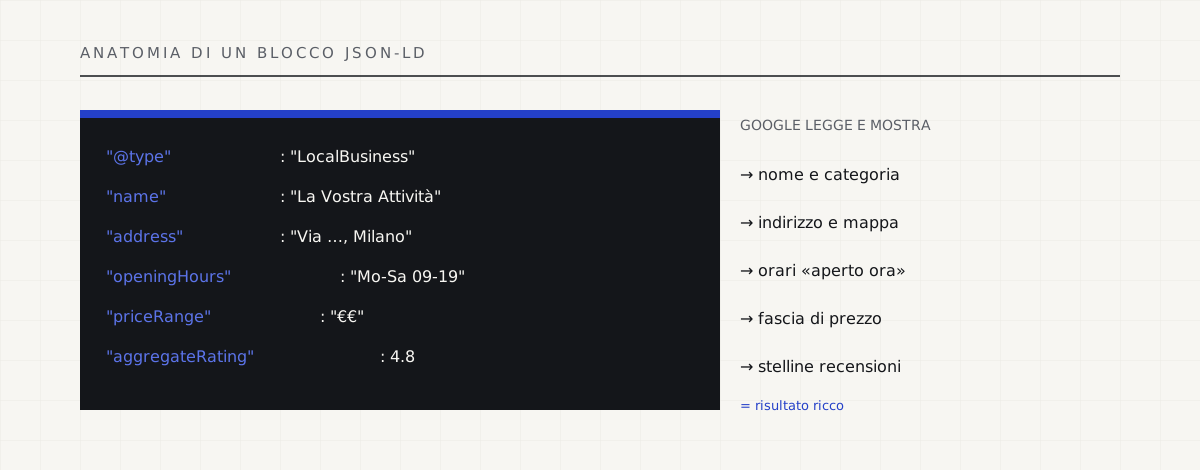
The vocabulary these labels are written in is called schema.org: a shared dictionary, born of an agreement between Google, Microsoft and other engines, that defines how to describe a business, a product, an event, an article. Google recommends writing it in a specific format, JSON-LD: a small block placed in the page’s code without touching its appearance. The visitor doesn’t see it; the engine reads it and understands.
What Google does with it: rich results.
Structured data isn’t a technical affectation: it exists to earn rich results, those larger, fuller listings that go beyond the classic blue link. Google shows them precisely from the information labelled with schema.org — a review’s stars, breadcrumbs, the FAQs that open under the result, a recipe’s photo and times, an event’s date. Google’s official gallery lists dozens of these formats, and it keeps growing.
The advantage is twofold and concrete. First: a rich result takes up more space and attracts more clicks, at the same position. Second, subtler: the same labels Google reads are read by AI assistants too, which draw on structured data to understand who you are and what you offer. Let’s be honest, though: structured data doesn’t lift the site up the rankings by itself — Google says so plainly. It makes the result nicer and more readable, not higher. It’s a click multiplier, not a ranking shortcut.
Which structured data an SME really needs.
You don’t need to label everything: you need the right types for your business. Here are the ones that, for a small or medium Italian business, give the most for the least effort.
Google — the rich results gallery →
How to add them without rebuilding the site.
One golden rule above all, and it’s a Google rule too: structured data must match what the user sees on the page. Labelling reviews that don’t exist, fake prices or wrong hours isn’t cleverness, it’s a guideline violation that can lead to a manual penalty. Structured data rewards honesty, not tricks.
The good news is that structured data is added on top of the site you have, without rebuilding it. It’s a JSON-LD block in the page’s code: on WordPress it’s generated with a well-configured SEO plugin or, better, with bespoke markup that truly reflects your content. Before publishing you test it: Google’s free tool (the Rich Results Test) reads the page and tells you which rich results it can generate and where the errors are. It’s a half-hour check that saves you from finding the problem once it’s already online. Structured data is part of the technical SEO we deliver as standard — not an extra to look at “later.”
They’re part of the technical SEO we deliver →
Google — structured data guidelines →
Structured data, one piece of a bigger picture.
A common mistake is treating structured data as a magic wand. In reality it’s one piece: it tells Google and AI assistants who you are, but it really counts only if the rest holds up — clear content, a fast site, trust signals in order. The same labels that describe your business are, not by chance, one of the E-E-A-T signals engines read to gauge how trustworthy you are.
The right way to start is to measure what’s already there. In a minute you can check whether your homepage exposes structured data — along with the other trust signals — and see what’s missing before adding a single line of code. From there, rich results become a concrete goal, not a hope.
Measure your homepage’s E-E-A-T signals and structured data for free →
It’s part of technical SEO at a fixed price →
Read also: E-E-A-T, how Google judges your credibility →
Sources.
The figures and claims in this article come from here. These are primary sources, not summaries: open them and check for yourself.
- schema.org — the structured data vocabularyThe dictionary shared by Google and Microsoft used to describe businesses, products and events.
- Google — intro to structured dataHow the markup works, why JSON-LD is the recommended format, and what Google does with it.
- Google — rich results galleryThe official list of rich result formats that structured data can unlock.
- Google — general structured data guidelinesThe rules to follow: the data must match the visible content, or the penalty kicks in.
Let’s talk about your website.
Free analysis of your current website; a fixed quote within 24 hours of the call.