
Free tool /06
Is your website ready for AI?.
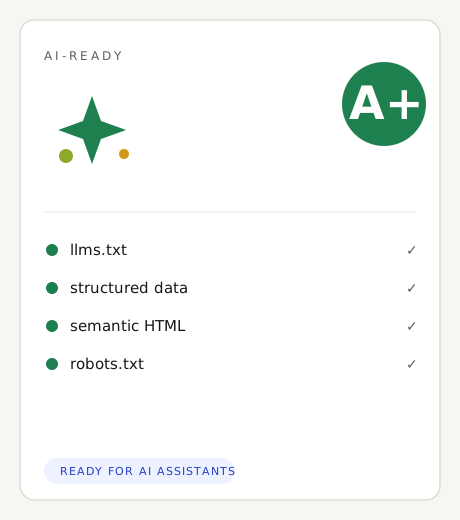
When ChatGPT, Claude or Perplexity read the web, do they find your website? We check four signals: llms.txt, AI crawler access, structured data and sitemap. No sign-up.
How it works
Three steps, no sign-up.
01
Enter the site address
We read a few public files and the homepage HTML from our server.
02
Four checks
We look for the llms.txt file, check whether robots.txt lets AI crawlers through (GPTBot, ClaudeBot, PerplexityBot, Google-Extended), plus JSON-LD structured data and the sitemap.
03
Score N out of 4
A traffic light for each signal and an overall score, with guidance on what to add to get found and cited by AI models.
The method
What this AI-readiness check actually verifies.
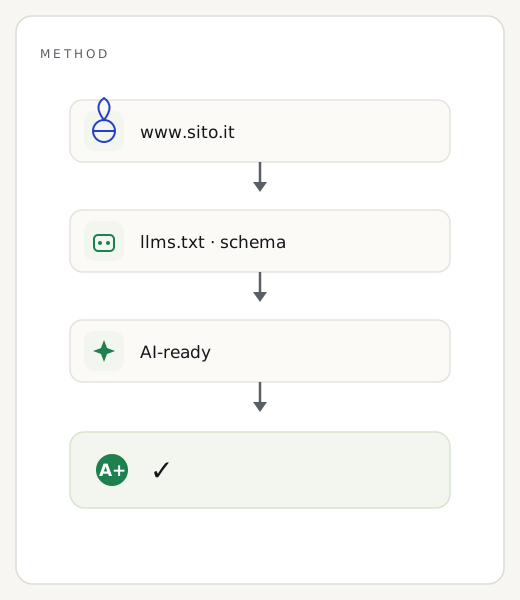
As with the GDPR check, it’s our own server that reads a few public files from your site and the HTML of your home page, without going through Google. We run four checks: we look for the llms.txt file, check whether robots.txt lets the model crawlers through (OpenAI’s GPTBot, ClaudeBot, PerplexityBot, Google-Extended), detect JSON-LD structured data on the page, and check for a sitemap. The result is a readiness score out of four.
It’s worth knowing what this test doesn’t promise. It checks that the technical signals are there, not that ChatGPT or Perplexity will actually cite you: that also depends on the quality and authority of your content, which no tool measures automatically. And since llms.txt is a young standard, its absence isn’t yet a serious mistake: it’s one more opportunity to be read well by machines. Read the score as a list of opportunities, not as a failing grade.
Reading the result
How to read your readiness score out of 4.
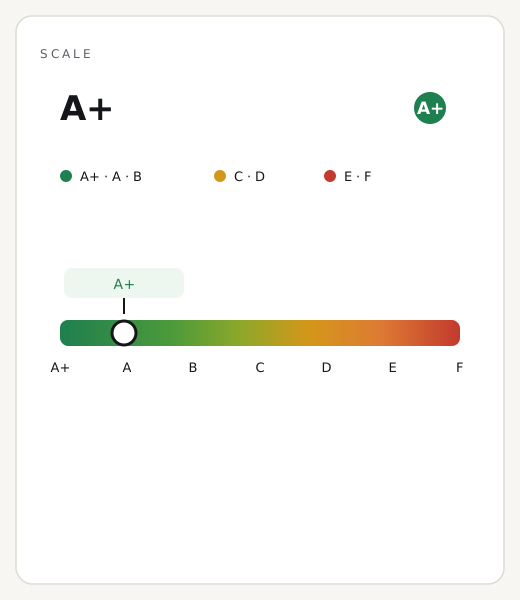
Each signal is worth one point and has its own traffic light. Four out of four means your site gives AI models every handhold they need to understand and cite it. Two or three out of four is the most common situation: llms.txt is almost always the missing piece, sometimes structured data too. Zero or one out of four deserves attention, especially if robots.txt is blocking AI crawlers: in that case you’re left out of generated answers, possibly without having decided to be.
One clarification to avoid needless alarm. Blocking AI crawlers isn’t a flaw in itself: it’s a legitimate choice if you want to protect your content. The test flags it so you know that door is closed, not to tell you you’re wrong. For most businesses, though, being cited by an AI assistant is extra visibility, not a risk: it’s worth weighing with open eyes.
Three common questions
What is the llms.txt file?
A proposed standard: a Markdown text file that tells AI models what the website contains and how to cite it, the way robots.txt does for search engines. It’s young, but increasingly common.
Should you let AI crawlers in?
It depends on your goals: blocking them protects your content, but excludes you from generated answers. For most businesses, being cited by ChatGPT or Perplexity is extra visibility.
Is structured data still worth it?
Yes, more than ever: JSON-LD data (schema.org) helps both Google and AI models understand who you are, what you offer and to whom. It’s the foundation of good indexing.
How to improve
How to get found and cited by AI models.
Getting ready for AI doesn’t take an overhaul: it’s largely the same signals that help you with Google, plus a few new ones.
01
Publish an llms.txt file
A simple Markdown text file at the root of your site that sums up who you are and what you offer: it’s the map that models are happy to read.
02
Open the door to the right crawlers
In robots.txt, allow access to GPTBot, ClaudeBot, PerplexityBot and Google-Extended if you want to appear in generated answers.
03
Add structured data
JSON-LD schema.org markup states your name, location, offer and services explicitly: it’s the foundation both Google and AI models use to understand you.
04
Keep your sitemap up to date
A complete XML sitemap helps crawlers find every page; make sure your content is readable text, not just images.
05
State facts explicitly
State clearly what you do, where, and for whom: models cite what they understand unambiguously, not what they have to guess at.
Want to get the website ready for AI?
Structured data, the right files and a machine-readable structure: it’s part of the technical SEO we deliver.
The other free tools