
17 JUL 2026
Website hosting in Italy or the cloud: what changes for speed and GDPR
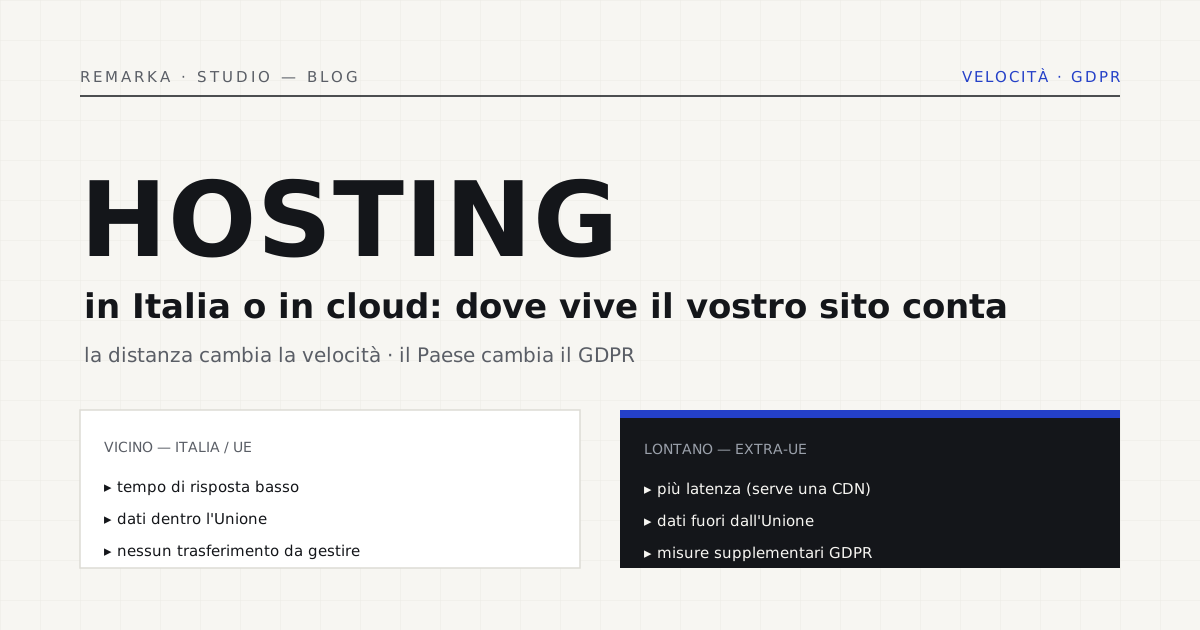
“Hosting is all the same anyway, I’ll take the cheapest.” It’s the idea behind contracts that then cost dearly in two different currencies: seconds of waiting and legal headaches. Where your files physically live — a server in Italy, a European cloud, a data center overseas — changes two things that really weigh: how fast the page opens for an Italian visitor, and how simple it is to stay compliant with the GDPR on your customers’ data. In this article we see what changes for website hosting in Italy versus the cloud, without needless jargon and with the right questions to ask before choosing.
What changes for speed: distance matters.
Every time someone opens your site, their browser has to talk to the server where the files live. The server’s first response has a technical name — Time to First Byte, the time to the first byte — and it’s the base on which all perceived speed is built. Two things weigh on this time: how fast the server responds, and how far it is from whoever queries it. Google’s documentation on this metric is blunt: the choice of hosting is decisive, and shared, overcrowded servers are generally slower.
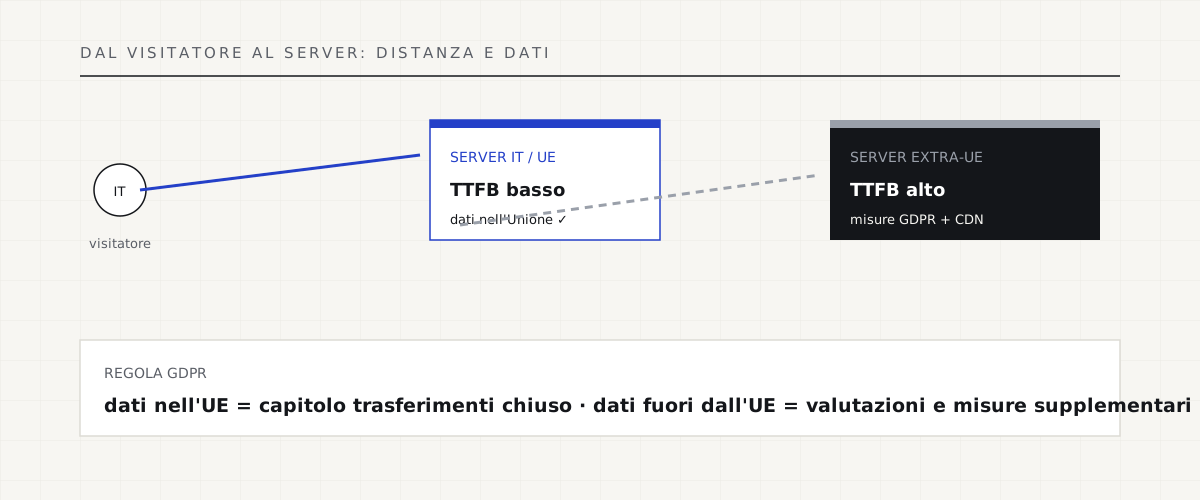
Physical distance isn’t a detail. A server far from your visitors adds latency to every request — milliseconds that, added up, become extra seconds of waiting on a mobile connection. If your audience is Italian, hosting that’s close (in Italy or at least in Europe) starts with an advantage. The solution that gets around the problem is called a CDN, a network of servers that keeps copies of the site near users wherever they are: with a good CDN in front, even a distant origin can serve an Italian visitor quickly.
What changes for the GDPR: where the data ends up.
Here the talk shifts from speed to law, and gets serious. Your site, almost always, collects personal data: a contact form, an e-commerce, even server logs with IP addresses. The GDPR — the European data protection regulation — establishes that this data enjoys a precise protection, and sets strict rules when it leaves the European Union. It isn’t a ban on using non-EU providers, but an obligation to ensure that, wherever it goes, the data keeps the same level of protection.
The practical difference is this. If you host the site in Italy or in a European data center, the data stays in the EU and the chapter on international transfers simply doesn’t open: one complication fewer. If instead you choose a provider that stores or processes data outside the Union — many large clouds have servers all over the world — you have to verify the safeguards required by the GDPR. The European Data Protection Board (EDPB), after the “Schrems II” ruling, clarified that in these cases assessments and, often, supplementary measures are needed. Translated: more bureaucracy and more responsibility on your shoulders.
Italy, Europe or outside the EU: how to choose.
There’s no single answer for everyone, but there are clear criteria. Here’s how to reason, without being guided by the monthly price alone.
How to know where you are today (and whether it’s holding you back).
A detail that counts double: adequate hosting improves speed and sustainability together. An efficient server, close and powered by renewable energy, serves your bytes with less waiting and fewer emissions — the same lever, read from two sides. But before changing hosting, measure what you have.
The server’s response time shows up in any speed test: if the page takes more than a second to give its first sign of life, hosting is almost always among the prime suspects. It’s a number, not a feeling. On the data front, the question to ask the provider is blunt: where is my site’s and my users’ data physically stored? If the answer is vague, that’s already a signal. In the sites we deliver, hosting is chosen so the data stays in the European Union, as part of the project and not a detail to sort out later.
What a business website includes, hosting and GDPR included →
Measure your server’s speed and response time for free →
Read also: how much your site weighs on the environment (and on your wallet) →
Sources.
The figures and claims in this article come from here. These are primary sources, not summaries: open them and check for yourself.
- web.dev — Time to First Byte (TTFB)The server response-time metric: why hosting decides your starting speed.
- web.dev — optimize TTFBHow hosting, proximity and CDN affect response time, with concrete fixes.
- Regulation (EU) 2016/679 — GDPR (EUR-Lex)The GDPR text: the protection of personal data and the rules on transfers outside the EU.
- EDPB — international data transfersThe European Board’s guide: what’s needed when data leaves the European Union (post Schrems II).
A business website with hosting and GDPR included, at a fixed price →
Let’s talk about your website.
Free analysis of your current website; a fixed quote within 24 hours of the call.