
15 JUL 2026
How to get found (and cited) by ChatGPT: a GEO guide
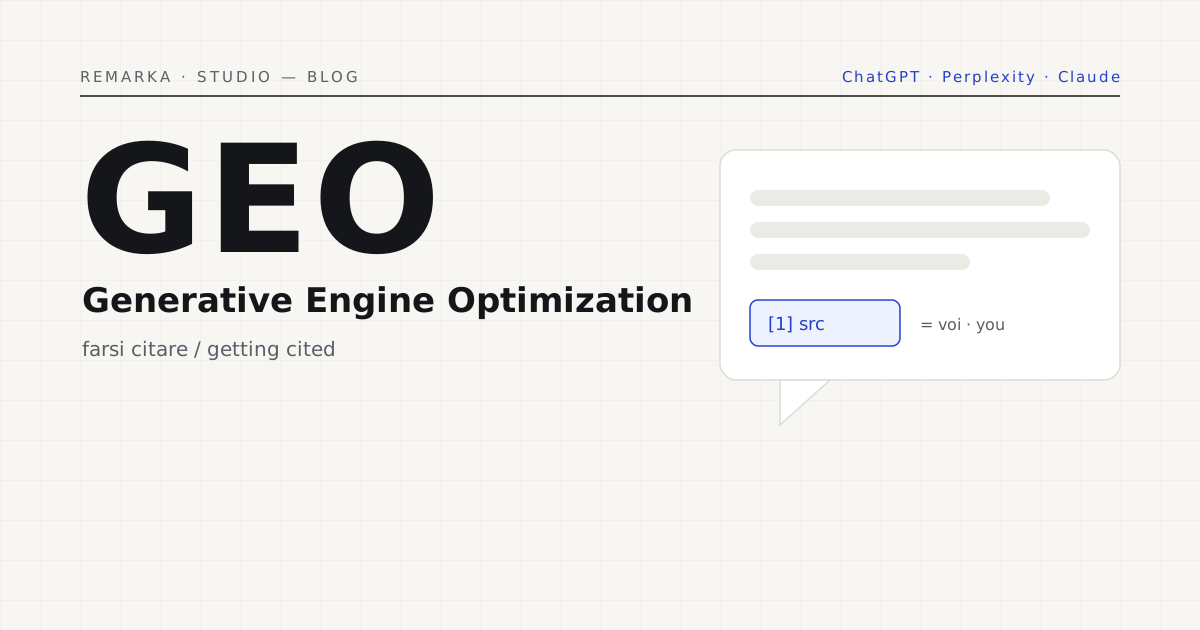
There’s a question that a year ago was for nerds and today even your cousin asks: “did you ask ChatGPT?” More and more people look for an answer by talking to an AI assistant instead of scrolling ten blue links, and that opens a new game: being first on Google is no longer enough — you have to be cited in the generated answers. Getting found on ChatGPT, Perplexity and the like even has a name: GEO, Generative Engine Optimization. Let’s look at what it is, where it resembles SEO and where it parts ways, and above all what you can concretely do.
Why you want a site visible on ChatGPT.
When an AI model answers a question, it often isn’t making things up: it reads the web and synthesizes, and in the best answers it points to sources with clickable references. Being one of those sources means two things. The first, immediate: someone reads you at the exact moment they’re deciding. The second, subtler: appearing in a ChatGPT or Perplexity answer is a signal of authority that carries trust with it, offline too.
The mistake to avoid is thinking it’s a passing fad or something “for big brands.” The mechanism rewards whoever explains themselves clearly, not whoever has the biggest budget — and that’s exactly the ground on which a well-run small business can beat a bigger, lazier competitor.
How Google uses content in AI answers →
How a model ends up citing your page.
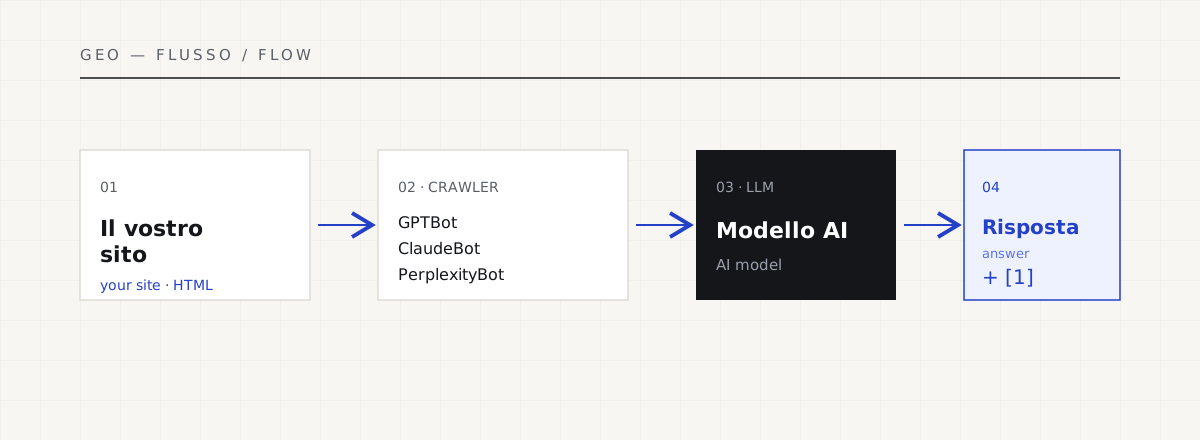
The path is simpler than it looks, and understanding it helps you work on it. Your site is read by specialized crawlers — OpenAI’s GPTBot, ClaudeBot, PerplexityBot; that content feeds the model; and when someone asks a relevant question, the model builds the answer and, if your text is clear and trustworthy, cites you as a source.
GEO and SEO: what changes (and what doesn’t).
Much of the work is the same as always: clear content, a clean technical structure, speed, structured data. Anyone with solid technical SEO already starts half done. But three things become more important than usual.
Where to start, without getting lost.
GEO isn’t a separate service to buy in a hurry: it’s the same good technical SEO as always, aimed at a new kind of reader. The first concrete step is to check whether your site is already machine-readable — whether it exposes structured data, whether it’s blocking the AI crawlers, whether its sitemap is in order. From there you see at once what’s missing.
And if you want to understand the most talked-about piece of this world — the famous llms.txt file — we’ve covered it separately, no smoke: what it is, how to write it, and how much it really matters.
We set it up: it’s part of technical SEO →
See how AI actually reads your site — free →
Read also: llms.txt, what it is and whether your site needs it →
Sources.
The figures and claims in this article come from here. These are primary sources, not summaries: open them and check for yourself.
- Google — AI features and your siteHow Google uses web content in generative answers and what sites can do.
- OpenAI — crawler overviewIf GPTBot can’t read you, ChatGPT can’t cite you: here are the access rules.
- Anthropic — ClaudeBot and how to manage itThe same logic for Claude: crawler access is the prerequisite for being citable.
- Google — intro to structured dataJSON-LD structured data helps machines and models understand who you are and what you offer.
Let’s talk about your website.
Free analysis of your current website; a fixed quote within 24 hours of the call.