
20 JUL 2026
WhatsApp Business for SMEs: when the chat beats the form
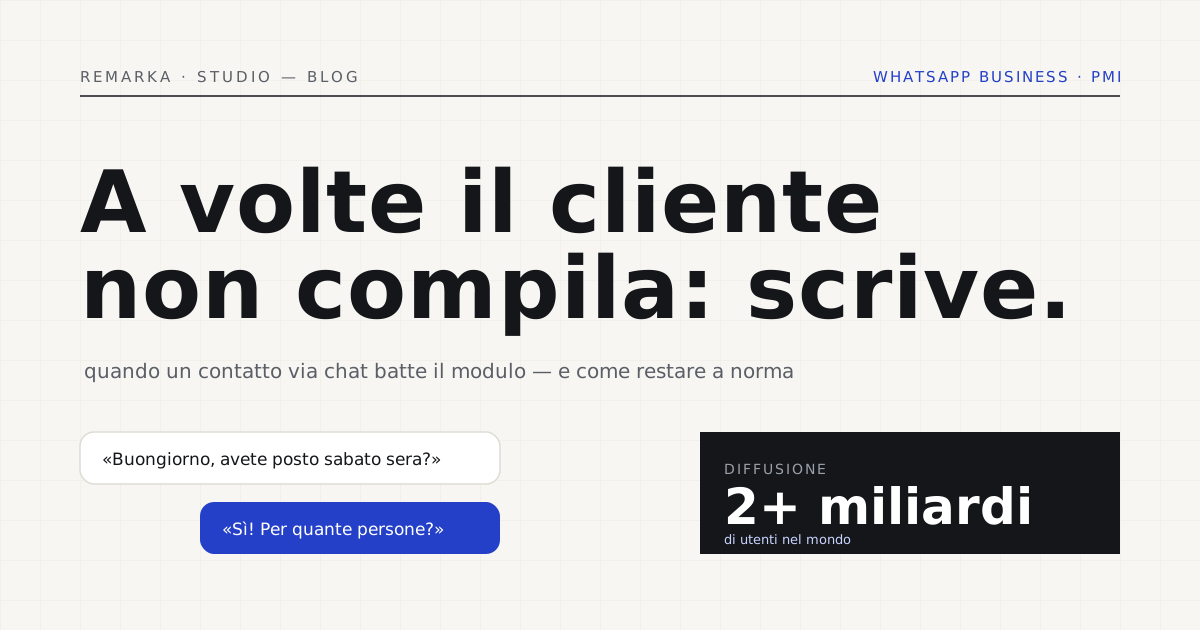
There’s a moment, on your site, when the person is ready to get in touch but the contact form stops them: too many fields, too long a wait for a reply, too formal for a quick question. That same person, though, messages on WhatsApp ten times a day without thinking. For many Italian SMEs a chat contact converts where a form loses — because it meets the customer where they’re already comfortable. Let’s look at what WhatsApp Business is, when it’s really worth it versus a form, and how to use it without privacy problems.
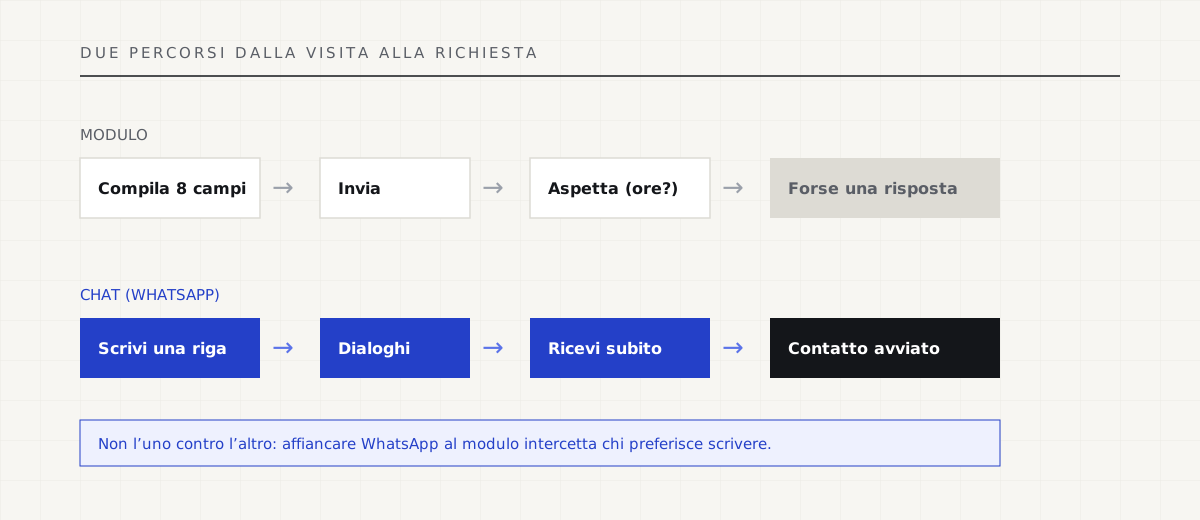
Why chat beats the form (sometimes).
The contact form has a structural flaw: it asks for trust and patience up front. You fill it in, send it, and wait — an hour, a day — with no idea whether anyone will read it. Chat flips all of this: it’s immediate, informal, and above all it’s the channel people already use every day. WhatsApp has over two billion users worldwide, and it’s effectively the default messaging app in Italy. Asking a customer to message on WhatsApp is asking them to do something they can already do with their eyes closed.
It doesn’t mean throwing the form away: it means putting a channel beside it for those who prefer to talk. A quick question before booking, a doubt about a product, a request for a quote on the fly: these are conversations that start better in a chat than in a form. And a conversation started is already half a contact won, because it opens a dialogue instead of firing a message into the void.
What WhatsApp Business is (and what it isn’t).
WhatsApp Business is the free version made for businesses, distinct from regular WhatsApp. It adds tools a company finds useful: a profile with address, hours, website and catalogue; automatic greeting and away messages; preset quick replies; labels to organise conversations. For a tradesperson, a shop or a practice it’s often all that’s needed, and it installs in ten minutes.
Different is the WhatsApp Business Platform (the so-called API): the version for high volumes, with automations, integrations into your management software and several operators on the same account. It’s for those handling hundreds of conversations a day who want to connect them to their systems. This is where custom work comes in: integrating the chat into the company’s workflow, not leaving it an island. The same logic as the web apps we build — putting the tool where the work already flows.
When it’s really worth it (and when it isn’t).
WhatsApp isn’t the answer to everything, and it’s honest to say so. It’s worth it when your business lives on direct contact and quick questions: hospitality, personal services, tradespeople, shops, bookings. In these cases chat cuts the friction and shortens the distance between curiosity and customer. It’s worth less where you need a formal, structured trail — complex procedures, detailed quotes requiring documents — where a form or an email stay tidier.
The practical rule is simple: add WhatsApp if you have someone who really replies, and quickly. A chat button that stays silent for two days is worse than no button: it promises immediacy and betrays the expectation. Chat is a promise of presence; make it only if you can keep it.
GDPR: the chat isn’t a no man’s land.
A convenient channel is still a channel that processes personal data, and in Europe that’s no joke. When a customer messages you on WhatsApp, the number and the content of the conversation are data you’re processing: the GDPR rules apply. In practice that means naming WhatsApp in your privacy notice, not using the numbers gathered in chat to send unsolicited promotions, and knowing that the data passes through a non-EU provider (Meta) — a point to manage, not to ignore.
Nothing prohibitive, but nothing to improvise either: the chat goes into the site with the same care as a form, privacy notice included. If you have doubts about your current site, it’s better to measure them before an inspection does. It’s the same approach we hold on every project: convenience for the customer must never become a risk for you.
Check your site’s GDPR and cookie compliance for free →
What a business website includes, compliant contact channels and all →
Put the contact where the customer already is.
The point of it all is one: meet the customer where they’re already comfortable, instead of forcing them where it suits you. For many SMEs that means putting a well-tended WhatsApp contact beside the form — complete profile, quick replies, someone who genuinely answers — and, when volumes grow, integrating it into your systems with a custom web app. It isn’t chasing a trend: it’s removing friction at the exact point where a visit decides whether to become a customer.
The form and the chat aren’t rivals: they’re two doors for two kinds of people. Those who like a written trail fill in the form; those who want to talk send a message. Opening both, and truly staffing them, is the simplest way not to lose either one on the doorstep.
Read also: why the site doesn’t convert, the 7 silent leaks →
Sources.
The figures and claims in this article come from here. These are primary sources, not summaries: open them and check for yourself.
- WhatsApp Business — official siteWhat the business version offers: profile, catalogues, automatic messages and quick replies.
- WhatsApp — two billion users (official blog)The reach figure: WhatsApp is the messaging app customers already use every day.
- Meta — WhatsApp Business Platform (documentation)The API version for high volumes and integrations: when the chat has to connect to your systems.
- GDPR Regulation 2016/679 — EUR-LexA chat conversation processes personal data too: the privacy notice and legal bases apply just as for a form.
Let’s talk about your website.
Free analysis of your current website; a fixed quote within 24 hours of the call.