
03 FEB 2026
What a business website costs in Italy: the real prices
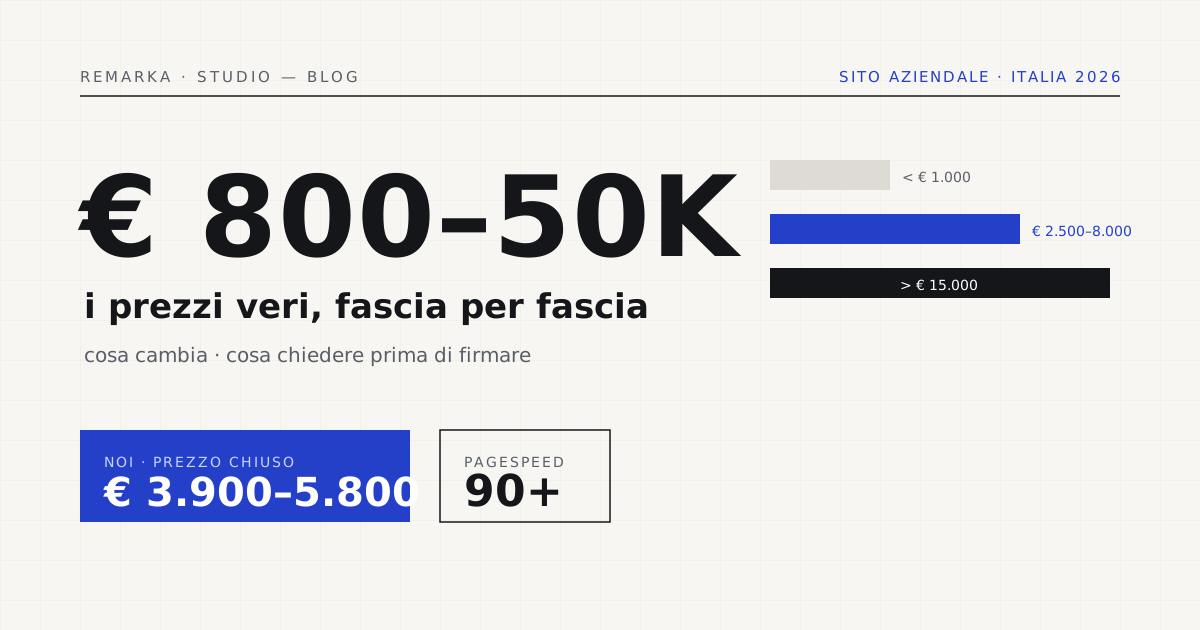
“One quoted me € 900 and another quoted me € 12,000 for the same thing. Who’s pulling my leg?” Neither, almost always: it’s that “a company website” in Italy means ten different products with the same name. The market ranges from the € 800 of DIY builders to the € 50,000 of the big agencies, and no one really explains what changes in between. In this article we put an honest map under every price bracket — including ours — and the questions to ask before signing any quote.
The price brackets, without beating around the bush.
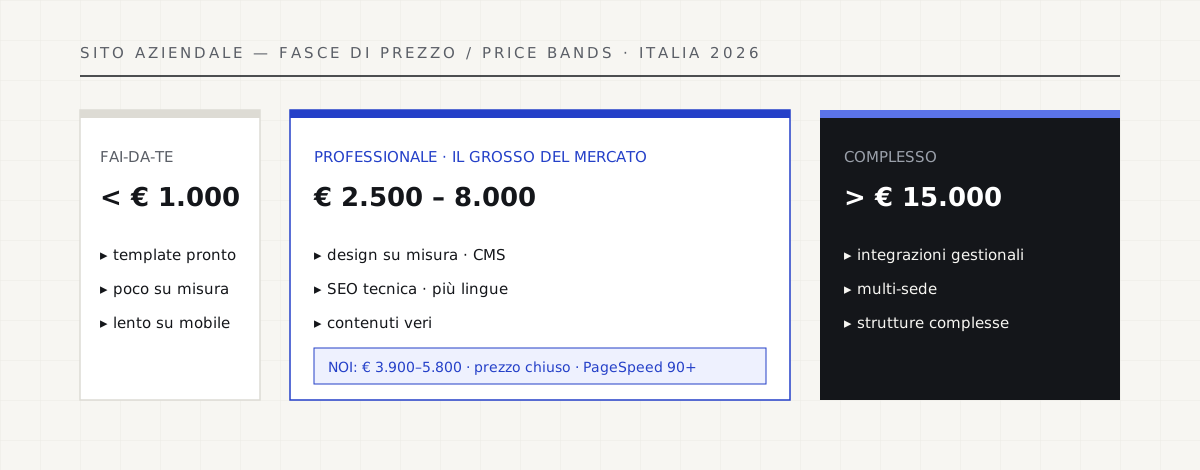
Under € 1,000 you almost always buy hastily assembled templates: a DIY builder or an acquaintance “who knows how to make websites”. They work until you need to modify them, rank them, or make them load fast on mobile. In the € 2,500–8,000 bracket sits the bulk of the Italian professional market: custom design, a CMS to update on your own, technical SEO, multiple languages. Above € 15,000 you move toward complex structures, integrations with management software, and multi-site projects.
Our price list for the company website sits in the central bracket — € 3,900–5,800, a fixed price in the quote — with two items you rarely find in black and white elsewhere: PageSpeed 90+ guaranteed and a delivery date with a 1% penalty for every working day of delay.
What really changes from one bracket to the next.
The price isn’t set by the number of pages: three things set it. The first is design — a bought theme filled in costs a tenth of an interface designed around your content, and it shows. The second is the technical foundation: a site that loads in one second on mobile takes work a template doesn’t do on its own. The third is real content — written copy, photos taken, native-speaker translations — which is often the part missing from quotes that are too low, and that you then end up paying for separately.
A concrete example of what hides inside the word “pages”. Two quotes both say “a 15-page site”: one means 15 pages with copy already ready to lay out, the other 15 pages to design, write, and photograph. The second costs twice as much and is worth three times as much, but on paper they look identical. This is where half of the “they quoted me double for the same thing” comes from.
The questions to ask before signing.
An honest quote answers these questions without hesitation. If the person in front of you gets flustered, you already have some information.
A new requirement no one puts in the quote.
Since 28 June 2025, accessibility for sites that sell to consumers is a European legal obligation, not a decoration. A quote that doesn’t mention it is either outdated or leaving you the bill for later. In our case the WCAG 2.1 AA standard is part of the work, not a surprise extra: we prefer to say it up front, in figures, than to discover it together in the face of a complaint.
The difference between brackets, in the end, is all here: what is guaranteed in writing and what is left to good will. An € 800 template doesn’t promise you a speed, a date, a legal obligation met; a serious project does. You’re not buying pages, you’re buying promises that can be kept: and it’s against those that the price should be read.
Compare prices and timelines, side by side with the market →
What a company website really includes →
Sources.
The figures and claims in this article come from here. These are primary sources, not summaries: open them and check for yourself.
- HTTP Archive — Web Almanac 2024Real data on how the web is built today: useful for understanding what you’re really paying for.
- Eurostat — digital economy statisticsThe European context in which a company website has to perform.
- web.dev — Web VitalsThe mobile speed we guarantee by contract: the difference between the price brackets.
- AccessibleEU — European CommissionSince 2025 accessibility is a requirement, not an extra: it has to be factored into the budget.
Let’s talk about your website.
Free analysis of your current website; a fixed quote within 24 hours of the call.