
17 JUL 2026
Gamification in B2B: when a game sells serious services
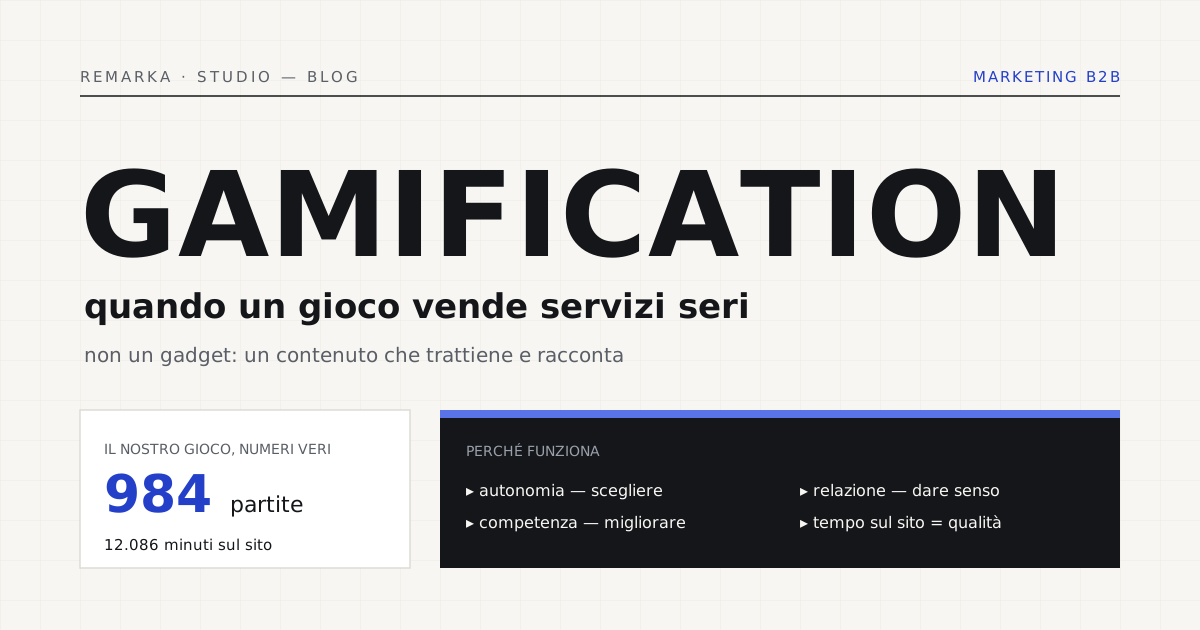
A serious B2B service — a consultancy, a technical translation, a management software — has a problem nobody likes to admit: it’s boring to tell. The brochure is read by those who already know you; the site is opened, scrolled and closed in thirty seconds. Gamification, that is using game mechanics outside a game, promises to break this boredom: keep people on the page, get them interacting, leave a memory. But does it really work in B2B marketing, or is it an expensive gadget? In this article we see when a game sells serious services, with a real case from the Remarka group and its numbers.
What gamification is (and what it isn’t).
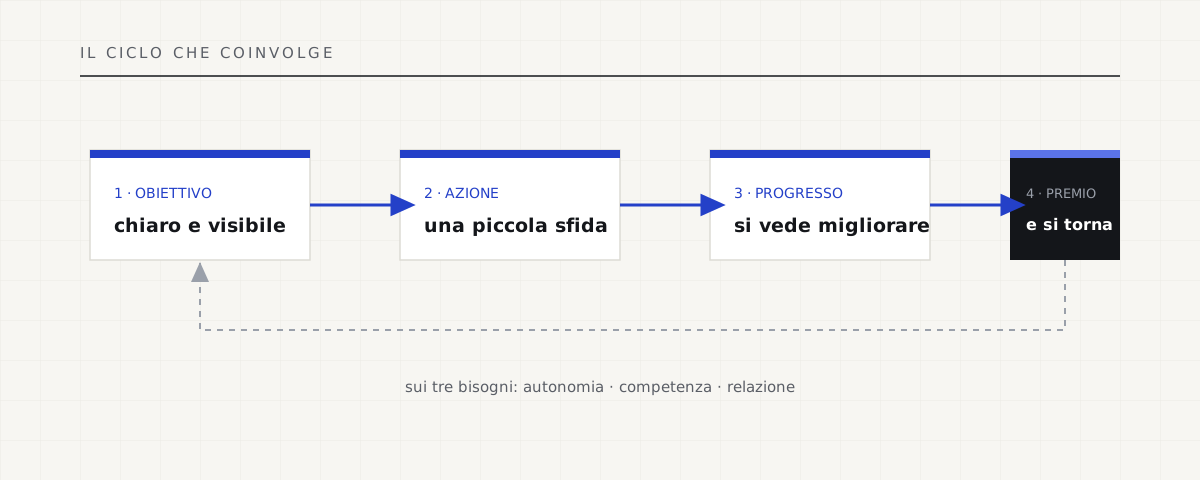
Gamification doesn’t mean “turning the company into a video game.” It means taking some of the mechanics that make games engaging — a clear goal, visible progress, a small challenge, a reward — and using them in a context that isn’t a game: a site, a trial journey, a form. The Nielsen Norman Group, an authority in user experience, defines it exactly that way: the use of game mechanics in non-game contexts.
And let’s be clear at once about what it isn’t, because this is where people go wrong. It isn’t slapping on a random score or a fake progress bar: that’s decoration, and it shows. Gamification works when it touches real psychological levers. Again the Nielsen Norman Group traces them to three fundamental needs — autonomy, competence, a sense of relatedness: people engage when they can choose, when they feel they’re improving, when what they do has meaning. A game that ignores these needs is just one more annoyance.
Why in B2B it’s harder (and more valuable).
In B2C, gamification is everywhere: points schemes, badges, leaderboards. In B2B the instinct is the opposite — “we’re a serious company, not a funfair” — and precisely for that the opportunity is bigger. In a sector where all the sites look alike, with the same claims and the same stock photos, content that genuinely engages is a rarity that gets noticed and remembered. The point isn’t to entertain for entertainment’s sake: it’s to give the visitor a reason to stay, and the brand something to talk about.
There’s also a technical return that’s often ignored. The time people spend on the site and the way they interact are signals of content quality — Google rewards pages that genuinely answer and hold attention, not those abandoned in two seconds. Content that entertains while it explains who you are therefore works on two fronts at once: the memory of those who experience it and the site’s health in the eyes of the engines.
A real case: a game to tell the story of translation.
Here too, before selling it to you we did it for ourselves. A “serious” B2B service like translation struggles to be remembered: we wanted a way to keep people on the agency’s site and tell our world without a boring brochure. So we created “Translation Empire,” a browser game in Italian inside the site: gamification in the service of marketing, content that entertains while it tells what we do.
The numbers, as they are: 984 games played and over 200 hours in total spent on the agency’s site — 12,086 minutes — thanks to the game. For a service that “can’t be told,” that’s real attention time, not an inflated figure. It’s the creative side of the same team that handles your redesign: when the job is to keep the user around, we know how to entertain them too.
The full case, with a link to the live project →
Redesign and marketing ideas for your site →
When a game sells (and when it’s just a cost).
Gamification isn’t the answer to every marketing problem. It pays off when the right conditions are there, and it’s a waste when you force them.
Where to start, without wasting budget.
And when is it just a cost? When the game has nothing to do with what you sell, when it’s there for fashion and solves no real problem for the visitor, when it complicates the journey instead of enriching it. A game that pulls the person away from the action that matters — asking for a quote, understanding a service — is a gadget you paid to slow yourself down. The right question, always, is: does this game make people stay and understand, or just put on a show?
You don’t start from the game, you start from the message. What do you want a person to remember after passing through your site? If that thing is explained better by doing it than by reading it, then gamification makes sense — and it should be designed around that message, not around fun for its own sake. It’s the kind of idea that comes up when redesign and marketing work together: if you’re rethinking the site and looking for a way to make it memorable, this is the right time to weigh it up, feet on the ground and an eye on the numbers.
Redesign and marketing for a site that gets remembered →
Measure the health of your current site, free →
Read also: website check-up, the 7 metrics that matter →
Sources.
The figures and claims in this article come from here. These are primary sources, not summaries: open them and check for yourself.
- Nielsen Norman Group — gamification in the user experienceThe world authority on UX defines what gamification is and when it really works.
- Nielsen Norman Group — autonomy, competence and relatednessThe three psychological needs that make an experience engaging, the basis of any good gamification.
- Google — creating helpful, reliable contentWhy content that engages and holds attention is also a quality signal for search.
Let’s talk about your website.
Free analysis of your current website; a fixed quote within 24 hours of the call.