
18 JUL 2026
Local SEO in Milan: how to stand out in Italy’s most competitive city
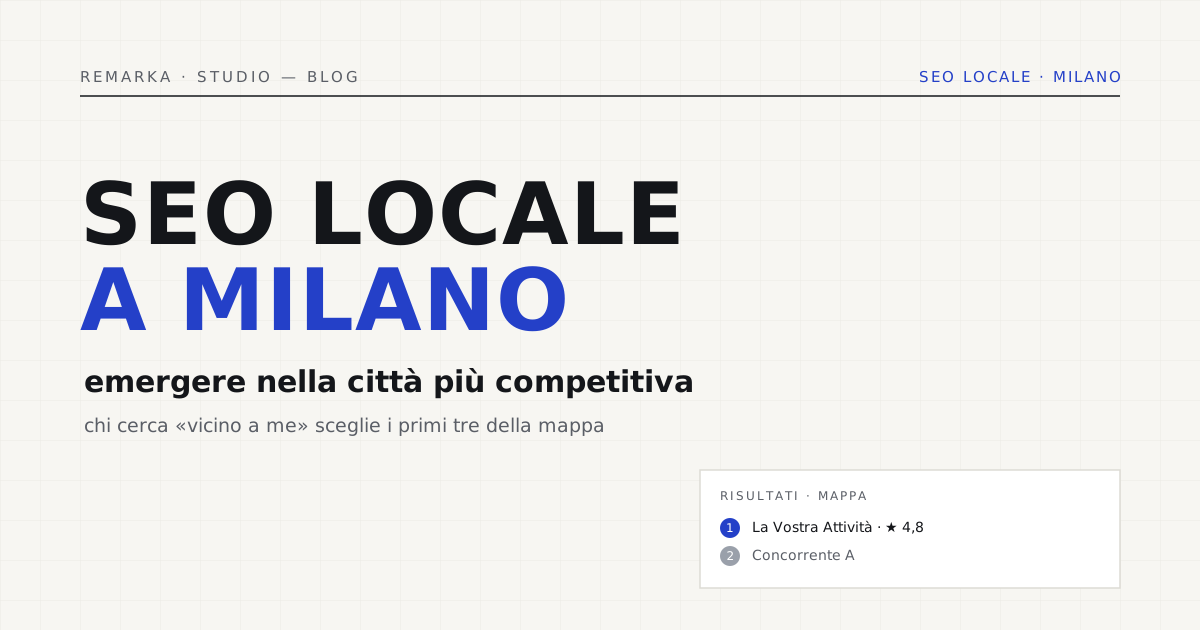
A tradesperson on the Navigli, a physiotherapist in Città Studi, a restaurant in Porta Romana: in Milan each of them competes with twenty others within a kilometre. And when a customer searches “physiotherapist near me” on their phone, they don’t scroll through ten pages of results — they look at the top three on the map and choose there. Local SEO in Milan is the discipline that decides who lands in those three spots. It’s not a matter of magic or budget: it’s work made of precise signals that almost nobody sees all the way through. Let’s look at how it really works, what weighs in the ranking, and where to start — with our own office in the city as a concrete example.
Why local SEO in Milan is a different race.
Milan is Italy’s most crowded market for almost every service: hundreds of businesses in the same trade coexist in the city, and the competition isn’t national, it’s a few blocks away. That changes the rules. Getting found for “accountant Milan” is useless if you don’t show up when someone two metro stops away is searching right at that moment. Local SEO doesn’t aim for the top national spot: it aims to be the most relevant to whoever is nearby, now.
The battlefield has a precise name: the “local pack,” that block with the map and three businesses Google shows at the top of local-intent search results. The classic links sit below it, but the eye — especially on mobile — lands there. Making it into those three boxes is worth more than ten organic positions: it’s the storefront the customer sees before anything else. And in Milan, where competitors are many, the difference between being there and not is the difference between your phone ringing and staying silent.
The three factors that decide the map.
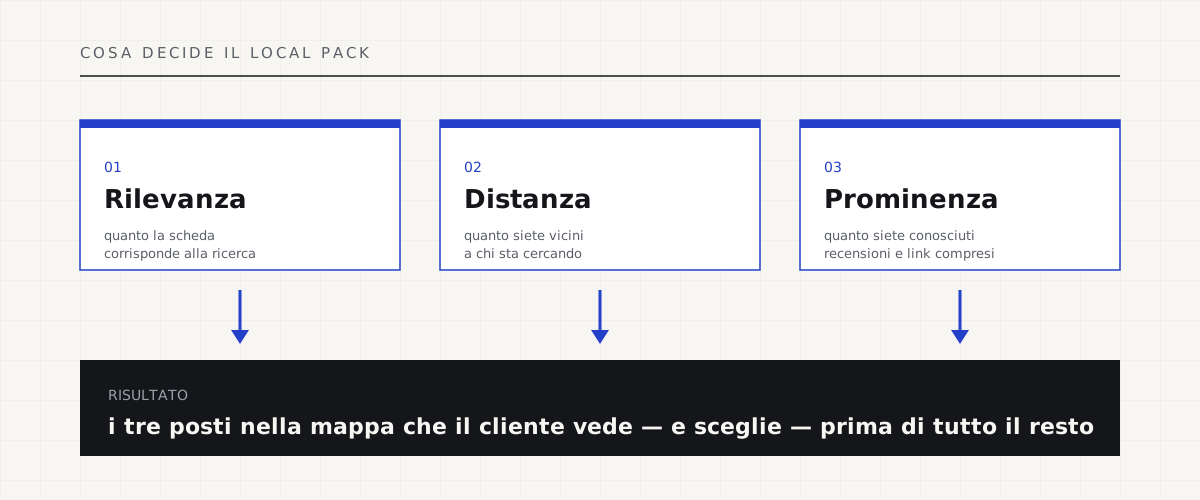
Google is unusually explicit about how it picks who to show in the local pack. In its official guide to local ranking it names three factors, and they’re worth knowing because you can work on all three.
Your Google profile: the shop before the shop.
The engine of local SEO is your Google profile (Google Business Profile): it’s what appears on the map, with name, hours, photos, phone and reviews. For many local searches the customer decides looking at that alone, without ever opening the site. Looking after it isn’t a detail, it’s the foundation: an incomplete profile or one with wrong hours cuts you out of the relevant results before the competition even does.
And then there are reviews, which weigh on trust and ranking at once. According to BrightLocal’s annual consumer survey, almost everyone reads reviews before choosing a local business. That doesn’t mean inventing them — it would be a boomerang, and a violation too — but asking for them methodically from people who had a good experience. We’ve devoted a separate article to the Google profile and how to look after it without tricks, because it deserves a guide of its own.
Google — guide to local ranking →
Read also: Google Business Profile, the storefront nobody tends →
The site still matters: structured data and local content.
The Google profile doesn’t live alone: it leans on your site, and a well-kept site strengthens everything else. The first brick is structured data — that block of code, invisible to the visitor, that tells Google “this is a local business, here’s the name, address, hours and area.” It’s schema.org’s LocalBusiness type, and Google reads it to understand and show your profile better. The second brick is consistency: name, address and phone must be identical everywhere they appear, on the site and in directories.
Then come the contents that really speak about the area. Not “Milan keyword” hammered in, but pages and copy that answer real local questions: the zones you serve, the jobs you’ve handled in the city, response times across the province. It’s technical SEO and content work together, and it’s exactly what we deliver as standard — not an extra to look at “later on.” Before adding a single line, though, it’s worth measuring the signals your site already sends Google.
Structured data and technical SEO in every site →
Measure your home page’s E-E-A-T signals and structured data for free →
Google — structured data and LocalBusiness →
Where to start, in Milan and beyond.
The right order is counterintuitive: first the Google profile (complete, verified, with real reviews), then the site (structured data, consistent NAP, local content), and finally prominence (citations and authoritative links, which come with time). Skipping the first step to chase the third is the most common mistake, and the most expensive. In Milan, where competitors at least tend to their profile, the game is won on the details the others neglect.
We do this work where the customers are, not only online: in Milan we have a real office, on Vicolo Privato Lavandai, and the first meeting — at your place or ours — is free. But the method is the same across Italy: we analyse your current profile and site, tell you what’s missing in black and white, and work to get you onto that map. Our calling card, after all, is a site we built for a group agency with the same care we put into yours.
Websites in Milan: how we work in the city →
The ATT case, the translation agency’s website →
Sources.
The figures and claims in this article come from here. These are primary sources, not summaries: open them and check for yourself.
- Google — improve your local ranking on GoogleThe official guide: the three factors (relevance, distance, prominence) and how Google picks the local pack.
- Google — structured data and LocalBusinessHow LocalBusiness markup helps Google understand and display a local business.
- BrightLocal — Local Consumer Review SurveyThe annual consumer survey: almost everyone reads reviews before choosing a local business.
Technical and local SEO, standard in every site, at a fixed price →
Let’s talk about your website.
Free analysis of your current website; a fixed quote within 24 hours of the call.