24 JUL 2026
Native translation or AI: the difference the customer feels
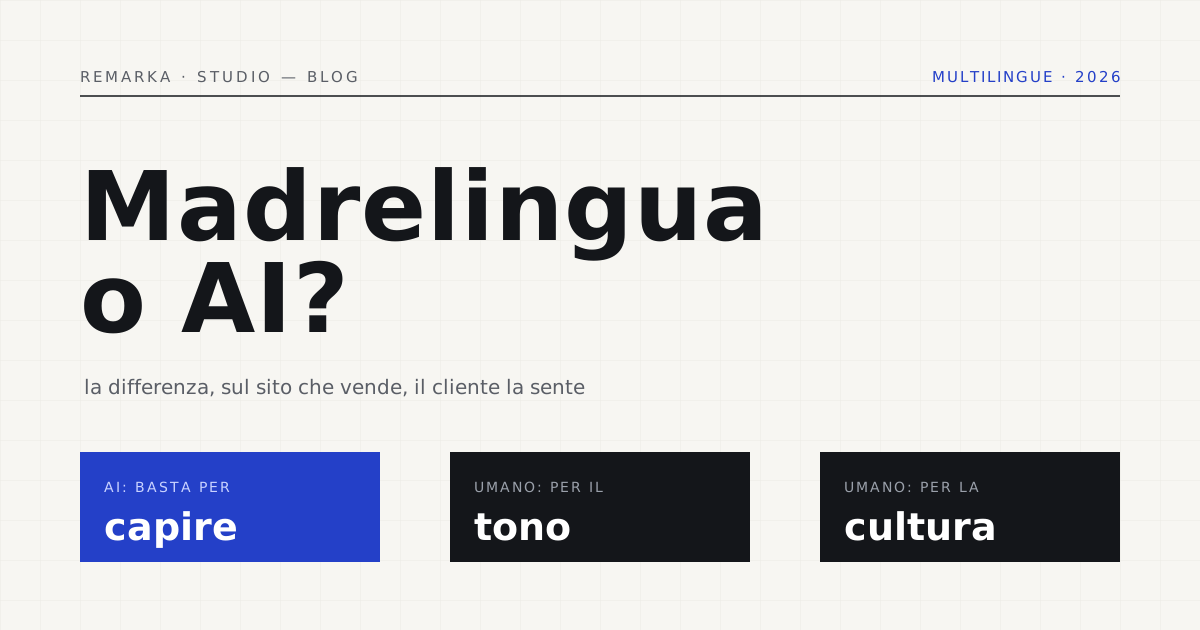
Machine translation has come on in leaps and bounds: today understanding a text in a language you don’t know is a matter of one click, and for many uses it’s perfectly fine. Precisely for this reason the right question isn’t «AI yes or AI no», but another: for your website — the one that has to sell, convince, represent you — when does a native translation still matter? The difference is there, and the customer feels it, but it’s not where many people think. Let’s look honestly at what machine translation does well, where the hand of a native speaker really is needed, and how to choose without wasting money or ruining your reputation.
What machine translation really does well.
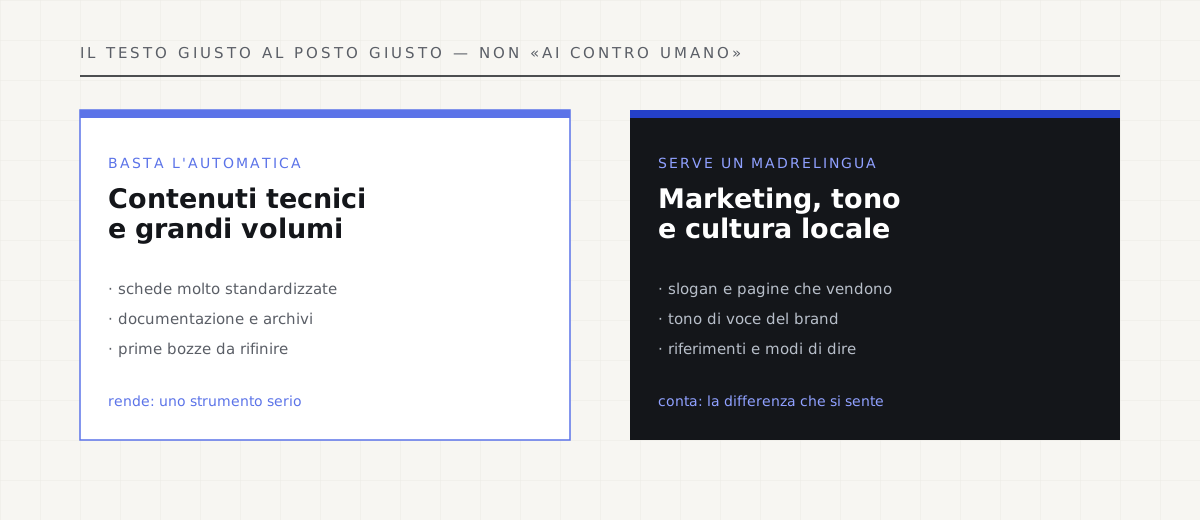
Let’s start from honesty: machine translation has improved enormously. To grasp the sense of a text, for highly standardized technical content, for enormous volumes where human review would be impossible, today it does work that ten years ago was unthinkable. Dismissing it as «always wrong» is false and helps no one. For an internal manual, a very repetitive product description, a first draft to refine, it’s a serious tool.
The point isn’t to demonize it, but to understand its limit. The machine translates the words and, ever better, the sentence too; what still escapes it is what surrounds the words: the tone, the intent, the cultural reference, the joke that works in one language and falls flat in the other. On the site that has to sell, that’s often exactly what makes the difference between a correct text and a text that convinces.
Where the hand of a native speaker is needed.
The human nuance counts where the text has to do something beyond informing. In marketing: a slogan translated literally can come across as flat, clumsy or, in the worst cases, unintentionally comic or offensive in the target culture. In tone of voice: a site that in Italian is warm and direct can become, machine-translated, cold and impersonal — and the visitor perceives it, even without being able to say why.
It counts, too, in local culture: idioms, units of measure, examples, references that a native speaker adapts without thinking and that the machine leaves untouched, betraying the «translated» origin of the text. It’s the difference between a site that seems written for that audience and one that seems written elsewhere and shipped there. For a tourist who books, for a buyer who chooses a supplier, that sense of «authenticity» weighs more than you’d think.
The most expensive mistake: machine translation left as it is.
The problem isn’t using AI to get started: it’s publishing the raw result without anyone reading it. A site with obviously automatic translations — awkward phrasing, false friends, sentences no native speaker would ever say — signals carelessness at the very moment you’re introducing yourself to a new customer. And it does so insidiously: you, who don’t speak that language, don’t notice; your customer does, on the very first line.
There’s also a cost you don’t see: lost trust doesn’t come back. A visitor who perceives a «badly translated» site doubts the rest — the seriousness, the quality, the security of payments. In doubt, they close the tab. That’s why a text meant to represent you abroad should at least be read and fixed by a native speaker: not out of snobbery, but because that’s where it’s decided whether they choose you.
Try for free how your text «sounds» to a native speaker →
Read also: the ROI of localization, how much translating really pays →
How to choose, without wasting or risking.
The practical choice isn’t all-or-nothing. A sensible approach is by tiers: low-stakes, high-volume content — very technical listings, archives, documentation — can start from a good machine translation; the pages that sell and convince — home, services, landing pages, stories — deserve a native translation or review. That way you spend where it pays and save where it doesn’t, without putting at risk the face you show the market.
It’s the approach we work with on multilingual sites: technology where it helps, the hand of a native speaker where it counts. We don’t translate with a plugin and be done with it; the languages of your customers we write so they sound native, with correct hreflang and international SEO. Because a site in another language mustn’t just be understood: it has to convince someone to choose you.
Multilingual websites: translated by native speakers, not by a plugin →
Read also: Naples and tourism, a multilingual website that gets bookings →
Sources.
The figures and claims in this article come from here. These are primary sources, not summaries: open them and check for yourself.
- CSA Research — Can’t Read, Won’t BuyThe reference research on the value of language: consumers prefer to buy when content is in their language.
- Google — localized versions and hreflangThe technical side of localization: telling Google which language version to show each user.
- Google — managing multi-regional and multilingual sitesThe official rules for an international site: genuinely translated content and consistency between versions.
Hear how your text sounds to a native speaker: try it free →
Let’s talk about your website.
Free analysis of your current website; a fixed quote within 24 hours of the call.