
24 FEB 2026
PWAs for SMBs: when you don’t need an app
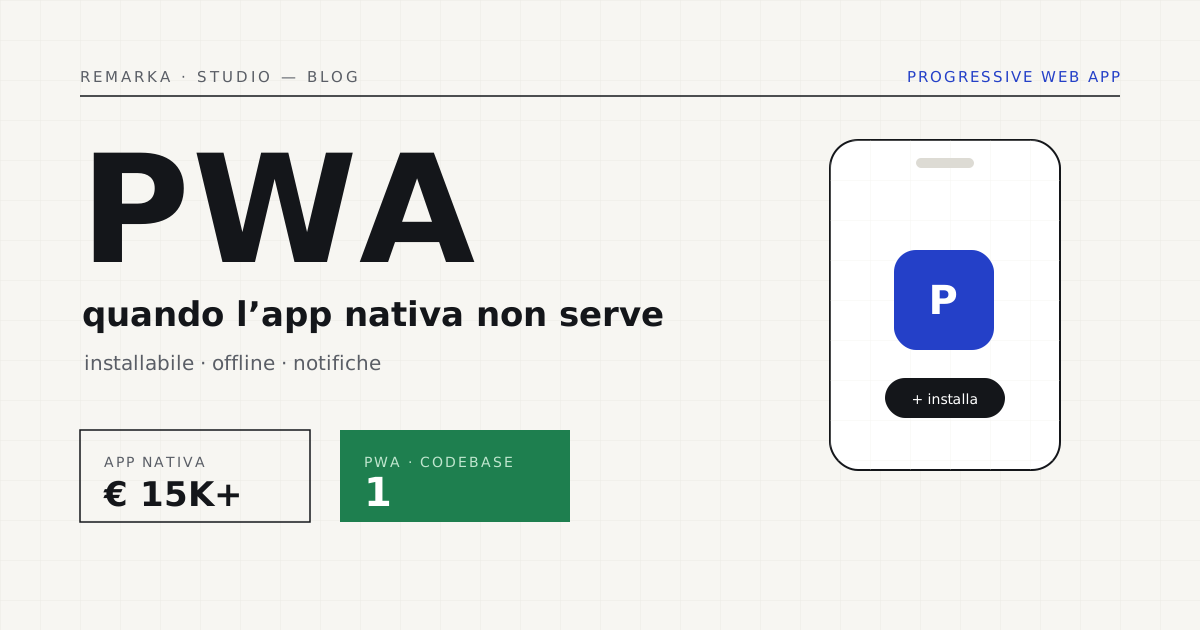
“We need an app.” Nine times out of ten, when we hear this, the honest answer is: maybe not. A native app costs on average € 15,000–30,000, has to be maintained twice — iOS and Android — and every update goes through the stores’ review. A PWA, i.e. a “progressive” site, installs on the phone, works offline, and sends notifications at a fraction of that cost. Let’s look at the three cases where it’s genuinely worth it for an SME, and the two where a native app is still needed.
What a PWA is, without the jargon.
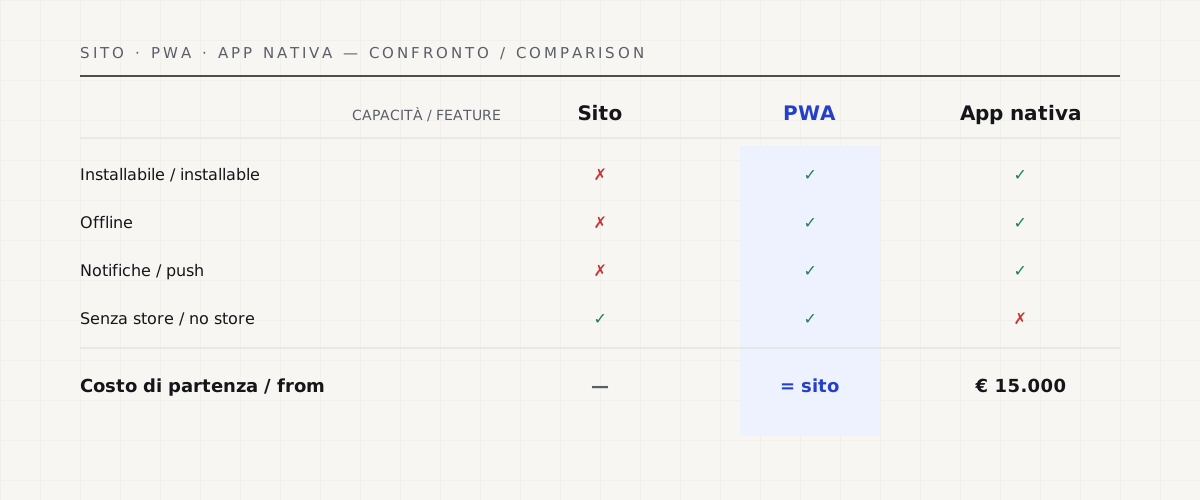
PWA stands for Progressive Web App: it’s an ordinary website, opening in the browser, but built to behave like an app. The person visiting it can “install” it on their phone’s screen with a tap, without going through the store; from there it opens full-screen, works even with a weak or absent connection, and — where needed — sends notifications. No 80 MB download, no Apple or Google review to wait for: it’s your site, with the right superpowers.
The three cases where it’s really worth it.
A PWA isn’t the answer to everything. But in these three cases, for an SME, it’s almost always the right choice — cheaper and faster to maintain than a native app.
A typical case from our records: a garage that takes bookings. With a PWA, the regular customer “installs” the site on their phone, opens it with a tap like an app, books even from the parking lot where the signal is shaky — and it didn’t cost the garage a second project to maintain. The same thing with a native app would have required two builds, two publications, and a fee that garage would never have recouped.
The two cases where a native app is still needed.
Honesty first: sometimes a native app really is needed. The first case is when the product lives on deep phone functions — advanced camera, sensors, heavy offline processing, games. The second is when the store presence is itself a sales and trust channel, and customers expect to find you there. Outside these two cases, a native app is often a prestige cost that a PWA covers with less money and fewer headaches.
How much you save, in numbers.
A native app requires two codebases, two publications, two update cycles, and the store commissions: that’s why it starts at € 15,000 and never stops costing. A PWA starts from the same site you already need, adds the progressive functions, and lives on a single update for everyone. The practical advice: before signing for an app, ask yourself which “app-like” functions you really need. Often the answer sits comfortably inside a PWA — and the money saved becomes content and advertising.
A practical test before deciding: list the three things the app “should do”. If they’re opening quickly, working offline, sitting on the screen, and sending a notification, you’re in PWA territory. If instead you need the camera with recognition, in-store payments, or deep hardware functions, then a native app makes sense. The cost of getting this choice wrong is counted in tens of thousands of euros.
When you need a custom web app instead →
Sources.
The figures and claims in this article come from here. These are primary sources, not summaries: open them and check for yourself.
- web.dev — Progressive Web AppsWhat a PWA is and what sets it apart from an ordinary site and a native app.
- MDN — Progressive Web AppsThe reference technical documentation on installability, offline, and notifications.
- web.dev — Learn PWAThe Google course that explains, step by step, how a PWA works.
Let’s talk about your website.
Free analysis of your current website; a fixed quote within 24 hours of the call.