
20 JUL 2026
Reviews and social proof: using them without inventing them
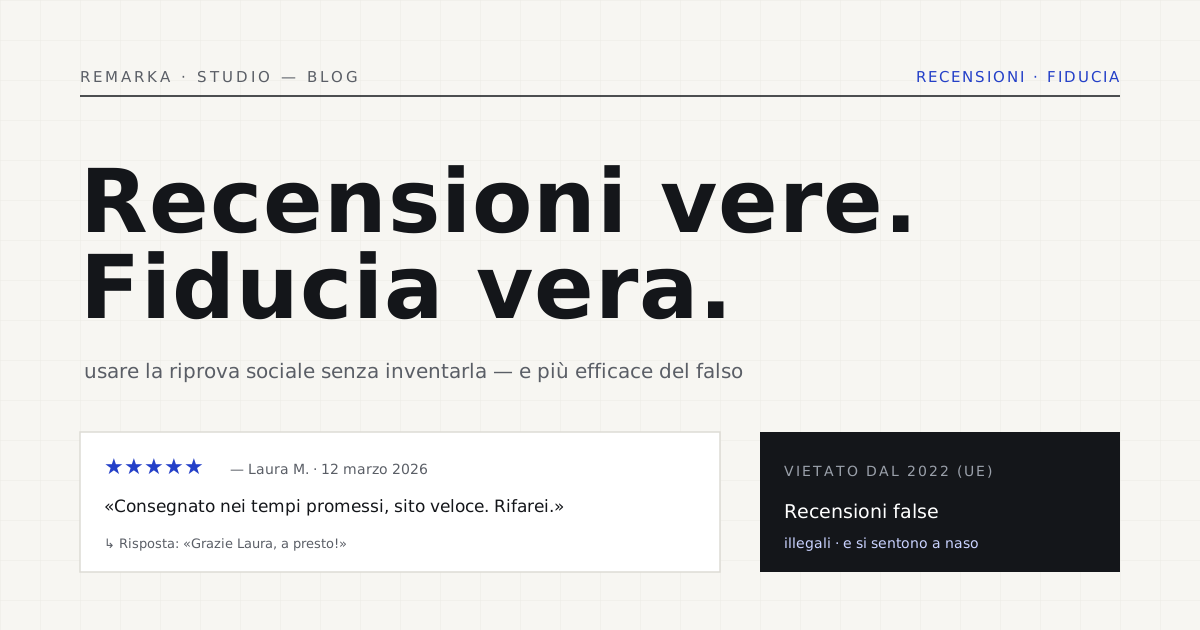
Before choosing a plumber, a hotel or an accountant, almost everyone does the same thing: they read what others say. Social proof — reviews, testimonials, real cases — is among the most powerful levers on a site, because the trust of strangers weighs more than anything you say about yourself. Precisely for that reason the temptation to inflate it, or even invent it, is strong. It’s a mistake, and not only a moral one: since 2022 fake reviews are banned by law in Europe, and the public sniffs them out better than you’d think. Let’s look at how to use reviews on your website honestly — and more effectively than the fake kind.
Why social proof works.
It works for an ancient reason: faced with an uncertain decision, we look at what others did and trust them. On a site this translates into concrete numbers: according to BrightLocal’s annual survey, almost all consumers read reviews before choosing a local business, and many trust an online review as much as a friend’s advice. A profile with twenty real reviews and thoughtful replies convinces more than a thousand words of self-praise.
Social proof isn’t just the little stars. It’s everything that shows someone, before this visitor, trusted you and did well: real cases with numbers, testimonials with a name and a face, client logos you’re allowed to cite, an honest counter. The more concrete and verifiable it is, the more it weighs. A round, generic number convinces less than a specific, checkable detail.
Inventing them is illegal (and it shows).
Here we need to be blunt, because the law draws the line. European Directive 2019/2161, known as “Omnibus,” transposed in Italy too, explicitly forbids publishing fake reviews or claiming that reviews come from real customers when they don’t. It isn’t a grey area: buying stars, having employees write them, passing off as verified reviews that aren’t exposes you to penalties. The regulator can step in, and it does.
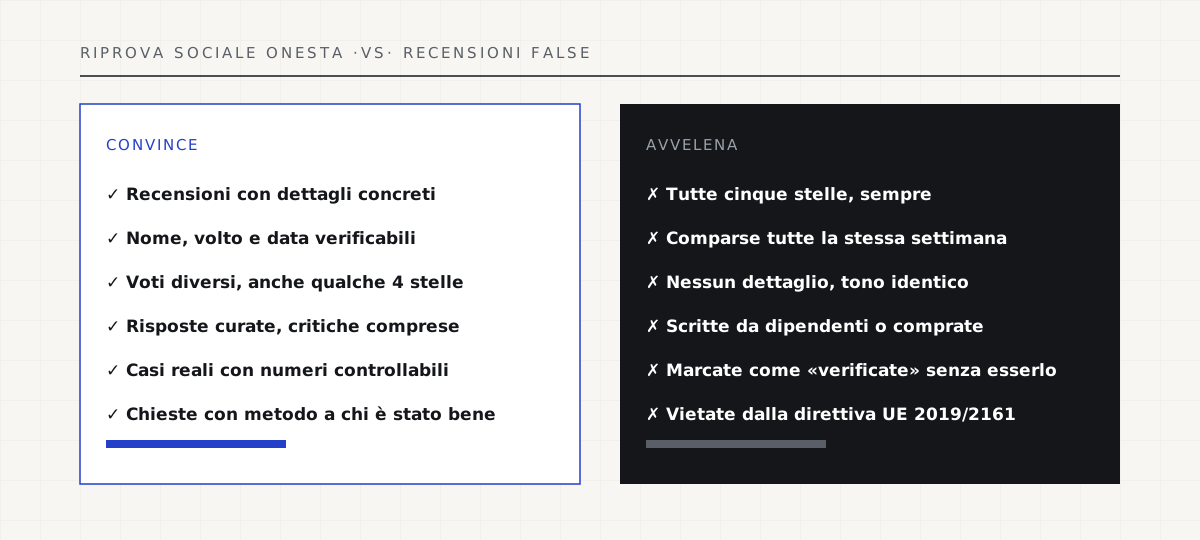
But even if there were no law, a practical problem would remain: fake reviews can be smelled. All five stars, all in the same week, all in the same enthusiastic tone with no concrete detail. The experienced reader — that is, almost anyone, by now — recognises them, and when in doubt discards all the rest. A single made-up testimonial poisons even the genuine ones. Faking isn’t just risky: it’s counterproductive.
How to collect real reviews, with method.
The good news is that collecting honest reviews is easier than it seems: almost always the only thing missing is method. The rule is to ask at the right moment — right after a job that went well, when the satisfaction is fresh — and to make it simple: a direct link to your Google profile, not “look us up and leave a comment.” People who had a good experience are usually happy to say so, if you ask without making them work for it.
Then you reply, to all of them, criticism included. A polite reply to a negative review convinces future customers more than ten words of praise: it shows there’s someone listening behind it. And never, ever offer money or discounts in exchange for a positive review: besides being forbidden, it falsifies the signal. Asking for a review is legitimate; buying one is not.
Measure your E-E-A-T trust signals, free →
Where to put them, and how to make them count for Google.
A real review left where it is is born and dies there. To make it work it has to be placed where the visitor decides: next to the call to action, on the service page, beside the contact form. Social proof is most effective at the exact point where it asks for trust, not banished to a “Testimonials” page nobody opens. These are the same signals of authority and experience — the E and the T in E-E-A-T — with which Google judges your credibility.
There’s also a technical aspect few tend to: structured data. Marking up reviews with schema.org’s Review type lets you, within Google’s rules, show the stars directly in search results. Mind the policies, though: Google forbids marking up self-attributed or invented reviews, and penalises them. Here too, the dishonest shortcut backfires. Honesty and technique together are what we deliver as standard on every site.
What a business website that inspires trust includes →
Read also: Google Business Profile, the storefront nobody tends →
Trust isn’t faked, it’s built.
The thread of it all is one: trust is capital that builds slowly and burns in an instant. Real reviews collected with method, thoughtful replies, verifiable proof placed where it counts are worth more than any inflated number — and they don’t expose you to a penalty or an embarrassment. It’s the same line we hold on ourselves: in our cases we show real group projects, with links to the live sites and checkable numbers, not testimonials written at a desk.
If you have to choose between looking perfect and looking credible, choose credible. A site with a few real reviews, not all of them five stars, converts more than one plastered with praise that smells fake. The public isn’t looking for perfection: it’s looking for someone to trust.
Sources.
The figures and claims in this article come from here. These are primary sources, not summaries: open them and check for yourself.
- BrightLocal — Local Consumer Review SurveyThe annual survey: almost everyone reads reviews before choosing, and many trust them as much as a friend’s advice.
- EU Directive 2019/2161 (Omnibus) — EUR-LexThe European rule that bans fake reviews and the deceptive attribution to real customers: it isn’t a grey area.
- Google — structured data for reviews (review snippet)How to show the stars in results — and the rules to respect: no self-attributed or invented reviews.
- schema.org — the Review typeThe structured-data vocabulary you use to mark up a review so search engines understand it.
Let’s talk about your website.
Free analysis of your current website; a fixed quote within 24 hours of the call.