
24 JUL 2026
Localization ROI: how much translating your site really pays
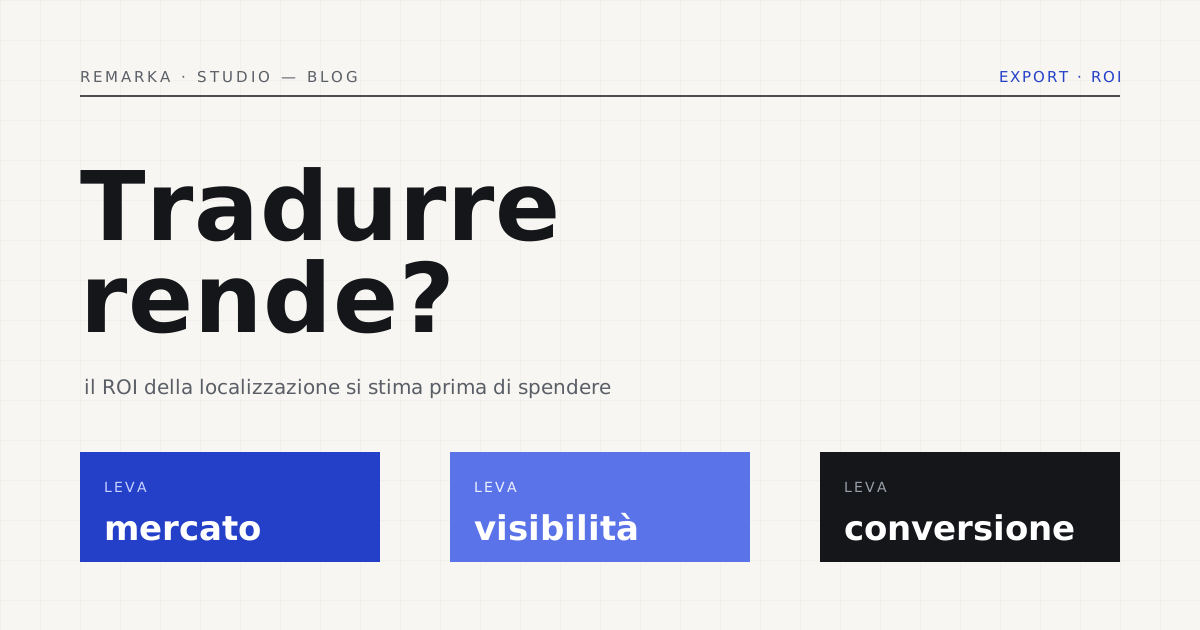
«Is it worth translating the site?» is the question every company looking abroad sooner or later asks itself. And the serious answer is neither «yes, always» nor «no, it costs too much»: it’s «it depends, and it can be estimated». The ROI of localization — that is, how much translating and adapting the site for a market pays, in proportion to what it costs — isn’t an act of faith, it’s a calculation you can set up before spending a euro. Let’s see how to reason about it: which numbers to look at, where the return that often goes unseen lies, and how to tell whether opening a given language really pays.
Localizing isn’t translating: two different words.
Before talking about return, a distinction that changes the sums. Translating is turning words from one language into another. Localizing is adapting the site to a market: the language, yes, but also the currency, the expected payment methods, the examples, the cultural references, and SEO in that language so people find you. A site that’s «translated» but not localized often doesn’t pay, because it’s understood but doesn’t convince and — worse — isn’t found by whoever searches in their own language.
This difference is the first piece of the ROI. The cost of a well-done localization is higher than that of a plain translation; but it’s the return that’s of another order, because a localized site really enters the market instead of merely existing in another language. Comparing the price of two different things is the fastest way to make the wrong decision.
The numbers of the return: market, search, conversion.
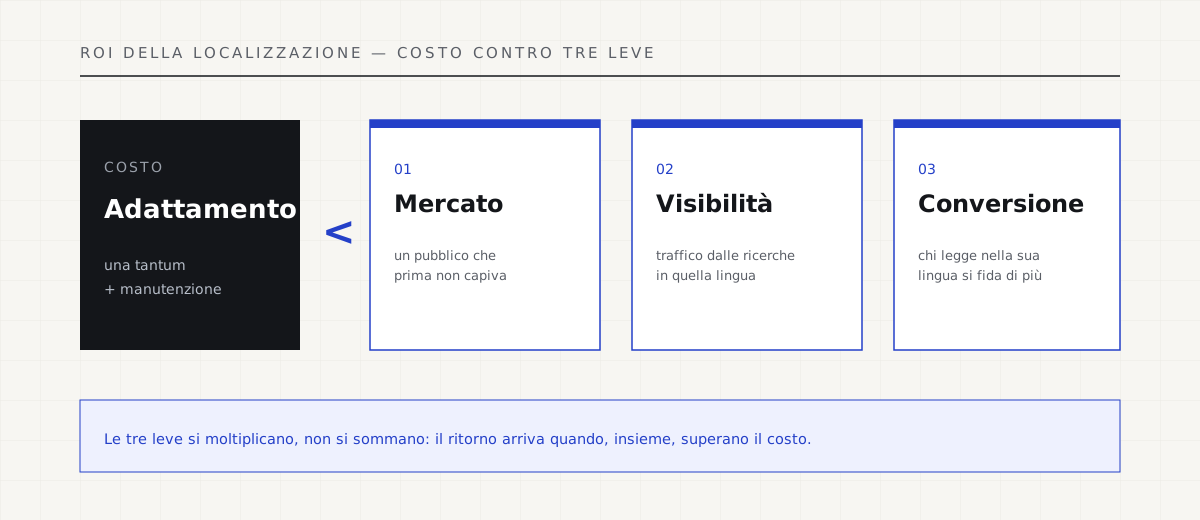
The return of localization is built on three levers. The first is the reachable market: opening a language means being able to speak to an audience that couldn’t understand you before. CSA Research has said it for years: the great majority of consumers prefer to buy when the information is in their own language, and a significant share doesn’t buy at all on a site that doesn’t speak it. Every language you open, done well, pushes forward the boundary of the people you can convert.
The second lever is visibility: a localized site, with correct international SEO and hreflang, appears in searches in that language — traffic that without localization simply doesn’t arrive. The third is conversion: whoever reads in their own language trusts more and buys more. Cross-border e-commerce, after all, is a growing share of online sales in Europe (Eurostat). Three levers that multiply each other, they don’t add up.
How to estimate the ROI before spending.
You set up the calculation the other way round: not «how much does it cost to translate», but «how much does it have to return to be worth it». You start from the cost of localizing that market (one-off plus maintenance), you estimate the reachable audience and a prudent conversion rate, and you look at after how many months the expected return covers the outlay. If the market is large and your margin is good, break-even comes quickly; if it’s small or local competition is fierce, perhaps that language can wait.
You don’t need a consultants’ model to get an idea: a few honest assumptions are enough — how many more people you reach, how much a customer is worth, how much opening the language costs. That’s why we’ve put online a free localization ROI calculator: enter your numbers and see whether, and in how long, translating really pays. Better an approximate calculation done beforehand than a precise regret afterwards.
Calculate the ROI of your site’s localization for free →
Read also: native translation or AI, the difference the customer feels →
The mistake that zeroes out the return.
There’s a sure way to ruin the ROI: localizing halfway. Translating the home but leaving the checkout in Italian; opening a language but not looking after its SEO, so nobody finds you; machine-translating without review, so whoever arrives doesn’t trust it and closes the tab. In all these cases you’ve paid the cost without reaping the return — the worst possible combination. Localization pays when it’s complete along the whole path, from the first search to the payment.
That’s why we treat localization as an investment to design, not a plugin to switch on: we choose with you the languages that pay, we translate them with native speakers where it counts, we look after hreflang and international SEO, and we keep the whole purchase path consistent. A site ready for export isn’t an Italian site with little flags: it’s a site that, in every language, takes the customer all the way through.
A site ready for foreign markets: the export-ready service →
Read also: a site ready to sell abroad →
Sources.
The figures and claims in this article come from here. These are primary sources, not summaries: open them and check for yourself.
- CSA Research — Can’t Read, Won’t BuyThe reference research: the majority of consumers prefer to buy in their own language, many don’t buy at all without it.
- Eurostat — e-commerce statisticsThe official EU data on e-commerce, cross-border sales included: the market that localization opens.
- Google — managing multi-regional and multilingual sitesThe rules for an international site that gets found: visibility is one of the levers of the return.
- Istat — statistics on businesses and exportsThe national statistics institute: official data on Italian businesses and exports, useful for sizing a market.
Let’s talk about your website.
Free analysis of your current website; a fixed quote within 24 hours of the call.