
16 JUL 2026
A website in 3 weeks: how it’s (really) possible
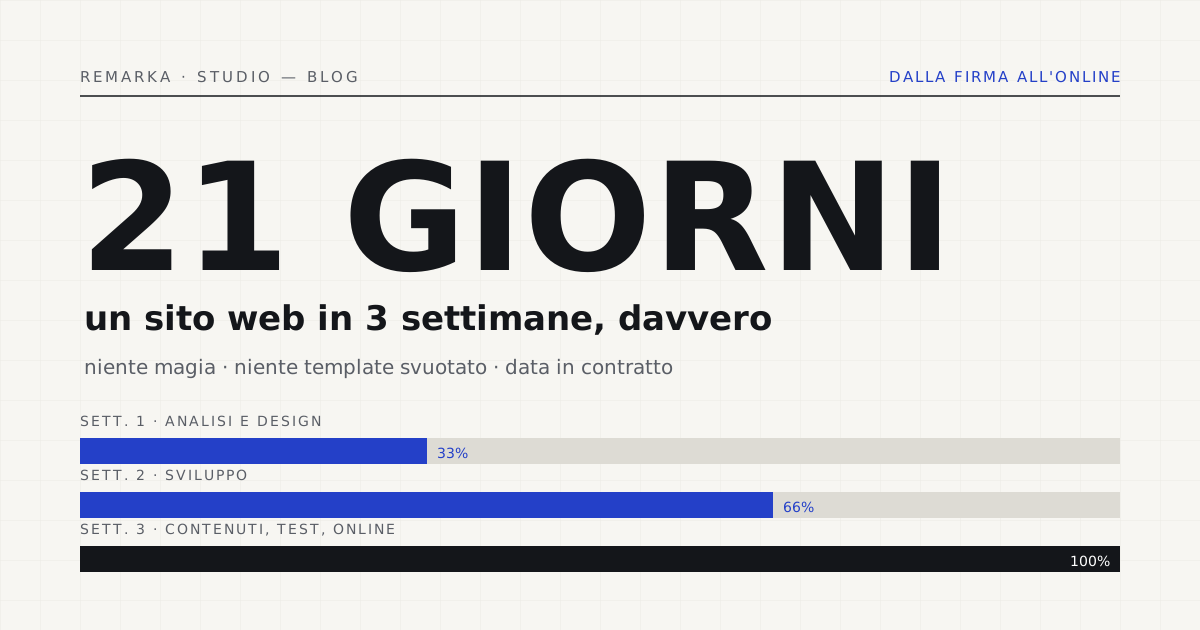
“A website in 3 weeks? Either it’s a scam, or it’s a template filled in a hurry.” It’s the most common reaction, and a healthy one: on the Italian market a business website takes 6–10 weeks on average, so promising three sounds like promising to lose weight while sleeping. Yet we do it, with the date written in the contract and a penalty if we overrun. There’s no trick and no half-done work: there’s a method that removes the dead time, not the quality. Let’s see, day by day, how a website in 3 weeks is possible — and what we need from you to make it work.
Three weeks isn’t magic: it’s removing the dead time.
The market’s 6–10 weeks are hardly ever work: they’re waiting. The quote that stays undecided for days, content arriving in dribs and drabs, a design going back and forth five times because nobody set the scope at the start. Time goes in the ping-pong, not in producing. We compress the three weeks by attacking exactly that ping-pong: scope fixed at signing, a single round of revisions per phase, content gathered with you in one meeting rather than chased by email.
The second lever is banal but decisive: we start from our own foundations, proven across dozens of projects, not from a blank page every time. That doesn’t mean “all sites the same”: it means the technical scaffolding — speed, accessibility, SEO structure — is already solid, and we spend the three weeks on what’s yours, not on reinventing the wheel.
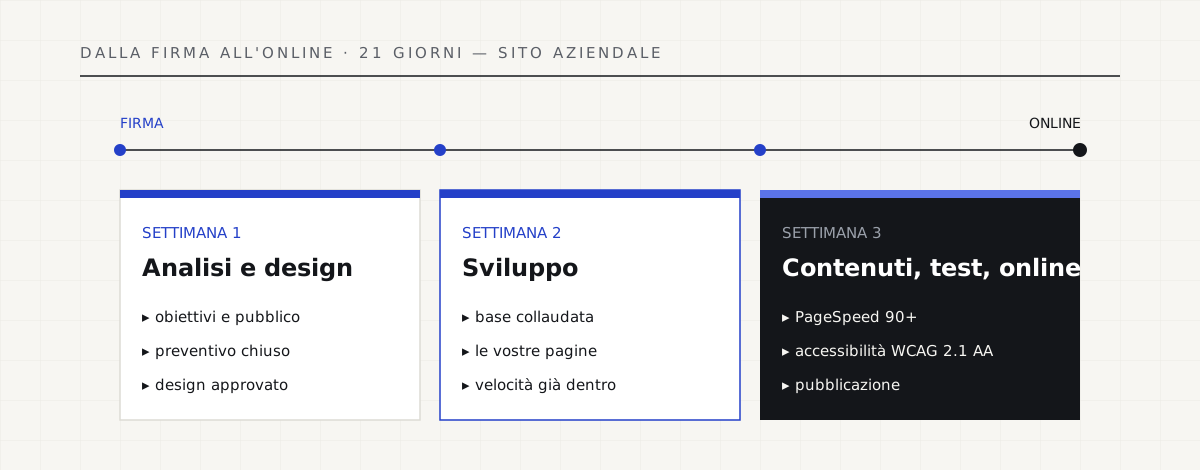
Week 1: analysis, fixed quote, design.
The first week decides the other two. We do the analysis — who you are, who you want to reach, what the site has to do — and out of it comes a fixed quote, with locked price and date. Then the design: not twenty drafts, but one shared, approved direction, so the following week develops with no second thoughts. It’s the week that asks the most of you, and it’s time well spent: every decision taken now is a delay avoided later.
Week 2: development, with speed already built in.
In the second week the approved design becomes a site that works. Here the choice to start from proven foundations pays for itself in full: the technical structure that carries speed and accessibility is already in place, and development focuses on your pages, not the scaffolding. We don’t chase PageSpeed 90+ at the end like a patch: we build it as we develop, because speed isn’t a final touch-up but the way the site is made.
Settimana 3: contenuti, test, online.
The third week is the one of the details you see and the ones you don’t. We lay out the final content, then test: real speed on a phone, accessibility to the WCAG 2.1 AA standard — today also a legal requirement — forms, links, behavior on different screens. Only when the numbers add up do we go live. A fast site that respects people isn’t a frill: it’s what Google measures to rank you and what keeps visits instead of sending them away.
Check a site’s health with the full check-up →
What we never compress: quality.
We cut the waiting, not the checks. The three weeks don’t come from work done in a rush, but from work with no dead pauses: while you review a draft, we don’t sit idle, we prepare the next phase. What never gets skipped is the part that protects you — the speed and accessibility tests, the trial on real phones, the check of forms and links. If one of these checks fails, we don’t go live: the date is defended with method, not by sacrificing the testing.
There’s a case where three weeks aren’t enough, and we say so up front: a project with a large catalog, many integrations or several languages takes longer. We don’t hide it to get a signature — we write it in the quote, with the same fixed date and the same penalty. That’s why three weeks is the business-website figure: a brochure site asks for two, e-commerce for six. An honest number is worth more than a small one.
And if we overrun? The penalty, and what we need from you.
The date in the contract only counts if it has a price: every working day of delay is 1% off the total. It’s the reason we take the three weeks seriously, and it’s also the reason we ask one thing in return. Meeting the date depends on two hands: for three weeks to be enough, content and decisions have to arrive when we ask for them, not once the work has started. Week 1 exists precisely for this — to gather everything together, so weeks 2 and 3 can run.
Whoever promises “a site in a week” without asking you for anything is selling a hollowed-out template. Whoever promises you “whenever it’s ready” is leaving open a door that costs dearly. Three weeks, with a date and a penalty, is the honest point between the two: genuinely fast, but with no shortcuts on quality.
What a business website includes, at a fixed price →
Before signing: how to read a website quote →
Already online? Redesign or new site: the test of 5 questions →
Sources.
The figures and claims in this article come from here. These are primary sources, not summaries: open them and check for yourself.
- web.dev — Web VitalsThe mobile speed we guarantee by contract: PageSpeed 90+ isn’t a slogan, it’s a measurable threshold.
- AccessibleEU — European CommissionSince 2025 accessibility is part of the scope of every new site, not a job to postpone.
- Google — creating helpful, reliable contentWhat Google considers quality: the backdrop to why we test before going live.
- Google — intro to structured dataStructured data is part of the technical scaffolding that’s ready from the start.
Let’s talk about your website.
Free analysis of your current website; a fixed quote within 24 hours of the call.