
16 JUL 2026
Website quote: how to read it without surprises
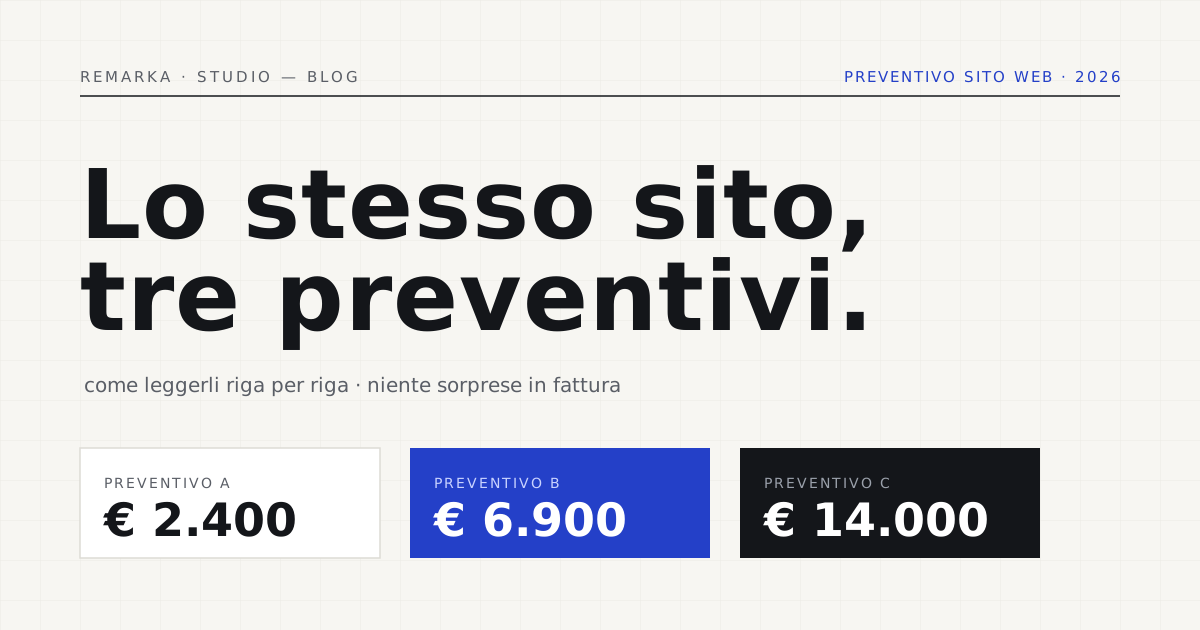
You asked for three quotes for the same website and back come three figures that seem to describe different projects: € 2,400, € 6,900, € 14,000. It feels like comparing apples with bicycles, and in a sense that’s true. A website quote isn’t a bakery price list: inside the same words — “a ten-page site” — sit jobs worth three times one another. In this article we hand you the grid to read a quote line by line, see where the real price hides, and which questions to ask before signing, so the surprises don’t arrive on the invoice.
Why two “identical” quotes cost double.
The misunderstanding almost always starts from a single word: “page.” Two quotes both say “a ten-page site,” but one means ten pages with your texts already written, to lay out on a template; the other means ten pages to design, write and photograph from scratch. The second costs double and is worth triple, yet on paper the two lines look identical. This is where half of the “they quoted me an absurd amount for the same thing” comes from.
A site’s price isn’t made by the pages, it’s made by three things that often stay implicit: how bespoke the design is, how much work goes into the content, and what is guaranteed in writing. An honest quote makes all three explicit. A crafty quote leaves them vague, so it can be the lowest of the pile — and make it up later, when you find that the photos, the texts and the second language “weren’t included.”
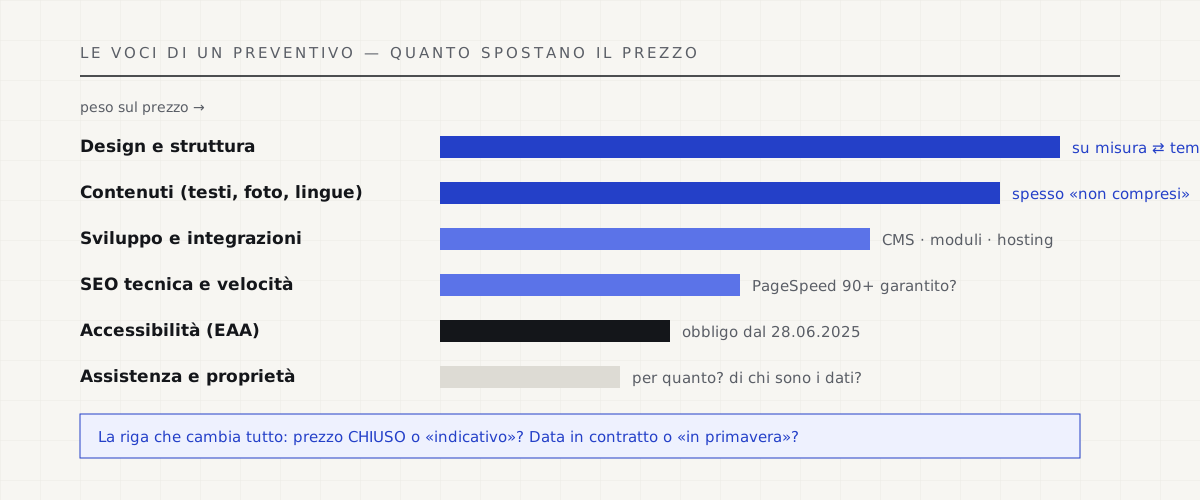
The items a website quote must include.
Before looking at the figure at the bottom, check that all the items are there. A serious project breaks down more or less the same way every time, and every missing item is a cost that will come back — usually once the work has started, when negotiating is harder.
Fixed price or “indicative”? The line that changes everything.
There’s a substantial difference between a “fixed” quote and an “indicative” one, and it’s worth more than any discount. The fixed price is what you’ll pay: if extra work comes up, it’s agreed in writing first, or it’s on whoever made the quote. The indicative price is a starting point that climbs as you go, once you’ve already invested time and can’t turn back.
The same logic applies to timing. “Delivery in spring” isn’t a date; “delivery on the 30th, with 1% off for every working day of delay” is. Always ask whether the date is in the contract and with what penalty: the answer, more than the figures, tells you who you’re dealing with. In our case the price is locked at signing and the date is written with the penalty — not out of generosity, but because it’s the only way “no surprises” means anything.
The surprises that come later: the recurring costs.
The build price is half the story. A living site costs every year, and an honest quote tells you so up front. Adequate hosting, security updates, maintenance: on the market professional maintenance runs between € 500 and € 2,000 a year, and what it covers varies a lot. If you sell online, add payment fees and e-invoicing, which in Italy must pass through the Agenzia delle Entrate’s Sistema di Interscambio: make sure it’s included or quoted, not discovered once the shop is open.
Then there’s a cost almost no quote names yet, and it’s an obligation: compliance with the European Accessibility Act, in force in Italy since 28 June 2025 for sites that sell to consumers. It isn’t an optional item to “look at later”: it’s a legal requirement, with fines. A quote that ignores it isn’t saving you money, it’s postponing the bill.
How to read it in practice: the five questions.
You don’t need to become technical. Five questions are enough, and the way they answer counts as much as the answers: if the person opposite gets nervous, you already have some information.
Confronta i nostri prezzi e tempi, accanto a quelli di mercato →
What a company website really includes →
Before rebuilding: measure the health of your current site →
Read also: a website in 3 weeks, how it’s really possible →
Sources.
The figures and claims in this article come from here. These are primary sources, not summaries: open them and check for yourself.
- Agenzia delle Entrate — e-invoicing (SDI)The official page on the Sistema di Interscambio: a cost every e-commerce site must put in the quote.
- AccessibleEU — European CommissionSince 28 June 2025 accessibility is an obligation, not an extra: it belongs in the quote.
- HTTP Archive — Web Almanac 2024Real data on how the web is actually built today: useful to understand what you’re really paying for behind a site.
- web.dev — Web VitalsThe mobile speed that must be guaranteed with a number: the difference between a serious quote and a vague one.
Let’s talk about your website.
Free analysis of your current website; a fixed quote within 24 hours of the call.