
19 JUL 2026
Website monitoring after launch: what to measure every month
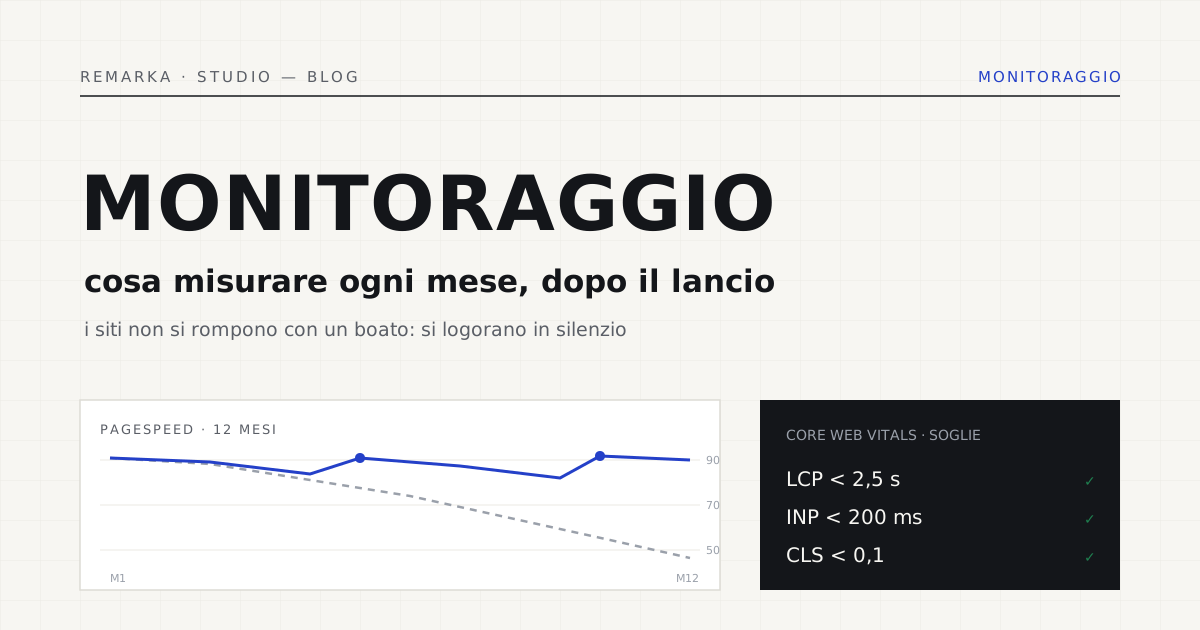
On delivery day your website was a perfect scorecard: PageSpeed 94, all green, handshakes. Twelve months later it takes five seconds to load, one form no longer sends anything, and nobody noticed — because nobody was watching. Websites don’t break with a bang: they wear out in silence, one plugin update at a time, one 8 MB photo at a time. Website monitoring is the craft of noticing before your customers do. Here’s what to measure every month, with which tools, and when it makes sense to delegate.
Why a fast website stops being fast.
A website is a living system: the CMS and plugins update themselves, the team uploads photos straight off the phone, marketing adds a tracking script “just for one campaign” that stays forever, the shared hosting fills up with neighbours. Each change is small; the sum is not. It’s the same reason a car gets serviced: not because it broke, but because it’s been used.
And a second clock is ticking: Google’s. The metrics change — in 2024 INP replaced FID among the Core Web Vitals — and a site frozen at two-year-old standards slides backwards even if nobody touches a thing. The delivery-day score isn’t a diploma on the wall: it’s a photograph, and photographs age.
The four measures of serious website monitoring.
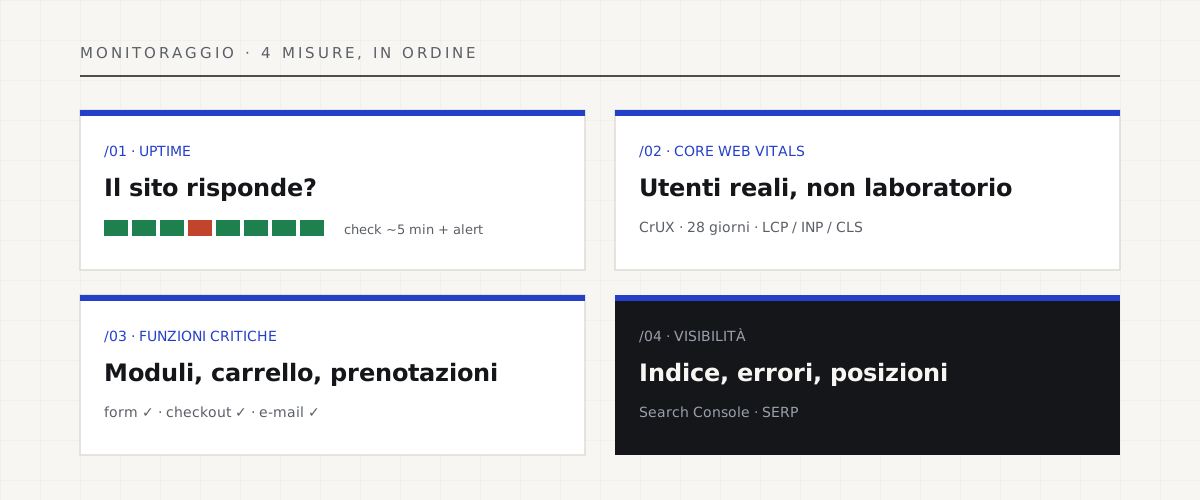
Four measures, in this order: first “does it exist?”, then “does it work for real people?”, then “does it sell?”, finally “can it be found?”. Monitoring that watches only the speed score is a dashboard with just the fuel light: useful, but it won’t tell you a wheel has come off.
Lab and real world: why the two numbers don’t match.
Lighthouse — the engine behind PageSpeed Insights — measures the site under controlled conditions: same simulated network, same device. It’s invaluable for diagnosing, but it’s still a lab. Field Core Web Vitals come instead from the Chrome UX Report: real users, real networks, real phones, aggregated over 28 days. The two numbers can diverge — the lab passing and the field failing, or the other way round — and when they diverge, the field is right: that’s where your customers are.
The practical consequence: a one-off check tells you how the site is doing today, in the lab. Only a monthly series tells you whether it’s getting better or worse for the people who actually use it. It’s the difference between a photo and an electrocardiogram.
Core Web Vitals in 2026: what Google actually measures →
The monthly ritual, in twenty minutes.
Full site check-up: 7 measures in one minute, free →
When to delegate (and what to demand from whoever does it for you).
The twenty-minute ritual works — as long as someone actually does it. Experience says that after the third month the appointment slips, and the site goes back to wearing out unseen. Google’s reliability engineering formalised a principle that holds at small scale too: systems are kept safe by automatic checks and alerts, not by good intentions.
That’s why monitoring is included in our projects with a maintenance plan: our platform keeps an eye on uptime, periodic checks and the real-user Core Web Vitals of the sites we look after, and when a value slips we see it — before you hear about it from customers. The report arrives every month, in human language. If you prefer DIY, the ritual above is yours: what matters is that someone is watching.
Our Monitor live — and try it on a site of yours, free →
Free today, under watch tomorrow: monitoring for clients →
Technical redesign: when the numbers say it’s time →
Sources.
The figures and claims in this article come from here. These are primary sources, not summaries: open them and check for yourself.
- web.dev — Core Web Vitals (Google)The official definitions and thresholds of LCP, INP and CLS cited in this article, including the switch from FID to INP in 2024.
- Chrome UX Report (CrUX) — documentationThe source of field data: real Chrome users, aggregated over a rolling 28-day window.
- Google SRE — Monitoring Distributed SystemsThe Site Reliability Engineering book’s chapter on keeping systems safe: automatic checks and alerts, not good intentions.
Let’s talk about your website.
Free analysis of your current website; a fixed quote within 24 hours of the call.