
23 JUL 2026
Internal links: the free SEO almost nobody looks after

There’s an SEO lever that costs nothing, is entirely under your control, and most sites waste it: internal links — the connections from one page to another within the same site. No budget, no waiting, nothing to beg external sites for — just sensible decisions about what to link to what. And yet almost nobody looks after them: an article gets written, published, and left there, isolated. Let’s look at what internal links really do for SEO, the most common mistakes, and how to use them to push the pages that matter higher.
What internal links really do.
Internal links do three things, all important. The first: they help Google discover pages. The engine moves by following links; a page nobody links to internally is hard to find and hard to index — it’s like a room with no doors. The second: they tell Google what the destination page is about, through the anchor text, the clickable words of the link. “Guide to Core Web Vitals” explains far more than “click here”.
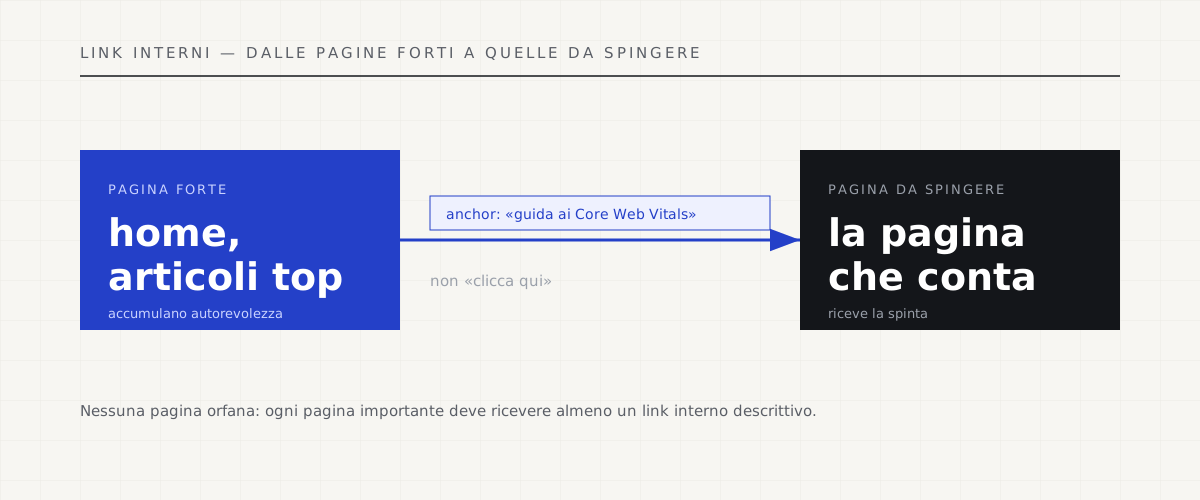
The third, the most underrated: they distribute authority. The strongest pages on the site — the homepage, articles that receive links from outside — accumulate value in Google’s eyes, and with internal links you can channel part of that value toward the pages you want to push up. A well-placed internal link is a vote you cast yourself, from a strong page to one that matters: free, and under your control.
The most common mistakes.
The first mistake is orphan pages: articles and pages that receive no internal links at all. They exist, but it’s as if they didn’t — Google struggles to reach them and doesn’t understand how much they matter. The second mistake is vague anchor text: “click here”, “read more”, “this article”. They waste the chance to tell Google (and the user) where the link is taking them. The anchor is a signpost: write it with the right words.
The third mistake is pointing everything at the homepage. Many sites only link to the main page, which is usually already the strongest, and leave inner pages high and dry — exactly the ones that would need a boost. The fourth is laziness: publishing without ever asking “which other pages on the site relate to this one?”. Internal links don’t happen by themselves; they need to be thought through, one article at a time.
How to use them well.
A few rules change everything. Descriptive anchor text, containing the words the destination page wants to be found for — never “click here”. Contextual links, inside the text, where the connection makes sense to the reader, not piled up at the bottom. And a clear direction: from strong pages toward the ones you want to push, so authority flows where it’s needed. Every time you publish something, ask yourself which existing pages it should receive a link from.
The reverse holds too: the new page should link to relevant pages that already exist, to keep the reader on the site and tie the content into a coherent topic. There’s no need to overdo it — a few well-chosen links are worth more than twenty random ones — but no page should remain an island. An on-page analysis shows you in seconds the orphan pages and the anchors that need fixing.
Internal links and site architecture.
Internal links aren’t a chore to tack on at the end of an article: they’re the skeleton of how the site is organized. A good structure groups pages by topic and connects them so that, from the most general, you naturally move down to the most specific and back. It’s the same principle behind topical authority: a cluster of connected pages beats a collection of islands. Internal links are the threads of that cluster.
There’s an immediate benefit for people too, not just for Google: a well-connected site is one where visitors find what they’re looking for. Visits last longer, more pages get seen, and someone arriving with one question discovers nearby answers. SEO and user experience coincide here: looking after internal links improves both, without spending an extra cent.
Free on-page SEO analysis of your page →
Read also: topical authority, why a blog beats 100 scattered keywords →
The boost you already have at home.
Internal links are the most democratic SEO there is: they don’t depend on budget or on other sites’ goodwill, only on attention. And yet they remain the most neglected chapter, perhaps precisely because they’re free and nobody sells them. Looking after them is one of the few things you can do today, on the pages you already have, to move up in rankings without writing a single new line of code.
In the sites we build, internal links aren’t a last-minute afterthought: they come from the architecture, from how content is grouped and connected from the very start. It’s the boost you already have at home — you just need to remember to use it.
Technical SEO that starts from a well-connected architecture →
Read also: images and speed, WebP and lazy-load →
Sources.
The figures and claims in this article come from here. These are primary sources, not summaries: open them and check for yourself.
- Google Search Central — making links crawlableHow Google follows links and why a well-made link (anchor text included) helps it discover and understand pages.
- Google Search Central — SEO starter guideThe official guide for beginners: site structure, internal links and descriptive anchor text among the fundamentals.
- Google Search EssentialsThe basic rules for being found on Google: a good internal-link network is part of a site’s technical health.
- Web Almanac — HTTP ArchiveThe annual report on the state of the web drawn from millions of real sites: data on structure, links and page health.
Let’s talk about your website.
Free analysis of your current website; a fixed quote within 24 hours of the call.