
23 JUL 2026
Topical authority: why a blog beats 100 scattered keywords
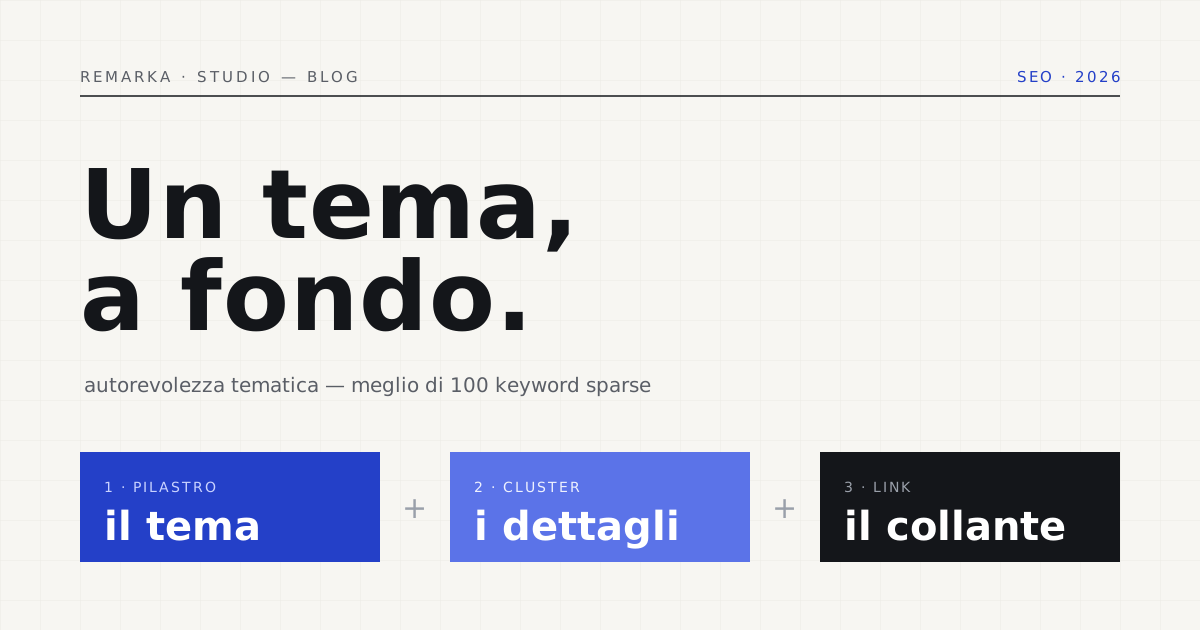
There’s an old SEO idea that refuses to die: make one page for every keyword, fill the site with disconnected articles, and hope something ranks. It worked ten years ago. Today Google thinks in terms of topics, not single words, and rewards whoever genuinely demonstrates knowledge of a subject — covering it well, in depth — over whoever has scattered a hundred thin pages across a hundred different words. It’s called topical authority, and it’s why a well-made blog beats a list of keywords. Let’s look at what it is, why spreading yourself thin no longer pays off, and how it’s built, page by page.
What topical authority actually is.
Topical authority is the reputation a site builds around a subject in Google’s eyes. It isn’t an official metric with a score to check: it’s the result of having covered a topic broadly and consistently enough to become a reference point. A site that covers “multilingual websites” well, with ten articles that hold together and link to one another — costs, hreflang, export, translations — tells Google “we know this subject, here”. A single isolated page on the same topic doesn’t.
The underlying idea is simple and very human: we trust someone who knows a subject deeply, not someone who knows a little bit of everything. Google tries to imitate that judgment. The more your site demonstrates mastery of a topic — answering the surrounding questions too, not just the main one — the more credible it becomes when it ranks on that topic. Topical authority is that credibility, earned piece of content by piece of content.
Why 100 scattered keywords no longer work.
The temptation is to figure out which words people search for and make one page for each. The problem is that pages born this way are usually thin, repetitive and disconnected: ten articles that say little about ten unrelated topics don’t build authority anywhere. Google reads them for what they are — filler content — and treats them accordingly. Worse: they often end up competing with each other on the same search engine, so-called keyword cannibalization.
Over time Google has specifically armed itself against this. Its systems reward helpful content made for people, and scale down content created “for the engine” — pages built around a keyword but empty of substance. Spreading yourself across a hundred words without mastering any single topic is the perfect recipe for not standing out anywhere: lots of work, little authority, fragile results.
How it’s built: the pillar-cluster model.
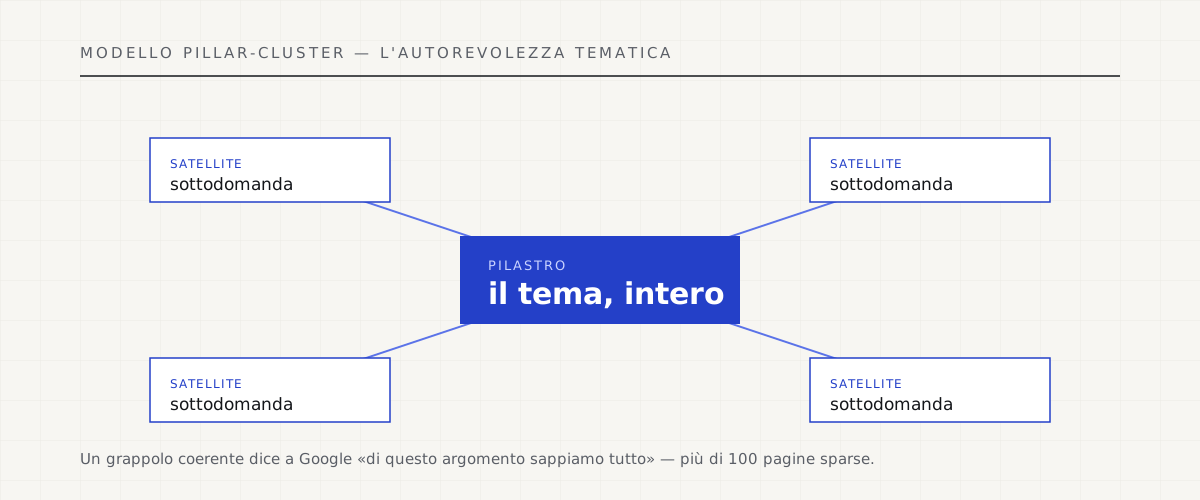
The tried-and-tested way to build topical authority is called pillar-cluster. You choose a core subject and dedicate a broad, carefully written “pillar” page to it that frames the whole topic; around it revolve “satellite” articles, each on a specific sub-question. The pillar gives the big picture, the satellites dig into the details, and they all link to one another. Not a hundred scattered pages, but a coherent cluster that covers a topic from every angle.
This architecture does two things at once. For the reader, it makes it easy to go deeper: from the overview down to the details without ever leaving the site. For Google, it draws a clear map of expertise: “this site has covered this topic completely”. It’s the opposite of a keyword list: fewer pages, but tied together by a thread, reinforcing each other instead of competing.
Internal links and consistency: the glue.
A cluster of articles isn’t enough if they remain isolated islands. The glue is internal links: every satellite links back to the pillar and to other relevant satellites, with anchor text that says what the destination page is about. That way Google understands those pages form a whole, not a random collection — and relevance flows from one to another, strengthening the entire group. This is the connective tissue of topical authority.
Consistency over time matters too. Topical authority can’t be bought in a week: it accumulates by publishing steadily, updating pages as they age, and filling the gaps in the topic as new questions emerge. An on-page analysis tool helps you see whether a page is well connected to the rest of the cluster or has been left orphaned, cut off from the group.
Free on-page SEO analysis: see whether the page is well connected →
Read also: internal links, the free SEO almost nobody looks after →
Fewer pages, more mastery.
The shift in mindset comes down to this: stop asking “how many keywords can I cover” and start asking “which subject do I want to become a reference for”. The first question leads to a wide, shallow site; the second to a deep, credible one. Google — and increasingly the systems that summarize the web too — rewards the second. Quantity doesn’t build authority: demonstrated mastery does.
It’s the approach we use to build content for the sites we run: few subjects, covered well, with a structure that holds them together. A blog like this isn’t a warehouse of articles — it’s documented proof that you know what you’re talking about. And in the eyes of Google and of clients, that’s worth more than a hundred keywords chased at random.
Technical SEO that gives structure to your content →
Read also: E-E-A-T, how Google judges your credibility →
Sources.
The figures and claims in this article come from here. These are primary sources, not summaries: open them and check for yourself.
- Google Search Central — creating helpful contentThe key document: Google rewards content made for people and scales down content created “for the engine”.
- Google Search EssentialsThe basic rules for being found: quality, technical and spam policies. The framework within which to build topical authority.
- Google — How Search WorksHow Google evaluates the relevance and quality of pages: understanding the engine’s judgment helps you cover a topic properly.
- Google Search Central — structured dataHelping Google understand what each page is about: one piece of the clarity that underpins topical authority.
Let’s talk about your website.
Free analysis of your current website; a fixed quote within 24 hours of the call.